For Eurogamer readers, it may have been a while since you last dug into the finer details of PUBG—or, more specifically, PUBG Battlegrounds (a slightly redundant subtitle that Krafton, the publisher, has long acknowledged)—especially since the game’s current, post-Brendan Greene phase. PUBG is now the umbrella name, while Battlegrounds is the title of the game itself, particularly the battle royale mode that many players became deeply, sometimes obsessively, attached to during the early days.
Still, that’s only part of the picture. Battlegrounds is adding a brand-new PvE mode, completely separate from the battle royale, called Xeno Point. Technically, it isn’t PUBG’s first PvE offering—the game previously teamed up with Skibidi Toilet, a viral favourite from Gen Z, alongside a range of so-called modes featuring bots—but in many ways, Xeno Point feels like the biggest shift PUBG has made toward the genre so far.
It helps to think of Xeno Point as something close to a self-contained experience inside PUBG Battlegrounds. In this mode, you’ll link up with three teammates and push into a futuristic hub, where you can spend resources to move through a broad skill tree, boost enhanced ultimate-style powers, craft items, and select your kit for the next run. Long-time PUBG players should find the loadout familiar: standard battle royale weapons, attachments, backpacks, and more, capped off with a special anti-alien weapon that’s unique—though a touch underwhelming. The real twist, though, is that these weapons now come in several versions, sorted by color and graded by rarity.
Those rarity tiers then feed into the usual looter-shooter structure, with percentage-based damage boosts tied to certain weapons and tempered by your armor. In theory, choosing and upgrading gear becomes increasingly important as you climb through levels and the challenges ramp up.

That said, figuring out how much this matters was hard to judge from my own time with the game. In the third tier out of four—where I had a mix of epic and legendary gear, which may have been a bit too strong—the first mission I played was surprisingly straightforward. Almost suspiciously so. Our group breezed through a redesigned Miramar desert map in a more linear flow, grabbing objectives to hold off incoming waves and taking down a sub-boss on the very first attempt. After a quick return to the hub for minor tweaks, we also managed to defeat the main mission boss without trouble, then raised the stakes for the final round.
The next section was tougher, though still within reach. To what extent that came down to two of my teammates being PUBG Studio developers is, of course, up for debate—I contributed too. Higher-tier gear also helped. One teammate kept getting dropped by the boss, only to be knocked down again right after a revival, which is a familiar pattern: the boss can single you out, lock on, and set up a big strike even while you’re still crawling around waiting for someone to bring you back. That’s what finally pushed me to step back from helping them (sorry). Even on the top difficulty, with unoptimized gear and only a quick glance at the skill tree, the toughest encounter I faced still didn’t feel especially intimidating.
In fairness, the challenge level can feel secondary—issues like these are typically ironed out quickly once players spot them, or, by now, are already refined through multiple test passes before release. The lingering question for me is what this mode genuinely adds that’s new, and whether that’s enough to keep PUBG players interested—whether they’re coming back or still actively playing.
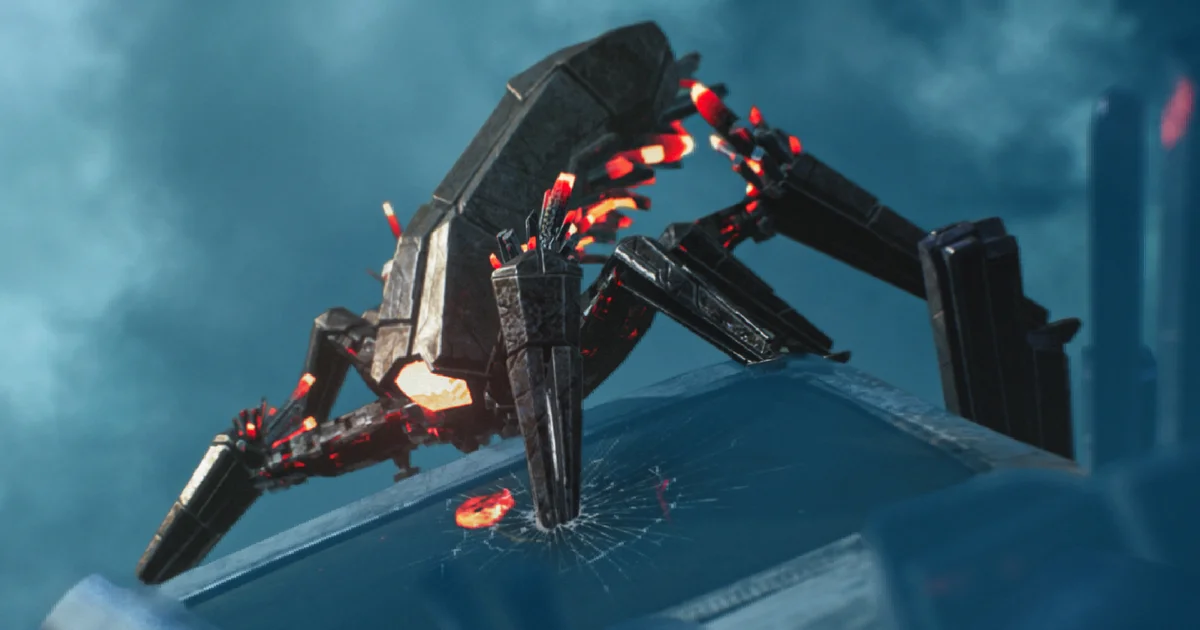
On that front, I’m still a bit doubtful. The foes in Xeno Point—whether it’s swarms of robotic melee spiders, variants that self-destruct, humanoid xeno-machines that stand and shoot, or enemies that project invincibility shields for others—plus a boss that stays in place with a handful of small, unmoving weak spots, don’t do much to stay engaging. The map doesn’t help much either. PUBG’s early locations have long been among gaming’s most vivid, eerie alternate worlds, packed with sub-areas that feel sharply distinct and stick in your memory like classic Hollywood shootout sets. Here, Miramar mostly plays the role of a loot corridor, steering you toward yet another “pinata” target at the finish.
Even so, like almost every PvE mode, Xeno Point is a perfectly serviceable way to kill time between the more intense parts of the game—especially when your usual Battlegrounds squad wants to try something different for a change. It feels lighter and less demanding, designed for casual play and shorter sessions, which makes it a decent reset button compared with the constant pressure of battle royale. There’s also something oddly satisfying about getting back to my old weapons and attachments—and all of their particular PUBG quirks—in this new setting. Still, if I’m going to return to PUBG, and convince my friends to do the same, I can only see myself coming back for Battlegrounds itself.
This preview is based on a visit to Krafton and PUBG Studios in Seoul, South Korea, with Krafton providing flights and accommodation.