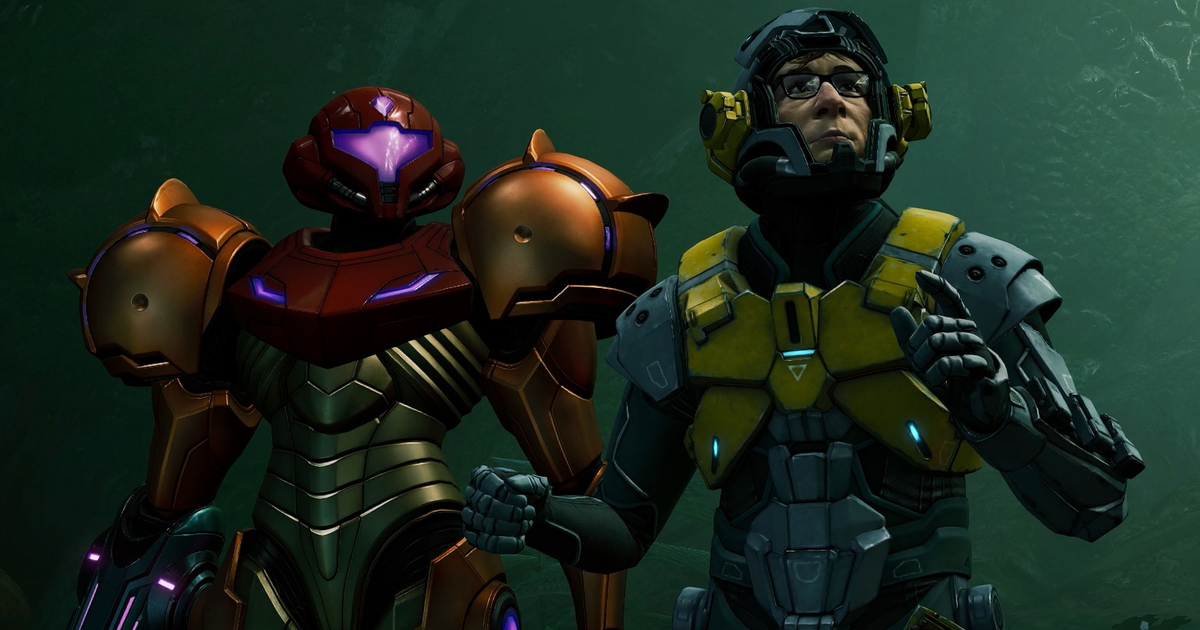
It’s hard to believe, but almost two full decades have passed since the last completely new Metroid Prime release. The series returned with the third entry, Corruption, on the Wii in 2007. For anyone eager for more Prime material, the encouraging takeaway is that Metroid Prime 4: Beyond seems to capture that wish with confidence. It offers plenty of what you’re looking for. Still, after getting hands-on time, I can’t shake the feeling that it may have missed an essential part of what makes Metroid special.
Breaking all of this down can get a bit involved, so let’s start with the fundamentals. The standout moments are genuinely enjoyable—in a one-hour session, I saw Metroid Prime 4’s big, cinematic opening, along with what’s clearly the game’s first real-world hub, dungeon, or whatever term you prefer. The familiar Prime phrasing doesn’t seem to map neatly onto Prime 4, thanks to certain changes to the structure; we’ll dig into that a little later.
The start will feel familiar if you’ve played before: Samus is stationed at a Federation military outpost when the Space Pirates strike. The pirates are chasing a powerful ancient relic hidden at the facility, and naturally, Samus jumps in to support the Federation troops. The second section I tried puts Samus into an unusual environment—we’re still not sure where, or even when, it’s set. Your job is to move through the corridors of what appears to be an ancient temple (or something very close to it), solve puzzles, and fight dangerous plants and creatures as you push forward.
At this point, it still feels unmistakably like Metroid Prime. You’re able to scan just about anything—enemies, plant life, and even ceremonial statues—to learn more about what surrounds you. What’s new here is that Samus gains psychic and telekinetic abilities, presented through a sleek new purple visor and streams of purple light that move through her iconic suit. These powers are granted by a mysterious alien race that’s nearly gone extinct, which calls her “the chosen one.” They also open up a fresh set of options for both combat and puzzle-solving.
Performance, by the way, looks strong—at least on Switch 2, since that’s where the demo was played. We still don’t know what the Switch 1 version will look like, and if Pokémon Z-A is any clue, Nintendo likely won’t show it before release. On Switch 2, though, Performance Mode targets 1080p at 120fps, and it’s impressively smooth. In handheld mode, the 120fps target carries over, but the resolution drops to 720p, which comes across as fine on the Switch 2 screen. Meanwhile, Quality Mode provides 4K at 60fps—or 1080p at 60fps when you’re playing handheld. The improvements to visuals and the overall presentation since the Switch 2 reveal, which was the last time it was playable, are substantial. It looks fantastic.
Next up: mouse control. You can absolutely play Metroid Prime 4 with multiple input setups, whether that’s motion-style tilting or a GameCube-style controller layout. Still, it’s difficult not to think that a mouse may be the best option. Using a mouse to interact with a Nintendo game at 120fps feels like the kind of thing you’d expect to trigger legal questions—but it’s supported fully. No legal complications here.
I do have a few small worries about how the mouse setup works in certain situations, mostly tied to the hardware side of things. The claw grip required for the Joy-Con mouse during long, intense firefights, the sensitivity adjustments, and similar factors can get uncomfortable. I’m also wondering whether the game will work with a regular USB mouse—if it does, that would be a genuinely major shift. I’d be interested in learning more about how the team built this game, though with Nintendo involved, we probably won’t get much behind-the-scenes detail. A number of the telekinetic mechanics feel like they were “shaped” for mouse input, but because this is a cross-generational release, it seems unlikely those elements were made with Switch 2’s new control approaches specifically in mind. A lucky coincidence, maybe.

Alright. “It’s about to get real nerdy in here.” I’m talking about this article… though I’m also quoting someone. That would be Myles Mackenzie, a Specialist and a supporting character in Prime 4. And yes—Samus does interact with other characters throughout this game.
That’s where my concerns about Metroid Prime 4 start to kick in. I’m worried it may be missing the central feel of the Metroid series: the experience of Samus as a lone figure surrounded by a grim, hostile world. Metroid has always leaned hard into that atmosphere, and it shows up across the whole franchise. It’s present in Brinstar’s 2D depths, and in Prime, where much of the story is delivered through optional, easy-to-miss scanning of objects. My fear is that in Prime 4, Samus may spend too much time listening to one-sided conversations.
The first time you meet Myles, he’s rambling to himself: “You’re alone, on a planet, with no prospect of survival. But, you’re also no longer sitting next to Phil in that cubicle. So… win?” He’s an engineering type with glasses—certainly not the toughest Federation soldier. He clings to objects and asks for help. When enemies show up, he shouts and scrambles for cover. And yes, he keeps moving around after you.
After you rescue Myles, the sense of isolation that defines Metroid starts to fade. The first time you switch into Samus’ well-known ball form near him, he reacts to it. As we reach a disabled mech, he introduces Samus to it. “You know her,” he says to the inanimate machine. “She’s famous!” Myles also seems to function as a gameplay cue. For example, he warns you when you get close to a stretch of water where enemies hide below the surface, prepared to burst up. And when I deliberately walk past a save point without using it, he calls out from behind.
“Samus, there’s something noteworthy over there. Are you certain we don’t need to utilize that?”
I
I feel my soul slip away from my body. I consider lining up a Samus-sized arm cannon against my own temple. Some might label that as melodramatic, or simply fussy — and honestly, I understand that reaction. Still, what really bothers me is how this bothersome, chatty companion interrupts the quiet wonder of the ancient temple Samus is exploring. One of Prime’s biggest assets, its gift for atmosphere, is dulled. His constant talking adds nothing to the actual fights. He tends to dump a lot of information during cutscenes, I suppose. Samus never replies, and that only makes her look even more like an awkward loner.
That raises the obvious concern: how much of the full game will play out in the same way? I’ll admit, though, I’m still uneasy. When Myles is along for the ride, his name shows up in the top-left corner of the UI next to a spanner icon — likely indicating his function as an engineer. It’s easy to imagine other names and symbols in that area too, with different roles providing their own kinds of help in this world.
And then there’s the narrative. It all starts with that ancient relic everybody’s hunting for — it malfunctions and explodes like a kind of time bomb. A wave of white energy washes over Samus, and spreads to the surrounding area at the base for what feels like miles. Once that glow hits her, she’s shoved into a different location. Myles goes too. At that point, you’d have to assume the Federation troops, their equipment, and even the Space Pirates stationed there were hit by the same fate. I expect this game’s structure will involve running into different Federation forces across various spots in this strange “Beyond” white void. It reminds me of Master Chief meeting Marines as he moves through Halo. The difference is that the charm of those campaigns was tied to the irreverent back-and-forth of those quirky Marines — and it doesn’t quite feel like what has traditionally made Metroid shine.
After the opening stretch, Prime 4’s approach still looks like it’s following Prime’s tradition of moving from one world to the next — though from this narrow preview, I get the impression Samus’ ship may be missing. Instead, the motorcycle seems to function in a way similar to Epona. The desert shown in the screenshots also feels reminiscent of Hyrule or Termina Field: a wide-open stretch connecting more focused biomes and “dungeon”-style areas, including one I tried during the demo. I didn’t manage to test the bike itself, unfortunately.
There’s still plenty that won’t be clear until the full release. It’s odd to say this after so much criticism, but I genuinely want to see more. I enjoyed the puzzles, the combat, and I was especially glad to see the game’s control options and its overall visual presentation. Still, a real worry that Metroid’s usually stunning atmosphere could be getting damaged is creeping into my excitement — like written words etched along a piece of seaside rock.
After taking down a serious boss that required careful, smart use of a brand-new gadget I’d just picked up, I’m finally able to leave the temple with the item Samus needs to retrieve in hand.
“Watch out, Samus. You won’t have me there to cover your back,” calls out Mackenzie as I head for the exit, though he’s completely useless in combat. I can only hope that’s standard, not the exception.