There’s a special kind of thrill in video games when a whole genre somehow clicks with what you enjoy. It’s the moment when the appeal suddenly feels completely obvious. Arc Raiders delivered exactly that experience: hopping onto an elevator while you’re weighed down with loot, then starting the extraction process with only seconds left on the clock. The result was a real jolt of realization in me. Why was I ever not into this before?
At its core, Arc Raiders is a third-person extraction shooter. It delivers high-pressure scenes that naturally feed a deep sense of tension: heavy losses, brutal stakes, and those genuinely satisfying wins. Stepping back, you can see a clear focus on steady growth—both in what you carry (your growing stash of supplies) and in how your character develops, alongside your own growing know-how.
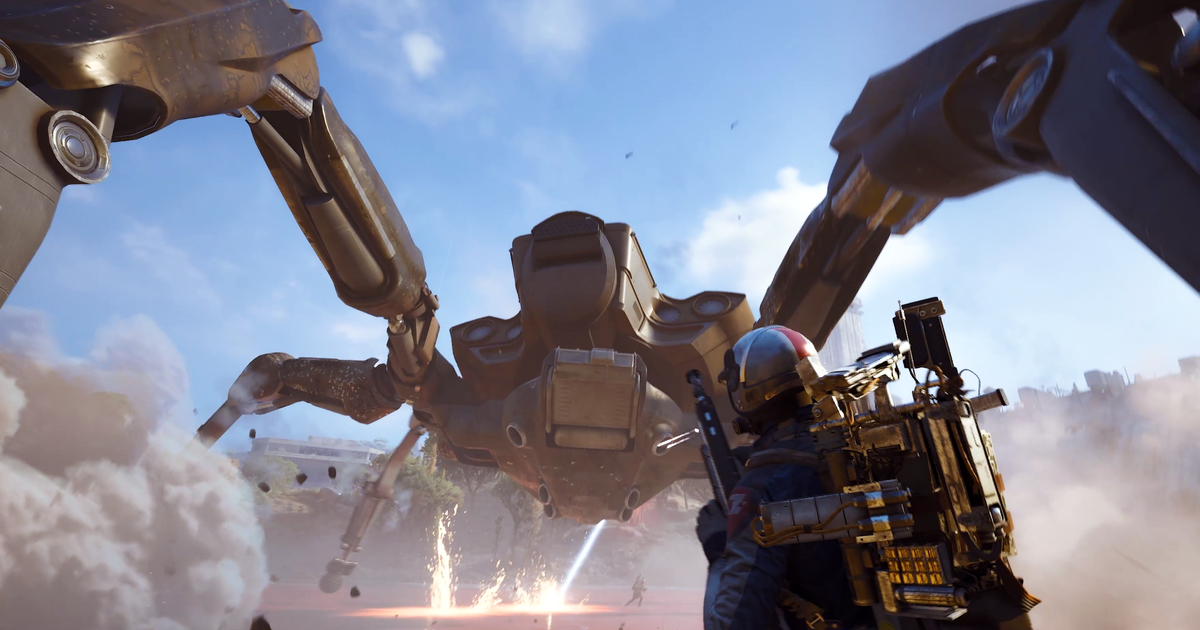
The story takes place in a setting where an all-powerful AI called Arc dominates everything, continuously scanning the world through a seemingly endless mix of drones and enormous robots. At first, their behavior looks like straightforward extermination—especially when you’re out there loaded with loot. But Arc seems to be changing, just slightly at a time. Something isn’t right, and it falls to you and the other raiders to piece together what’s going on while collecting springs and apricots.
The gameplay loop works like this. You start in Sperenza, an underground shelter for the surviving humans that functions as your main hub. From there, you ready the weapons and equipment you need, then check the quests offered by a small group of vendors. After that, you head out to the surface—solo or with a team—across a range of maps. During the run, you go up against Arc and other players while hunting for loot, working toward mission objectives, or simply enjoying the chase. When you can, you return to base by elevator or via a raider hatch, with the hatch needing a key.
From the beginning, it’s an easy game to get absorbed in. As of now, I’ve put about 40 hours into Arc Raiders, covering both public playtests and a private press preview. Those early sessions were full of careful exploration—wandering through abandoned buildings and empty highways, relics of a world that’s long since moved on. Arc Raiders does a great job pointing you toward key areas with its in-game map, but if you’re the type to roam off the beaten path, you’ll uncover rewarding surprises beyond those main stops.

No matter who you are, the match will eventually push you into tense player-versus-player showdowns or dangerous encounters with robots, all under the pressure of a timer that keeps moving forward. It’s not just a race against time—your window to get away shrinks as the seconds run down, and lingering becomes more and more risky.
Back at home base, you sort through what you’ve collected, then customize your raider. I’m genuinely impressed by Arc Raiders’ player characters. Their look is an unusual blend of punk-inspired, futuristic space-age gear, right down to the mullet. It’s a refreshing take on the typical post-apocalyptic drifter formula, without leaning on the usual tropes. In a game where you might expect everyone to be fully camouflaged, this clearly different direction feels surprisingly fitting. The art team at Embark Studios has built a DIY post-apocalyptic style that doesn’t tip into the self-serious territory that other titles in the same space can fall into.
I’m also a big fan of how Arc Raiders handles its skill tree. Instead of sticking to standard class roles, it splits into three routes. You’ve got survival, conditioning, and mobility. The team behind the system clearly thought about progression for different kinds of extraction players. Survival tends to suit more passive styles—especially stealth-focused scavenging. Noise reduction bonuses and improved in-match crafting eventually let you disarm mines and open locked security lockers.
On the other hand, maybe you’d rather jump into fights more often; in that case, conditioning adds extra boosts to stamina regeneration and melee damage. Or perhaps you thrive on momentum—tracking opponents and slipping away at the last second when things get intense. Mobility is for players who put the points into movement-focused tools, eventually granting special ways to move around. In time, you might unlock everything, though there’s currently no confirmed level cap. Still, I personally hope you can’t simply max every route. By encouraging you to commit to one branch, the game delivers that sense of mastering a particular kind of challenge. It makes difficult situations feel more manageable when you’re leaning into the build that fits you.
Beyond your personal skill setup, Arc Raiders strengthens you further through your hideout, where you can locate crafting stations and upgrade them—plus a delightful little chicken called Scrappy. This becomes another path for lasting progression, since certain improvements need particular materials but offer meaningful payoffs. Upgrading a medical station, for instance, improves the healing items you can craft—and the same idea applies to weapons, gadgets, and more.
Then you take your raider—ideally stronger than before—into another run across multiple maps. So far, I’ve visited four: Dam Battlegrounds, Buried City, Spaceport, and Blue Gate. Each one brings its own layout, quirks, and hidden details worth uncovering. I’ve also seen some critics describe Arc Raiders’ maps as dull or just average, but those takes don’t really land for me.
Take Dam Battlegrounds as an example. The huge concrete dam at the center of the map forms a tangle of long corridors, which is ideal for ambushes and for players who enjoy PvP chases. There are plenty of ways to approach the dam itself, including exposed ladders along its outer walls, makeshift raider hideouts with ropes hanging over the edges, and hidden pipes that feed into the heart of the massive structure. Exploring the deeper parts of Dam Battleground is genuinely satisfying—climbing up metal staircases carefully and threading your way through corners with stealth.
That said, if the map section you’re given doesn’t click with you, Dam Battlegrounds thankfully includes other zones that deliver similarly strong chances to roam and fight. The swamp is especially memorable: scattered patches of vegetation form natural cover, while wreckage from destroyed Arc shells and rough metal frameworks sit across the landscape. My personal favorite hidden spot isn’t even flagged on the map. It’s a lone tower positioned at the southern edge, close to the scrap yard and well away from the center of activity. During my time there, I never ran into another player, but anyone who stops by should find worthwhile loot for their trouble.
Every map I’ve spent time on includes this kind of detail. Weapon caches are tucked away in tall structures at Buried City, the area around the central tower at Space Port is pure chaos, and Blue Gate opens into expansive underground routes and corridors. Across the board, each map offers points of interest—big and small, easy to notice and cleverly hidden—so players who are willing to search get rewarded for it. On top of that, the world is packed with engaging environmental storytelling. On the eastern side of Dam Battlegrounds, the water is an eye-catching shade of red—what causes it? It’s iron in the water, my friend; that’s Arc coursing through the oceans. Or look at the enormous walkers seen beyond the edges of Buried City, a reminder of how tiny raiders are compared to the artificial authorities running the surface. In Blue Gate, the most dangerous place to loot is also scattered with what’s left of humanoid robots, which raises the question of whether they held a bigger place in society before everything fell apart. Arc Raiders is full of moments like these.
So, with all that in mind, what makes the game stand out? For me, it comes down to its atmosphere. Arc Raiders is, in a pleasant surprise, a hopeful experience. That may feel unexpected for a world shaped by the survival-of-the-fittest idea, but it doesn’t have to be bleak or isolating. Even when you’re playing solo, Arc Raiders feels unexpectedly cooperative.
I think that comes from a few key factors. First is Speranza, the safe hub where your character and many surviving humans are based. It’s not a cold, unforgiving hole—it’s a lively, lively, and colorful place. Raiders head to bars for drinks, and people take part in everyday work like welding and hauling supplies, all while looking out for each other. From the start, it communicates that raiders don’t climb to the surface only for themselves, but for the sake of humanity.
Then there’s the social side of things. This is something I’ve brought up before, but Arc Raiders actively encourages players to interact. You don’t always need to wipe out enemies to earn experience points—actually, you can level up a great deal just by looting. And when you do cross paths with another player, there’s a good chance their items won’t be things you specifically need. During tense moments, a quick motion from the emote wheel or a short bit of conversation can calm the situation almost instantly.
Of course, there’s no avoiding danger; I’ve been stabbed in the back by other players, which still hurts to think about. But that’s part of what it means to build trust in a place like this. I’ve also managed to escape alongside two opponents, and I even played the flute after a tough PvE encounter while another group danced around me. When things go right, everyone can grab what they came for and make it home safely—and those moments become genuinely unforgettable.
Lastly, think about how the game presents itself, especially when you set it beside its rivals. Escape from Tarkov is clearly a cornerstone for extraction shooters; it’s a hard, layered beast. That complexity can create a strong feeling of competence, though it may also reinforce the kill-or-be-killed mindset that many titles in the space are known for. That isn’t necessarily a bad thing, either—I’d argue it’s a major reason it has attracted so many players.
Even so, there are a few important details to weigh. Embark Studios has been upfront about using AI in its development process. Just like in its earlier release, The Finals, the studio used real voice actors’ recordings and then reproduced them (with consent) through AI tools for in-game use. They’ve also used machine learning to animate a lot of the movement of Arc enemies—for example, when you shoot the propeller off a Hornet and it spins down to the ground.
If you’re strongly against using AI as part of game production, this matters. However, if you’re comfortable treating it as a supplement to human-led creation—a position that likely aligns with Embark’s leadership—you may see it as reasonable within the context of Arc Raiders. Either way, it’s something worth considering. I’m personally a bit uneasy about it, but it’s clear Arc Raiders approaches AI development cautiously.
It’s also worth noting that what I’ve shared comes from different testing phases, not from the full launch version of the game. There’s no question that more maps, more missions, and more discoveries are still on the table. I’m familiar with how features like expeditions work—a seasonal system that lets players choose a character reset in return for rewards—but since I haven’t tried it myself, I can’t speak to it from firsthand experience.
Still, setting those caveats aside, Arc Raiders strikes me as truly exceptional. I haven’t felt this way about a major multiplayer title since, perhaps, the original Destiny. Arc Raiders feels like a fantastic early milestone for Embark—one I hope leads into a long, productive run for the team, especially given how much talent is clearly on display. And like Destiny once did for so many people, Arc Raiders has pulled me into an entirely new style of shooter.