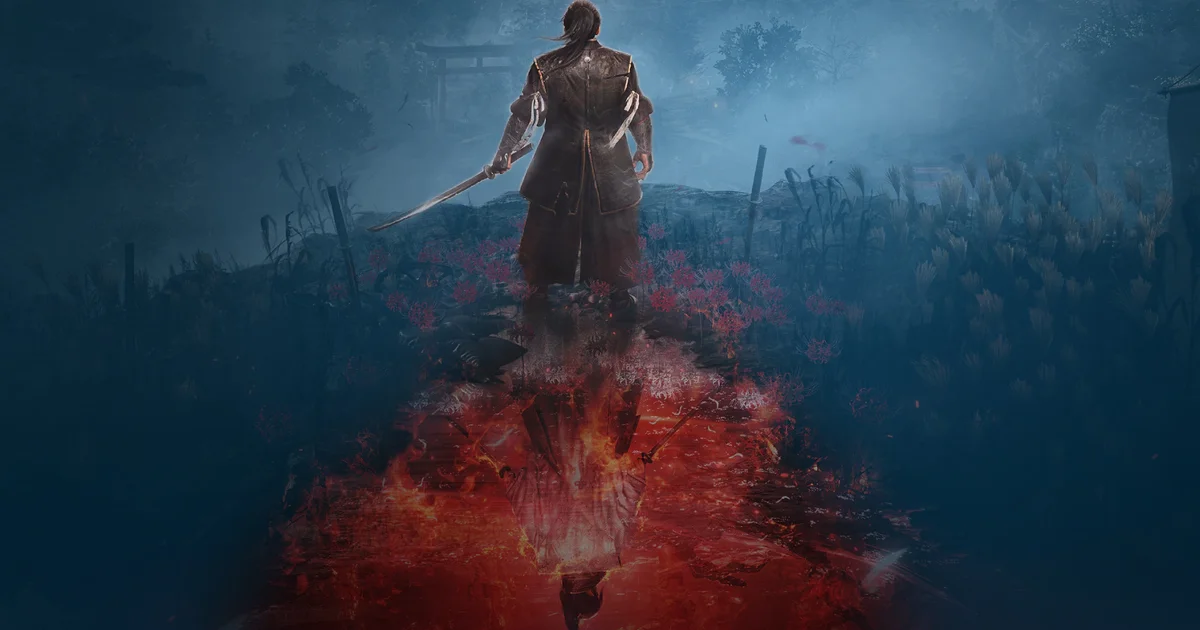
In my view, Nioh 2 is almost beyond reproach. Team Ninja, drawing inspiration from the Souls-like template while never being boxed in by it, has created a strong counterpoint to FromSoft’s output through the Nioh series. A stance-based style of combat brings in a fighting-game sensibility, and the careful, detail-rich level planning, the commitment to authentic Japanese historical settings, and comparatively straightforward storytelling methods help the franchise stand apart from the sea of rivals all chasing top position in the genre. If FromSoft is the emperor, then Team Ninja plays the shogun.
A common misconception about Nioh is that it’s simply “Dark Souls set in Japan during the Sengoku era,” but that framing doesn’t do the series justice. Look at what it offers on its own merits and it’s clearly much more than that. It feels less like a straight-laced Souls outing and more like a cross-genre mix, drawing from Tenchu, Ninja Gaiden, Onimusha, Devil May Cry, and even brushing against Metroidvania-style design. In fact, Nioh features bonfires, stat progression, and level-integrated shortcuts—elements that can be brutal—but I truly believe that’s where the similarities stop.
The solid groundwork from the first game was carried forward and reinforced in 2020 with the release of Nioh 2. Its outstanding weapon-focused combat was sharpened by demonic special techniques, the (admittedly) limited roster of foes was expanded quite a bit, and additional systems were introduced across the intricate environments. The result is a game that keeps delivering fresh surprises and a compelling reinterpretation of the punishing hardcore RPG formula.
Nioh 3 builds on all of that, and then some. If Nioh 2 refined the series’ core approach, then Nioh 3 pushes it even further. For better or worse, the third entry is heavier, more layered, and broader in scope. Much of that comes from the ability to run two full character setups side by side—one samurai and one ninja. To succeed, you’ll need to switch between them smoothly. Oddly enough, it brings to mind the feeling of stringing combos together in Devil May Cry 3: start with your samurai to shatter your opponent’s defense, instantly swap to your ninja, and then finish the job with a relentless run of attacks. It’s exciting, satisfying, and I can already see how naturally the two styles could work together.

Earlier this year, the game’s alpha was fairly polarizing, and after trying it, I worried that, in chasing novelty, Nioh 3 might have wandered too far from what made the original two games such a hit. In the meantime, Team Ninja has experimented with more Sekiro-like mechanics (Wo Long) and open-world ideas (Rise of the Ronin)—and, honestly, neither of those, in my opinion, reaches the same heights as the Nioh entries.
That said, putting energy into a new direction for the franchise appears to have recharged Team Ninja’s momentum—similar to how solo creators sometimes use side projects to clear the noise before returning to their main career and delivering a major comeback record. A strong example is Nioh 3’s “open field” concept. It isn’t an open world, so it feels more thoughtfully arranged and engaging than what Rise of the Ronin offered, but the areas are more “modular.” They’re packed with smaller activities that support progression, making them especially appealing to completionists. It calls to mind Elden Ring on a grander scale: hit a wall with a boss in one of the tougher Crucible regions, clear out a base or two, handle a few optional objectives, and then come back stronger. That approach should ease your experience.
The alpha didn’t really show any of that (and, naturally, the difficulty tuning was a bit off—typical for the Nioh development rhythm). After running through an entire level and finishing a couple of particularly tough side quests, I’m comfortable saying that this more open, flexible structure matches how I picture Nioh actually playing. The game has a satisfying flow: larger areas are split into smaller sections, sometimes with their own bosses and skill-gated tests. Optional spaces encourage you to return later with new abilities or weapons, and they also reward you for pushing through enemies.
This revised pace also creates a healthier balance for inventory management. Controversially, I enjoy this part of Nioh. More than in any Souls title, you have to dedicate a meaningful amount of time to working through the menu system. Sure, it can feel messy, and yes, at first glance it seems impenetrable, but once you get comfortable with the seemingly endless overlapping menus and stat screens, you start to see just how deep this action-RPG really is. During the preview, a PR representative jokes, “If you spent 30 hours in the menus of the previous titles, you’ll spend 60 hours in them this time around!” I imagine that comment turned many people off, but for me, I genuinely mean it—I felt a jolt of anticipation when I heard it. I’m a min-maxer, a collector of loot, and a build-focused planner. Searching for the best possible setups for both samurai and ninja? That’s incredible.
Before I even hit the three-hour mark in my preview, that prediction (or warning) from the helpful Koei Tecmo representative came true. I found a solid water-based odachi for my samurai, along with armor that boosts water-related traits. For my ninja, I used a kusarigama (chain sickle) that can inflict paralysis. With my samurai, I could rack up substantial poise and health damage by leaning on stamina, then switch to my ninja and apply abilities that build poison. After a short stamina recovery, I could use the low-impact kusarigama techniques and consistently lock down most enemies before they had a chance to retaliate. Whether the demo intentionally set up this combination, or I just stumbled across a few useful tools that I could creatively mash into a basic build, I can’t say. Still, that’s the charm of Nioh: the loot and menus are like puzzles, and your job is to figure out the picture they’re trying to show you.
I get the sense that the build we tried was deliberately placed somewhere in the middle-to-late portion of the game to spotlight a wide variety of the brand-new foes you’ll…
I’m okay with that, honestly. Since the series first launched, the mix of foes has sparked debate, but after three games, I think there’s now enough variety to justify the bigger stages. Pairing human adversaries with demonic yokai makes sure every encounter feels fresh, and it’s satisfying to step up to harder enemies after working through weaker ones. Checkpointing and respawning feel reasonable—you’ll likely need to slip past three or four foes per boss, at least based on the level I played. Again, that’s in line with Nioh. This isn’t the original Dark Souls, so if you stumble against a boss, you’re not wasting your time.
After Wo Long, Rise of the Ronin, and that questionable alpha, I worried that one of my favorite franchises—so to speak—had “lost its edge.” Still, Team Ninja understands its audience and knows how to put its resources to good use. Capcom needed three attempts to build a genuinely iconic Devil May Cry. Bungie took three tries to reach the caliber of Halo 3. From what I’ve seen so far, I think Team Ninja’s third entry could go even further than the strongest moments in the series: a memorable installment, and a persuasive example of a studio carving out its own distinct, unconventional lane.
That said, the game doesn’t look especially attractive. After about five hours with its strangely warped take on historical Japan, that’s my main real criticism. But I don’t play Nioh for its oddly glossy, somewhat uniform visuals. I’m here for the gameplay—and based on what I’ve experienced already, I’m sure I’ll be hooked for a long time after launch. I’d really like to get another demo, so Koei Tecmo and Team Ninja can show off what this game can do in a more convincing way.
This preview is based on a version played during a trip to Paris, France. Koei Tecmo provided travel and accommodation.