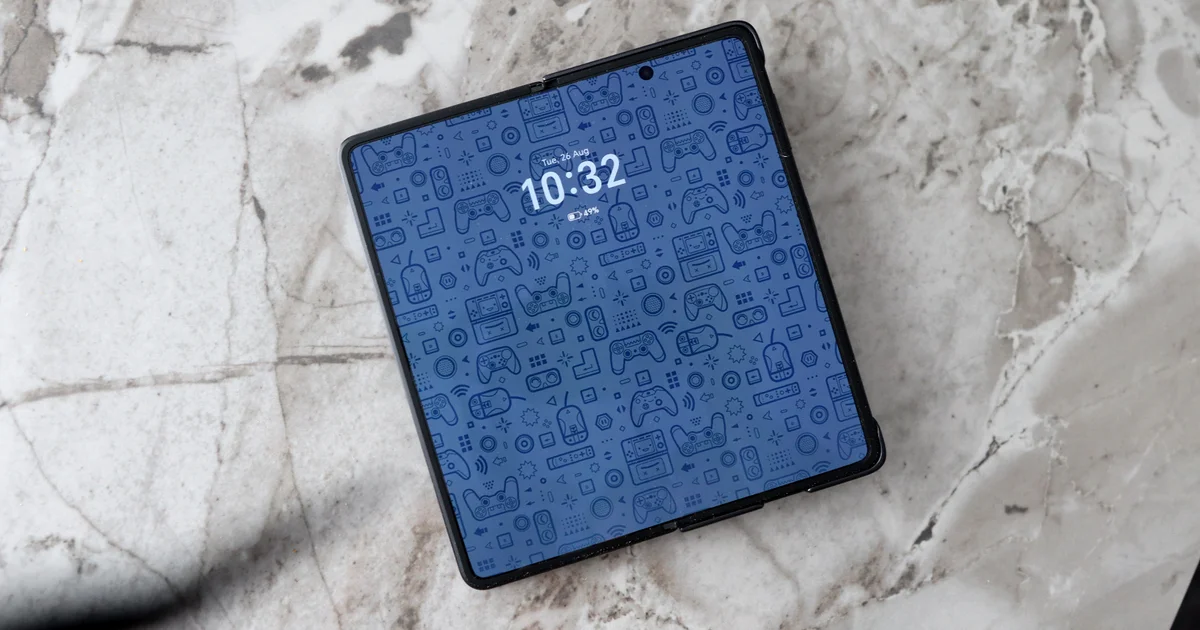
Last year, Honor’s Magic V3 foldable smartphone left a strong impression, thanks to polished software, a clean yet durable build, and upgraded performance. This time, we’re moving on to the Magic V5, partly because of the unlucky reputation the number four carries in China.
The new model follows current industry expectations with a slimmer chassis, a larger battery, refreshed cameras, a bigger internal screen, and stronger overall internals. It includes Qualcomm’s Snapdragon 8 Elite chipset, 16GB of RAM, and 512GB of storage.
Still, the real question is whether these changes amount to a meaningful step up from the 2024 version, especially since the price has climbed to an eye-watering £1699—an enormous amount even in this ultra-premium category. Or, would you be better served by buying an earlier model for roughly half the money?
Design
The Magic V5 swaps in a quieter, more restrained palette than the reddish-brown or green shades used on earlier models. You can choose from black, ivory white, and dawn gold—my own pick. Our review unit came in black.
When placed beside my Magic V3, the camera housing on the V5 sticks out a touch farther, largely because of internal upgrades I’ll cover shortly. Even so, the phone’s general form factor—whether open or closed—looks more streamlined than its predecessor.
One interesting detail is that the ivory white version is technically the thinnest. It measures 4.1mm unfolded and 8.8mm folded. The black and dawn gold models come in at 4.2mm and 9mm. That said, those figures are still about 0.2–0.3mm thinner than the Magic V3, and they’re very close to the Samsung Galaxy Z Fold 7’s 8.9mm combined thickness. At 10.8mm, the Google Pixel 10 Pro Fold looks noticeably more substantial.

Thickness and weight (217g) haven’t shifted dramatically from the V3, but it’s a relief to see that foldable phones have moved beyond feeling bulky. The Magic V5 slides easily into a normal-sized pocket and sits comfortably in adult hands whether it’s folded or opened. Like before, you’ll still want a steady grip when you use it in tablet mode one-handed. Oddly, this generation doesn’t include the textured back finish the Magic V3 had, so it feels a bit more prone to slipping.
The Magic V5 also embraces the contemporary design language Honor has been using across its Magic foldables: a sleek feel paired with extremely slim bezels around both the cover display and the main screen to make the most of the available viewing space. I do still wonder whether dust and grit could find their way in around the main display, though I didn’t spot anything particularly concerning during my time with it.
This phone uses a similar Honor “super steel” hinge, now improved to handle more force. Honor’s own promotion claims it can manage up to 30kg hanging from the hinge—though they clearly don’t advise trying that in everyday use—and the company lists a durability rating of 500,000 cycles.
Perhaps the biggest upgrade on the Magic V5 is its water and dust protection, which now carries complete IP58/IP59 certification. The previous model was only rated IPX8. By comparison, the ZFold 7 is rated for IP48 water resistance, while the Pixel 10 Pro Fold is the first foldable to reach an IP68 rating.
Display
With the Magic V5, Honor has refined both screen space and brightness. The main display grows slightly to 7.95 inches, while the cover screen stays at 6.43 inches. Both panels can hit a maximum brightness of 5000 nits with HDR on compatible content, which should deliver a noticeably vivid viewing experience. They’re both OLED panels, offering strong contrast, richer depth, and attractive color.
Thanks to the slightly larger footprint, the main screen now offers a resolution of 2352×2172—comparable to a 2560×1440 (“1440p”) display. That makes it a strong all-rounder, from day-to-day productivity to gaming and streaming content via Plex, YouTube, or Prime Video. Pixel density remains almost the same at 403ppi, and a 120Hz refresh rate keeps everything feeling responsive.
The smaller cover display impresses too, keeping the same 2376×1060 resolution as before and the same 120Hz refresh rate for smoother motion. When the main screen feels a little too big to handle comfortably—or when you simply want to check notifications quickly—the cover display is a solid alternative. Both screens support stylus input, though Honor’s stylus must be purchased separately, and there’s no built-in storage space for it on the device.
Some apps and content may show a letterbox-style layout, meaning the display isn’t fully filled. Even so, you can tweak individual apps and games so they make full use of the 7.95-inch area for a more immersive experience.
Camera
One of the most prominent improvements on the Magic V5 is in Honor’s newly branded “AI Falcon” camera setup, which the company says brings a classic flagship experience to a foldable form factor. In the past, their foldable camera systems have involved a few compromises, but Honor is aiming to move things forward.
On board is a 50MP primary camera, paired with a strengthened 64MP periscope telephoto offering 3x optical zoom and 100x digital zoom, plus a 50MP ultrawide sensor.
During my testing across a range of outings around London, the overall sharpness and color quality were both satisfying. That said, I still feel the Magic foldable cameras often push colors toward a more saturated look to maximize visual impact—the photo showing the Routemaster bus back is a good example.
Taking a closer look at the images reveals strong retention of fine detail across both the main and ultrawide sensors. The 3x optical zoom also holds up well when you move the subject in slightly. Once you enter the digital zoom territory, some AI processing becomes necessary to keep image quality reasonably consistent—especially at the top 100x level, which you’ll likely use more for fun than for anything practical.
In low-light conditions, the pictures come out a bit more smoothed, which does reduce some detail, but noise stays low, so the overall result looks fairly clean. Like its predecessor, there’s nearly no blur, and exposure control stays balanced without pushing highlights to an overly bright level.
To the best of my knowledge, the front cameras haven’t changed. You still get the same 20-megapixel selfie options, and they produce natural-looking colors with solid detail retention. And because this is a foldable, it’s also worth pointing out that you can prop it up and rely on the more capable rear cameras for self-portraits.
Performance
Internally, the Magic V5 receives the expected flagship treatment for 2025, appropriate for this premium price tier. You get the new Snapdragon 8 Elite chipset, paired with 16GB of RAM and 512GB of storage.
In the GFXBench gaming tests, the Aztec Ruins High Tier result at 60fps is a noticeable step up from the previous model’s 46fps. Car Chase also reaches 60fps, improving over the Magic V3’s 57fps. It’s important to remember that the higher-resolution internal panel makes the V5 a slightly tougher benchmark than the V3 last year.
Geekbench 6 scores don’t look dramatically better than what the Snapdragon 8 Gen 3 delivered in the Magic V3. Still, there are clear gains in both 3DMark Wild Life Extreme and PCMark Work 3.0, suggesting the Magic V5 handles demanding games and everyday productivity tasks more effectively.
| Benchmark | Honor Magic V5 | Honor Magic V3 | Honor Magic V2 RSR |
|---|---|---|---|
| Geekbench 6 Single Core | 2256 | 2214 | 2030 |
| Geekbench 6 Multi Core | 5237 | 5699 | 4928 |
| 3DMark Wild Life Extreme | 4929 | 4471 | 3748 |
| GFX Aztec Ruins High Tier | 60fps | 46fps | 46fps |
| GFX Car Chase | 60fps | 57fps | 56fps |
| PCMark Work 3.0 | 21201 | 17419 | 14089 |
In day-to-day use, I experienced a fast, responsive phone with no meaningful stutters or delays. Whether I was streaming videos, working in Google Docs, or using the Magic V5 the way I normally do, everything felt smooth.
The large main display makes a difference for immersive gaming experiences like COD Mobile and EA FC Mobile—something I hadn’t played in a while. Even under sustained load, the device stays relatively cool, and it’s comfortable to hold for extended periods.
On top of that, Honor seems to have reduced performance drop-offs during long stress runs more successfully than the two earlier generations. Over 20 cycles of the 3DMark Wild Life Extreme test, the device fell by 33 percent, while the predecessors dropped by more than 50 percent.
Honor is promising four years of OS upgrades and five years of security updates, which is perfectly reasonable even if it isn’t particularly standout for a phone in this segment. Out of the box, it runs MagicOS 9, Honor’s personalized version of Android 15.
I’ve had a mixed reaction to MagicOS on Honor phones, mainly because it never felt as fluid or polished as Samsung’s OneUI, for instance. The improvements in this new release aren’t as sweeping as the previous generation, but there are still some genuinely practical additions, including wireless file transfer and device cloning for people moving from iOS—something Honor says is increasingly common among its customers.
This handset shines when it comes to multitasking, particularly with how easily you can set up dual- or triple-pane layouts when you want to write while referencing material or staying in the middle of a conversation. The updated Multi-Flex mode makes that triple-pane arrangement possible, which is especially handy for heavy usage.
You also get the expected AI features. Google’s Gemini service powers tools like Honor Notes, where the note app can assist with summarizing, formatting, and grammar checks, and the Recorder app supports real-time note capture. On the photo side, there are also some interesting AI upscaling and cutout effects, and my testing suggests results vary in effectiveness.
The Game Manager app is back, placing quick access controls along the left edge of the screen. From there, you can reach essentials like rotation lock and screen recording, plus more advanced options such as filters to adjust how a game looks and a touch enhancer aimed at improving responsiveness. You can also tweak brightness and trigger ‘memory cleanup’ as needed. Many of these controls are simple on/off toggles rather than offering deeper, granular adjustments.
Even with Honor’s further refinements in MagicOS 9, I still have the same software concerns I mentioned earlier. For example, it adds Honor’s ‘Essentials’ folder directly on the home screen, but you need to tap precisely to open the right app. Pressing the folder won’t expand it into a larger view showing what’s inside. There’s also default-installed bloatware you might not want, including Facebook and Instagram. Sure, it can be removed easily, but that doesn’t really address the bigger issue.
Battery Life
For some reason, my review unit of the Magic V5 didn’t include a charger in the box, though it does come with a high-wattage USB-C cable and a leather case—so you’re still ready to set it up right away. The phone supports charging up to 66W, the same as the Magic V3, and you can purchase Honor’s specific charger from their website or pick a compatible third-party option.
Even though the maximum supported charging speed hasn’t changed, Honor has increased the battery capacity to 5820mAh, up from the Magic V3’s 5150mAh, which puts it ahead of some conventional flagship phone batteries.
The battery cells in the Magic V5 also use silicon-carbon, just like the Magic V3 and the Magic 6 Pro models I’ve reviewed. That design brings a couple of key benefits, including better performance in colder conditions and, according to the manufacturer, a more environmentally friendly approach than standard lithium-ion batteries.
In my testing, I could comfortably stretch regular daily use to a couple of days, which is impressive. The PCMark V3.0 benchmark clocked 11 hours and 25 minutes at 50 percent brightness. That translates to solid screen-on time for a foldable, and it’s roughly two hours more than the Magic V3.
Conclusion
As with the type of gradual improvements I’ve come to expect from today’s flagship phones, the Honor Magic V5 may not feel like a huge step forward in every area compared to its predecessor. That said, it truly is an excellent foldable.
You get strong performance along with two impressive OLED displays, plus better camera results and improved battery life—suggesting Honor focused on the most important upgrades over the Magic V3. And because it’s even slimmer, it’s easier to carry overall, making it a sleek, modern foldable. The one element holding it back a bit is the MagicOS Android software layer.
Priced at £1699.99, the Honor Magic V5 is clearly a premium device that competes seriously with both Samsung and Google, and it keeps building on Honor’s momentum toward making genuinely appealing smartphones from a company you may not have considered before.