The ant-sized thrill of Grounded returns in a sequel that lays out exciting promise for what comes next. There’s still plenty to accomplish, but a genuinely exhilarating adventure is already on the horizon.
It’s the small touches that keep pulling me in. Watching dog-sized baby roaches and their elephantine elders arrive to gulp down the juice of opponents I’ve been fighting, or seeing rhinoceros-sized bees hover like little drones as they sweep pollen from nearby plants. It’s running into orb weaver spiders the size of cars, drifting off to a gentle snooze after dark, or tank-sized wolf spiders trading blows with their tank-sized scorpion rivals in the shadows—complete with glowing red eyes, snapping pincers, screeches, and bared fangs. It’s the scuttling sounds you notice as you carefully push through grass-blade forests, stepping into a world that normally stays hidden beneath your feet and feeling, almost, like you’re discovering it for the first time. It’s walking down the street and wondering—while spotting berries mashed into the soil—how tough their skins would really be if they were turned into armor. That’s the feeling Grounded 2 delivers.
That said, in a broader sense, we’ve been here before. Grounded 2, just like Grounded 1, is a cooperative survival experience built around the concept of being reduced to ant scale and forced to survive in the expanded insect world around you. You still hack apart grass blades that look like towering trees to create a base, you still gather morning dew for hydration, and you still go after tiny green aphids to cook them on a spit. You keep advancing through gear built from assorted insect parts, and you remain on a mission to uncover the mysterious corporation with miniaturized bases in this world that led to your predicament. Even though the backdrop has moved from a backyard garden to a park, the heart of the experience stays essentially the same.
The real question now is whether this new, surprise sequel does enough to justify its existence—and you’ll see where I land if you read my coverage of Grounded 2’s early access launch last week. I started out unsure. There were flashes of brilliance, but solo play also brought plenty of moments that felt aggravating. I shared that early impression while hoping for more, and now that I’ve gotten to experience the game with others, I can say with confidence that Grounded 2 isn’t just a sensible follow-up—it’s actually an evolution of the idea that feels like it’s stepped forward into the next generation.
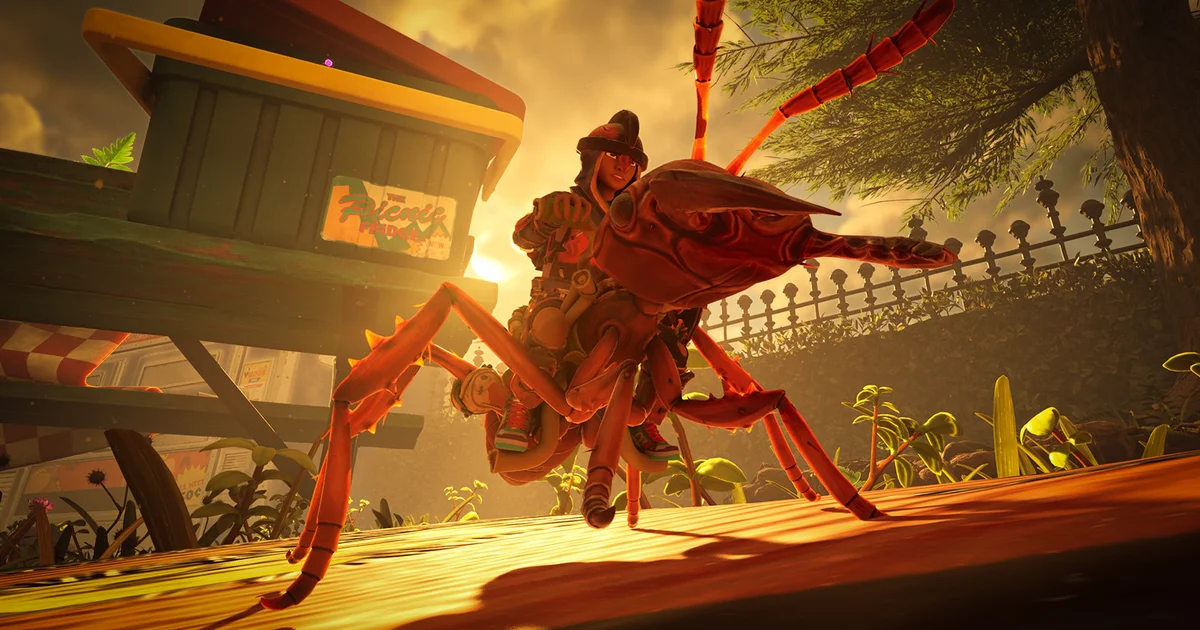
It’s a smart move. By creating a fresh game rather than simply expanding the existing one, Obsidian—alongside co-developer Eidos Montreal—has been able to rebuild the Grounded feel in a new engine. The upgrade is subtle, but it meaningfully sharpens the world’s fidelity, especially in the way lighting works, while also opening the door for brand-new gameplay ideas. The biggest and most exciting change is mounts. Now you can travel the world riding ants or spiders, speeding up exploration and making it easier to get away from threats. They also let you carry far more, thanks to their own larger, separate inventories—an improvement that goes a long way toward easing the usual mobile storage headaches. Keeping valuable materials on your mount is safer too: if you’re killed, you’ll still drop your backpack and what you collected, but if your mount is defeated, it will return to base with your gear in tow, bag intact.
Betty, my ant, is every bit as impressive for base building. She eats through materials like grass and weed stems much faster than I can. With a separate carrying limb, she hauls twice as much as I can manage on my shoulder, and at a noticeably quicker pace. She’s useful in combat as well. I can take part in fights while she carries me on her back, but when things get dangerous, it’s often better to hop off and have her battle alongside me—drawing enemy attention as they focus on her. That creates openings for flanking and for spotting weaknesses in the opponent’s rear. In other words, mounts earn their place, and they’re genuinely charming. In Grounded 2, they bring a companionship vibe when you don’t have real-life friends along—particularly when you’re pushing into deep, foreboding caverns by yourself. They tug at the same heartstrings as “Anty” from Honey I Shrunk the Kids, a movie these games clearly take inspiration from. Even the orb weaver spider mount looks adorable, dressed up with its many leg warmers.

It’s a breathtaking setting, and climbing above the grass-blade forest gives you a wide, panoramic view—along with the landmarks you’ll use to find your way. A lot of the game’s quests revolve around these landmarks and frequently involve a risky climb to reach the top, which is clear in the lectern screenshot, where I’m just a tiny dot near the summit. The third image you see was also shot from the lectern.
The world feels built out to support these mounts and the mobility they bring. There is one slight downside, though: when mounts aren’t available, you’ll definitely notice their absence—either because you haven’t unlocked them yet or because they’re recuperating back at base after being defeated. Still, the larger scale has helped Obsidian and Eidos spread the game out more effectively. You can now more easily distinguish zones or regions, which are usually grouped around standout landmarks like tall wooden lecterns, picnic tables, or bins, and you’ll learn to navigate by them instead of depending on an in-game compass.
At first, I found this irritating because I kept getting turned around. It wasn’t always obvious where you were on the in-game map—at least not when I played before the public release. Now, there’s a clear marker on your map that shows your precise location. Even so, once I started getting more comfortable with the terrain and how items relate to these landmarks, I began to appreciate the approach. Navigating Grounded 2 starts to feel like learning a real area: it nudges you toward instinctive habits, like climbing to higher ground so you can see over the grass-blade forest, where the effort pays off with truly stunning views. Some sections can still feel a bit sparse—and the game, ultimately, remains a work in progress—but this wider space gives everything more room to breathe. It also makes it possible to place tougher foes, such as scorpion packs, praying mantises, and wolf spiders, in areas you’re less likely to visit until later on, which is a welcome relief.
In a number of these zones, you’ll also discover more of the game’s new features, including environmental status effects—like sizzling and burning in the smoldering barbecue area, or cooling down to chilling and freezing near the frosty section of the toppled ice cream cart. These status effects mean you’ll need to develop ways to handle them if you want to explore those regions, and—excitingly—you can also learn to turn them to your own advantage, leading
to introduce a wide array of fresh gear categories built around them. That also means foes now come with particular resistances—and matching weaknesses—to those same tools. Along with tougher enemy blocking and a newly added player dodge action, it points to a more layered way of fighting: more routes to tackle each encounter, and more room for strategy. Overall, I think the goal is for you to plan your Grounded 2 runs in a similar spirit to Monster Hunter—mixing up inventive concoctions (called smoothies here), and setting yourself up with targeted foods, grenades, and equipment. I enjoy the added depth, but it can slow you down, especially when you’re hunting for the ingredients required to craft certain gear. In real terms, you’ll probably end up leaning on one reliable approach—at least, that’s what I did—rather than switching constantly. Still, the option is there, and at higher difficulty tiers (I tested medium and easy), you’ll likely feel compelled to chase every advantage available. Grounded 2 can be demanding.
The creatures you meet are genuinely impressive, and this time you can run into some truly massive specimens. In my view, they’re at their best when experienced at night or whenever visibility is limited.
A quick acknowledgement of the plot here, too: the missions frequently drop you into tough situations, pushing you to take risks that may be beyond your current comfort level just to get through them. Take, for example, collecting a red soldier ant for your mount, which is essential. The ant hill you’ll have to cross is guarded by many soldier ants, plus a roaming orb weaver spider that will be a major hurdle at that point in the game. The instant you grab the soldier ant egg, the entire hill turns hostile, forcing you into a frantic sprint to get out alive. It’s exhilarating—many of the quests are. And there are plenty of them; after more than 30 hours, I still have at least one left to complete. It feels generous, and the flow of it all seems tightly put together in that regard.
Still, Grounded 2 really shines when you play with other people. You can team up with as many as three additional players. Having partners along for the ride makes exploring this insect-filled world more fun, especially as you pause to take in what’s around you, and it also adds a layer of security—teammates can bring you back if you’re knocked down by an enemy. Working together also makes base construction far faster, something that can feel especially slow when you’re on your own and constantly collecting mountains of resources. With friends pulling their weight gathering and feeding supplies, you can build out broad, multi-level structures in a single evening.
Co-op play also brings to the forefront a set of fresh, class-inspired combat ideas, built around equipment loadouts and interchangeable passive mutation skills that can help you mimic roles you’d normally associate with class-based games—like rogue or mage. Rogues can unleash huge burst damage from ambush positions (similar to a sneak attack), while mages can throw explosive bombs that go off in a small area and hit everything nearby, and they can also ignite or chill enemies depending on the situation. Pair those styles with a tank-like character that draws enemy focus, and you end up with a balanced group ready to take on major threats. When you’re solo, you’re less likely to dig deeply into how these pieces fit together, but with friends there’s far more variety than simply trading blows with a big club. That gives the developers room to design more changeable combat scenarios, closer to what you’d expect from an MMO-style dungeon and boss lineup. I encountered huge named bosses protecting special loot, and there’s a strong chance the experience will expand even more as additional high-level encounters are added throughout early access.
The game includes a photo mode with plenty of options. It’s especially useful for zooming out so you can better judge how big you look in the world. Later on, I also learned you can switch UI markers on and off, which helps reduce distractions in screenshots while you’re playing.
That said, you can absolutely enjoy Grounded 2 on your own. I strongly believe—and the reaction I received to my previous piece suggests many people agree—that the solo experience in Grounded, as it is in Grounded 2, still ranks among the most intense gaming experiences I’ve had. It’s that careful, tense navigation through a dangerous wilderness coupled with the constant fight for survival, and it’s especially intense on medium difficulty or higher (I racked up plenty of deaths on medium, so I can’t even imagine what hard mode would be like). So, yes, there’s an underlying sense that you might miss out if you only play solo, but there’s also a unique and just as rewarding experience waiting for players who choose to go it alone. The satisfaction of slowly learning the wilderness by yourself—and overcoming a bunch of scorpions that used to overwhelm you—is incredibly strong.
However, the game isn’t finished yet, and I want to be clear about that. We’re only at the start of what will likely be a two-year early access development plan for Grounded 2, and a detailed roadmap has already been shared. As it outlines, a lot of new content is coming, including additional mounts, more areas to explore in the park, further story additions, new equipment tiers, improvements to gameplay systems, and more. Even so, it’s also important to point out that there’s already a substantial amount of content to enjoy right now.
Grounded 1 started out as an experiment—something like a test to see how it would go. It was impressive for its originality, but it also fell short in a few areas. Grounded 2 feels more familiar, which makes it harder for the game to hook you immediately, since it reuses similar rhythms and systems in what can feel like a fairly close match to the first game. That said, because it builds on an established foundation, it’s also more expanded and more polished than Grounded 1 was at the time of its initial release. There’s a lot of learning built into what you see here. Again, it’s the small details I’m especially glad to have—like the “hot deposit” feature, which lets you move gathered items into chests back at your base. By holding a button, you can quickly sort and drop whatever you’ve collected straight into the right chests. After that, you can pull resources automatically from those chests when you’re using nearby crafting stations. These improvements do a great job of smoothing out workflows across the game.
I also appreciate how the crafting stations for consumables—such as the smoothie maker and oven—use materials you might not need much later on, even though you’ll likely end up with extra amounts of them over time, like orb weaver spider parts. That keeps those items from turning into dead weight. It signals real understanding of how players are engaging with the game today. There’s still room to refine things, and more development will obviously be needed, but Grounded 2 already offers plenty of hours of enjoyable exploring and adventure. If Obsidian and Eidos can close the remaining gaps while explaining and deepening what’s already there—and their history with Grounded 1 suggests they can—then this could turn into another major win. Grounded has come a long way. I’m looking forward to seeing what else Grounded 2 will deliver.
A copy of Grounded 2 was provided for review by Microsoft Game Studios.