We’ve come a long way from esports’ early days, when there weren’t many videos available and keeping up with competitions from a distance usually meant relying on straightforward text or audio recaps. Today, you can watch from home and get a viewing experience every bit as polished as what you’d see on traditional television—complete with broadcast pros narrating the action, analysts unpacking strategies, and playful interludes that help smooth over pacing while meeting sponsor expectations. These moments are also punctuated by live shots from LAN arenas or event stages, where competitors deliver unforgettable peaks of success—or endure crushing, gut-wrenching losses. That said, these improvements to remote viewing may also reduce the draw of showing up in person. Why spend hours (or even days) traveling to attend when you can just stream it from your phone, laptop, or TV from almost anywhere on Earth?
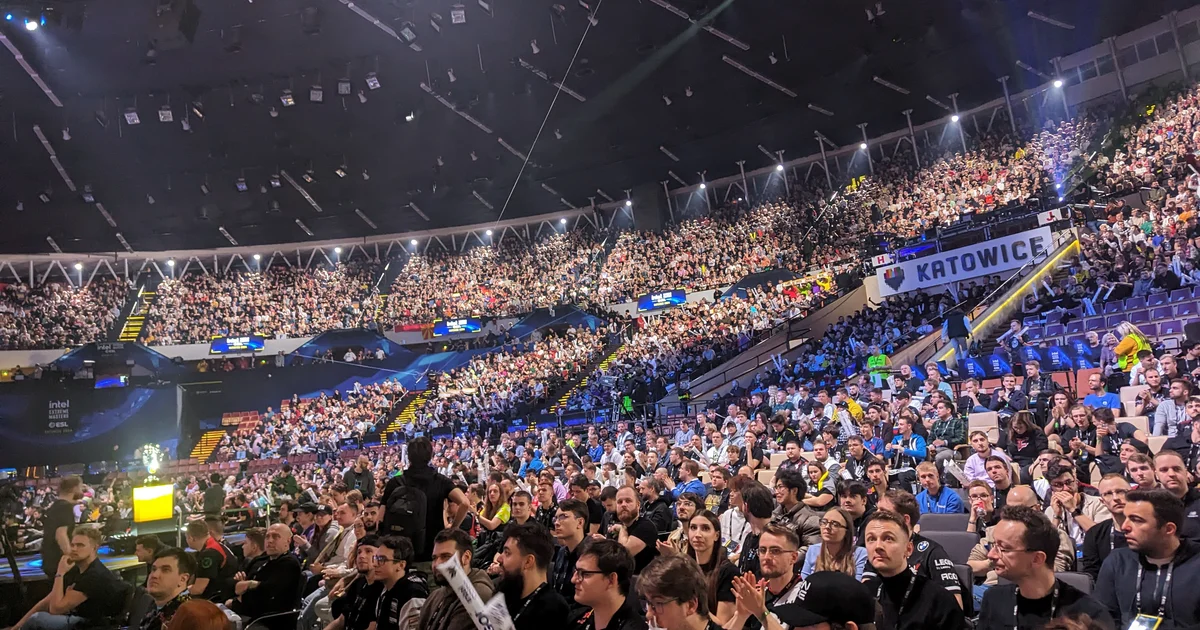
The fix, clearly, isn’t to scale back the online experience—it’s to elevate the in-person event by making it meaningfully different. That realization hit me during the IEM Katowice Counter-Strike 2 tournament in early February, when it became clear that people inside the venue were getting a level of production that outshined the esports broadcasts I’d previously watched from ESL and other competing organizations.
To ensure the live portion feels distinct, tournament organizers and production team ESL often pause the broadcast for skits, crowd participation, giveaways, and other entertaining features. This strategy turns a trip to the arena into something you can’t fully replicate by simply watching the stream on a big screen with the volume turned up. These segments are frequently hosted by familiar broadcast faces, giving arena attendees the chance to see commentators who are usually tucked away in casting booths above the stage—and even connect with them briefly during spontaneous photo ops and autograph sessions before or after certain bits, which is a particularly sweet perk for those holding pricier floor tickets.
Of course, not every intermission lands well—some audience volunteers can spark real energy in the hall, while others may derail what could have been a promising segment—but when recognizable personalities are involved, even sponsor spots from Counter-Strike skin trading sites can end up feeling like fun detours.
And ESL isn’t just leaning on these extra pieces to keep the show moving—they’re also using massive screens and speakers built for heavy, body-rattling low-end. In-game bomb detonations are amplified with bursts of smoke or flames. While multiple displays show the live stream during quieter stretches (when there aren’t special custom segments), there are also vertical portrait-style screens dedicated to player stats, timeout progress, and sponsor branding. In addition, long LED strips track the bomb and defuse timers.
Even with an arena that isn’t packed to capacity, it still delivers a truly immersive atmosphere. But once you add the chants and thunderous cheers from thousands of Polish and international supporters backing their teams and celebrating standout plays, the event stops feeling like standard live competition and starts to resemble theatre.

That said, online viewers aren’t left out either. There’s clearly strong demand for fresh ideas to fill downtime, and you’ll see everything from light, engaging interviews to full-scale comedic skits sharing time with thoughtful recaps of earlier games and statistical previews for upcoming matchups. Those pre-recorded contributions matter, too—they give talent and production teams a real chance to take breaks between matches instead of endlessly trying to stretch the schedule. And there’s no question that having this kind of tailored material boosts watch time compared with a simple loading screen.
Once more, not every segment is a success, but the number of misses is clearly lower than it was when esports first began experimenting with this sort of content about half a decade ago—and some skits even end up sticking in viewers’ minds more than the matches they come right before.
All of this polished presentation takes a lot of work behind the scenes. The physical stage is assembled while the tournament group stages are still happening weeks earlier, and a sequence of dry runs happens before each live production to confirm that displays, cameras, microphones, interfaces, effects, and everything else are running properly. (One of my favorite moments from the event was hearing a mock victory speech from a production manager who was suddenly placed in the role of a team captain—then describing on stage how his made-up squad bounced back from an early loss to win the match, with a meme-heavy match overlay in the background.) More than 4000 staff members are involved at IEM Katowice, which is a remarkable figure even when you consider the main Counter-Strike event is paired with a smaller StarCraft competition and a free expo for attendees.
Beyond the thrill of the Counter-Strike and StarCraft matches themselves, it’s been fascinating to see esports production operating up close—and I’m curious whether other tournament organizers will start using a similar model for their live events as the scene keeps evolving.
Disclosure: Acer UK covered travel expenses to Poland and accommodations in Katowice throughout the tournament.