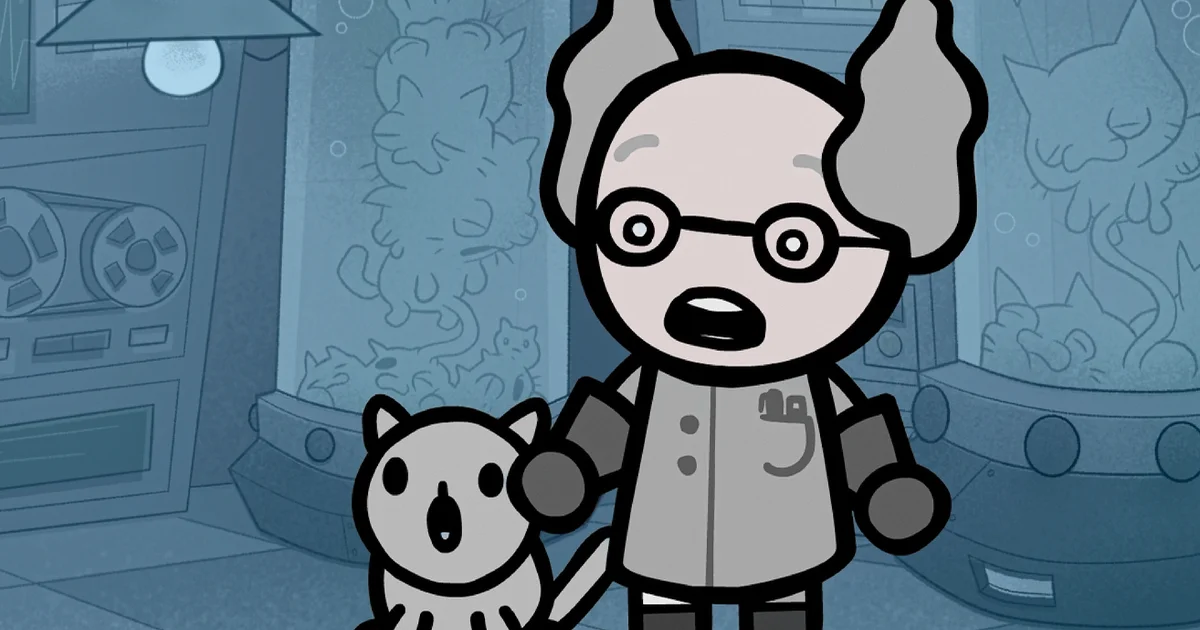
About two minutes in, Mewgenics unexpectedly places two cats in front of you, and they quickly get busy in a way that’s far from subtle. In a blink, a slippery kitten slides across the carpet—an unruly mix of traits passed down from its scruffy parents. By the time a few days have passed, it’s evolved into a mage able to throw fireballs. It will also develop feline AIDS.
That’s the vibe Mewgenics delivers. Created as a partnership between Edmund McMillen and Tyler Glaiel, the game feels rough-edged and ruthless—nasty and repulsive, yet somehow oddly irresistible. It’s also an exceptionally deep, turn-based RPG, packed with wicked humor and built around an unfiltered depiction of cats, plus a genuinely uplifting message about the value of even the most disgusting-looking creatures.
I made it through haunted cemeteries and dim caverns in just a few hours. I went up against zombie kittens, hippos dealing with heart problems, and literal excrement. Even during this short slice of the game, you can already sense how broadly Mewgenics is set up to expand. This preview felt like looking through a gap in a door.
From the latest release by the mind behind The Binding of Isaac, you form a squad of four cats and assign a role to each. Options range from tank and rogue to fighter, with every class leaning into advantages tied to traits a cat might naturally have. My cat, Catsune Miku (randomly generated, thanks), has strong intellect, so I set her up as a mage. Miku gets a basic fireball spell, plus a passive ability that seems to define her. Maybe she inherited it from her parents; maybe it’s just part of who she is. With Miku, her burns hit harder. Lucky her! Now imagine another cat—Fred—who’s tough but not very bright. You’d make Fred your tank.
These examples are pretty straightforward, but you can still build some genuinely monstrous combinations. If you spot a cat with a passive that strengthens minions, you can load them up with items that summon minions—or make minions stronger—until that cat becomes a powerful archetype in your run.
You then set out on your journey through city streets, where the early stages feel fairly straightforward as you move across tiles that trigger different events. You land on a loot tile and receive a stone that boosts intellect—an amazing find. You use it on Miku, because in fights, intellect controls how much mana she regenerates each turn. You also pick up a head brace that raises toughness but sharply lowers intellect. Fred becomes a solid wall, but his intellect drops so much that he can’t read anything. So it goes.
Random events show up as well. These RPG-style skill checks target one of your four cats to handle a specific problem. Miku finds cash and is smart enough to grab it. Fred later faces the same kind of roll, but with his low intelligence you get scrambled text, so you can’t tell which choice is right. You pick wrong, and Fred ends up hurt. As you work through Mewgenics, the resources you’ll be chasing most often are money, items, stat boosts, and food.

Eventually, you hit a battle—and this is where Mewgenics really turns loose. You’re set on a grid of squares where you can move, attack, and generally cause chaos. Your party starts on one side, while enemies and assorted mess—debris, food, excrement, and more—sit on the other. At first, the opposition is simple: chunky rats, other cats, maggots, and flies. Up to this point, it’s a gross-but-familiar TRPG combat setup, which won’t surprise anyone who knows McMillen’s style.
Still, it’s the environment and item systems that push Mewgenics into a different league. Say Miku throws a fireball at an enemy and lights some nearby grass. Fred, fighting up close, can then use a special ability or a weapon he’s equipped with to shove that opponent into the flames. Or, if you go with an ice spell instead, the grass can turn into sharp grass, adding yet another danger zone.
Items and abilities mesh with the surroundings so intensely that I kept finding myself thinking about fresh, creative ways to deal with the fights in front of me—rather than simply wiping out every enemy using the spells and attacks at my disposal. The closest comparison I can offer, even if it’s a bit rough around the edges, is Divinity: Original Sin and its similar habit of encouraging you to mess with the battlefield. Mewgenics even changes how bosses behave depending on random weather, giving them entirely new move sets. Impressive.
Once you clear those fights, Miku levels up and you’re offered four choices: active abilities or passives. This is where you can shape your build on the fly—either committing to your original plan or pivoting to something new based on whatever fate decides. Miku is shown a passive that boosts her damage when her mana is full, so her first turn won’t be spent casting her fireball. Instead, she’ll use that turn to reach the threshold and secure the bonus.
Then you come to a fork: take the straightforward route or attempt the harder one. Every level I played included this kind of decision, holding tempting rewards behind tougher encounters. You take the risk. The upside is that you score a shotgun—something Fred is going to love. The downside is that Miku gets knocked out during one of those tougher fights. That doesn’t mean she’s gone for good; it only means she’s ended up with a broken leg and a lasting reduction to dexterity.
Even so, you eventually reach the end of the level and defeat the boss. After that, you can pick whether to continue to the next level or return home with what you’ve collected. You decide to go back, bringing your hard-won loot along with you. Your supplies—food and money—are kept safely stored, and your cats can finally relax at home, retired for the time being.
After the day wraps up, Fred and Catsune Miku mate and produce a kitten. The new arrival inherits Miku’s burn-boost passive, which is great. From there, Miku can either stay in your home base—a disgusting house packed with filthy cats—or be sent to one of numerous NPCs who will grant you permanent unlocks, side quests, and other rewards in return. Still, the situation doesn’t have to stay fixed. Maybe Miku ends up with twins—nice. Maybe she’s asexual, or maybe she just doesn’t get along with Fred. Perhaps she’s permanently disfigured after a clash with Fred, or maybe she’s simply gay. All of these outcomes are possible, and each one changes what you’ll face on your next trip through Mewgenics.
It can feel like a lot at first, and in truth it’s quite substantial. I can assure you the game eases you into the learning process at a steady pace. Even if every one of your cats falls, a stray cat will still show up at your place each day. Despite its many moving parts, Mewgenics (at least during its opening stretch) doesn’t end up being overly difficult. A lot of it comes down to how effectively you can play to your cats’ strong points—so the responsibility shifts to you, the player, to figure out the best way to use your strange little companions.
What McMillen and Glaiel have put together with Mewgenics is a game where cats take part in battles, yet no cat is ever treated as truly worthless. At the same time, it gives you the chance to carry out genuinely disturbing deeds with your feline companions. You might end up with a mangled, unappealing cat—too scatterbrained to read and dealing with a grim inherited condition. Some people might call that cat a write-off, but a closer look makes it clear that the animal is stubbornly resilient. To me, that “pointless” cat looks like a five-star tank!
So we reach what I consider to be the heart of Mewgenics, particularly for anyone who keeps cats: your pets aren’t perfect creatures who never get it wrong. They can be loud, chaotic, and greedy. Still, every longtime cat owner will tell you that even with those quirks—and with challenges that are genuinely upsetting—they can’t help but love their feline friends. You learn to see what makes your cat special, beyond every problem they bring along.
That idea is at the center of Mewgenics, in both its initial story and its broader structure. Each oddball cat that arrives at your door has the capacity to cut through the game, powered by plenty of affection and care. They’ll fight ghosts and spiders, explore the wilderness, and even help guard your home against outside dangers. And when they come back, it doesn’t matter how beat up they are—they’ll still land in a comfortable place with an NPC. Even when they’re no longer at their peak, they still matter. I think that’s a meaningful message. Especially in a game loaded with toilet humor. In fact, maybe that’s *exactly why*.
If you couldn’t guess, I wrapped up this preview feeling genuinely thrilled about Mewgenics. When my preview access was taken away, I felt genuinely disappointed. It seems like a strong candidate for something special. After years of work, I’m only hoping this developer duo can manage to deliver on what looks like an excellent release next year.
Mewgenics is scheduled to launch on February 10th, 2026, on PC.