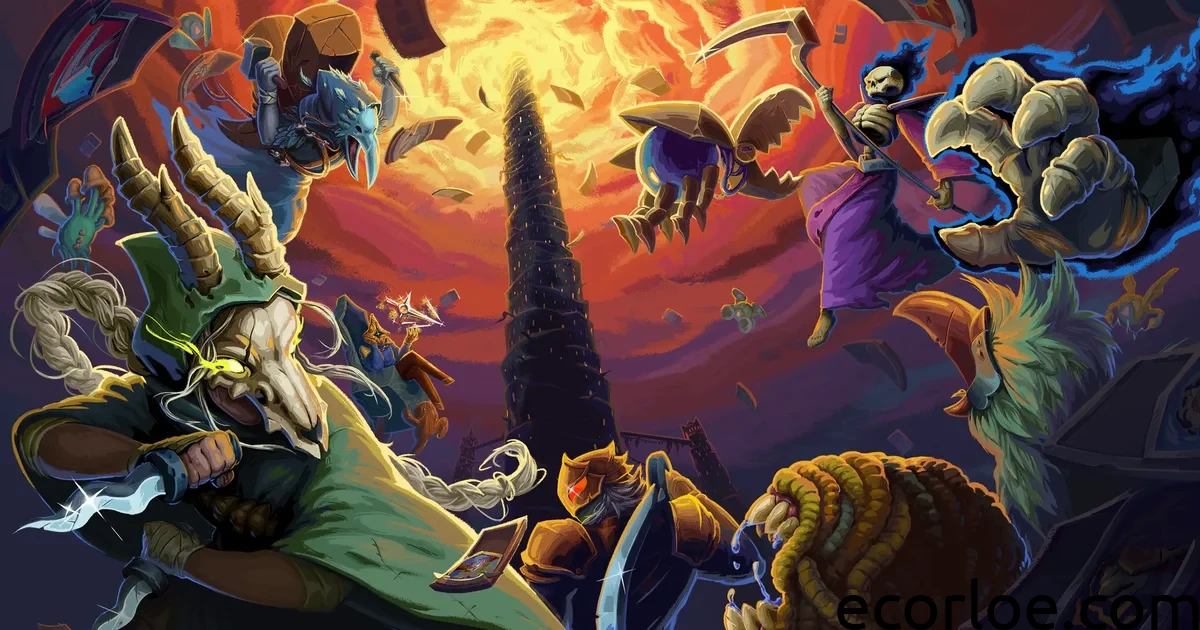
Years of careful study back a continuation that feels oddly familiar at first glance. The fresh additions carry real weight, but what truly makes a difference is the confidence in what this distinctive card battler sets out to do. Cruelty has never been this satisfying.
Before Slay the Spire 2 entered early access, I was uneasy, largely because what I saw seemed to mirror the original. I noticed there were changes, of course, yet they didn’t strike me as significant enough to warrant a completely new release. Then a nagging thought crossed my mind: had Mega Crit—its studio—run out of ideas? Not at all. I was wrong, and I’m genuinely glad I can say that.
Those layers of novelty I assumed would be paper-thin turned out to be far more meaningful. Look at the improved look of the game: it might not scream “different” when you freeze a frame, but once you’re watching it play, it’s immediately noticeable. Slay the Spire 2 feels more energetic than the first. Fish-like foes thrash around as if they’re swimming through the air. Shadowy wisps flutter about creatures, clinging to them. Magic spills out from glowing eyes. There’s motion everywhere—it seems to breathe and surge constantly, while still keeping the lovingly handcrafted feel that made the original so appealing.
Then there are the brand-new characters, The Regent and the Necrobinder. They don’t feel standout merely because Slay the Spire has previously added new characters (RIP The Watcher, who doesn’t show up here). What matters is how these newcomers bring fresh ideas and a wider set of decks to experiment with. You can summon helpers—like a giant skeletal hand or a hovering blade. There’s also a new damage-reversal type called Doom, which starts at zero and rises until it wipes out enemies once their health drops under a set threshold. On top of that, stars introduce yet another resource, effectively giving you two separate pools to spend on cards, which can become extremely powerful when you manage it well.
The Regent and the Necrobinder may be the most expressive characters the Slay the Spire series has produced so far. The Necrobinder floats beside her adorable Thing-like hand partner, Osty, while the Regent sits cross-legged on a massive throne. He’s propped up by two strained servants, chin resting on his fist, looking as though he’s bored out of his mind by the whole situation. That quiet indifference lands perfectly. They’re full of personality.
And the multiplayer component? It’s a true game-changer, as I mentioned earlier. Teaming up to fight the Spire with another player (with up to four joining) adds a completely different side to the experience. It’s not only about how you can back each other up by building decks that work together or using multiplayer cards that boost your ally. It’s also because you no longer have to shoulder every challenge by yourself. Sure, it sounds obvious, but it works extremely smoothly—the whole game feels that way. It’s sharp, quick, responsive, and packed with small, satisfying conveniences. For instance, you can see your character’s pointing hand when you’re figuring out who gets which chest relic, or you can jot notes for one another directly on the game’s map. Multiplayer is probably the reason Slay the Spire keeps showing up on Steam’s Most Played list.
Still, even with all these additions—maybe even because of them—there’s something subtler that I value just as much. The experience is grounded in a hard-earned sense of mastery. While it revisits the Slay the Spire formula without changing its core idea, Mega Crit has applied everything it’s learned over the years with real precision. It’s as if Mega Crit has been watching us for ages, carefully figuring out exactly where to press to keep the tension high.
Let’s pause and zoom out a bit. What actually defines a Slay the Spire run? You might not be able to explain it cleanly, and that’s understandable. It also helps to revisit why this card-game blend is so compelling in the first place. Slay the Spire is a roguelike deck-building game—the roguelike deck-building game, really. It didn’t just arrive in the genre; it helped create it. The premise is simple: you get one life to climb a spire, clearing a string of fights by playing cards. Those cards tie directly into your character’s theme. After every battle, you choose a new card to add to your deck. If you lose, you’re sent back to the main menu—but each failure still unlocks cards and other resources to help you on your next attempt.
The real pull comes from mixing variety, tough decisions, and the ongoing search for that streak of luck that lets you seize control. You’re chasing chaotic math: that electrifying moment when what used to beat you suddenly gets overtaken by your own plan. So Slay the Spire keeps dangling the chance to gain power. Will you take a risky challenge for a strong relic (a passive boost)? You might not walk away safely. Do you skip healing at a Rest Site so you can upgrade a card? You’re always teetering on that edge.
At its heart, Slay the Spire 2 doesn’t change the foundation, but it does include updates. There’s a new fortune-telling mini-game built to award rewards, plus plenty of new cards and relics to discover. Even the returning character classes—the Ironclad, Assassin, and Defect—have been refreshed in a way that encourages you to rediscover them, even if they aren’t fully new.
One major addition I’m especially happy to see is the chance to interact with divine beings at the start of every Act. These encounters resemble the moments with Slay the Spire’s mascot, Neow—the many-eyed whale. You first meet her at the beginning, where she offers a choice of powerful boons, and now she’s not alone. At the start of each later Act, you’re met by an equally strange lineup: a scarecrow, a melting dragon, a living rainbow, and more. Mega Crit seems to have decided these interactions are a far more engaging way to reward you immediately before a boss fight than a static pile of loot—and that conclusion makes sense. The visuals for each encounter are elaborate and vivid, and the mechanical options you’re offered are genuinely surprising. Reroll each card reward once; gain 999 gold; Cook at Rest Sites—an entirely new choice. These rewards definitely aren’t the usual fare.

These divine interactions are fresh and unfamiliar. Here are a few that I’ve come across—I’m sure there are more.
The divine encounter most likely to become legendary—or at least meme-worthy—is Vakuu, a demon that looks like a grinning, emaciated corpse. What makes him stand out is that he asks for a steep price for his rewards. In my most recent run, he gave me one extra energy per turn, which is incredibly strong since you typically have three energy per turn. But there’s a catch. If I take his offer, Vakuu has to play the first round of cards for me in every
…battle after that. I’ve never come across anything like it in a card game before.
With a balance as delicate as Slay the Spire 2, taking risks to push forward is genuinely dangerous (and yes, I went ahead and did it…). What sets Slay the Spire 2 apart is its bold, slightly unrestrained take on the genre.
It’s as if Mega Crit has watched us for years and learned precisely which pressure points to go after.
Throughout the run, you’ll stumble into devious encounters in puzzling circumstances, along the path where you’ll also come across some of the game’s new card modifiers. You can even craft your own card—something I haven’t seen before—so you can add effects like Replay (letting cards trigger more than once) and take away restrictive keywords such as Exhaust, which makes cards disappear after they’re used. There are now more options to tailor a deck to your preferences. These strange events can feel tempting, yet in Slay the Spire 2, danger always shows up. You might run into an event that randomly discards a card from your deck, forcing you to give up health just to keep any say in what gets lost. And in a one-life game, how much pain can you realistically afford?
The game’s combat lineup has also been updated, introducing fresh foes that, in my view, deliver smarter challenges. It’s as though Mega Crit has been tracking our play and picking up on the things we like—and the most effective ways to counter them. Are you trying to keep your deck lean (a familiar approach for controlling variance)? You may find that Mega Crit has started sending enemies that clog your deck with unpleasant “bad” cards. Are you leaning on zero-cost plays and extensive drawing to stretch your turns as far as possible? You might not enjoy being met by opponents focused on limiting how many cards you can play. And if you’ve been investing in upgrading your deck, here’s an enemy that temporarily undermines your efforts. Just as we build decks meant to survive the spire, Mega Crit has designed Slay the Spire 2 to dismantle those plans.
It’s probably harder to surprise people a second time, since well-known ideas often lose their spark. Still, I can say without hesitation that Slay the Spire 2—yes, truly—plays better. It looks sharper, the character lineup feels wider and more interesting, and multiplayer is in the mix. But what genuinely delights me most is the sly, manipulative side of Slay the Spire 2. This franchise has always been about displaying our cleverness—that’s the heart of what drives it. It’s a battle of wits between player and game, and that kind of face-off is only enjoyable when your opponent is just as sharp, which this game certainly is. I’ve burst out laughing more times than I can count at the nerve of a newly discovered encounter. There’s a real thrill in simply uncovering what’s waiting around the next corner.
One point worth stressing, though: Slay the Spire 2 is still in early access. Still, it speaks to the quality of the work—its stability and fine attention to detail—that Slay the Spire 2 feels so well refined you can almost forget it’s unfinished, which is a high bar for early access these days. Even so, there’s plenty more coming. Expect differences in Acts, mod support, additional cards, events, and more artwork (there’s a lot of placeholder art in the Timeline, and I’m starting to grow attached to it). And, of course, there will be the necessary changes and improvements that come with properly tuning and balancing a game built like this. Eventually, it should also make its way to consoles, like Slay the Spire 1—though that’s something to look forward to later.
In the end, there was no reason to worry. In Slay the Spire 2, Mega Crit demonstrates that it understands exactly what keeps this card game feeling lively and attractive—and why so many people enjoy picking it up. The core concepts stay fresh. Even if the overall formula hasn’t shifted dramatically, Mega Crit has.