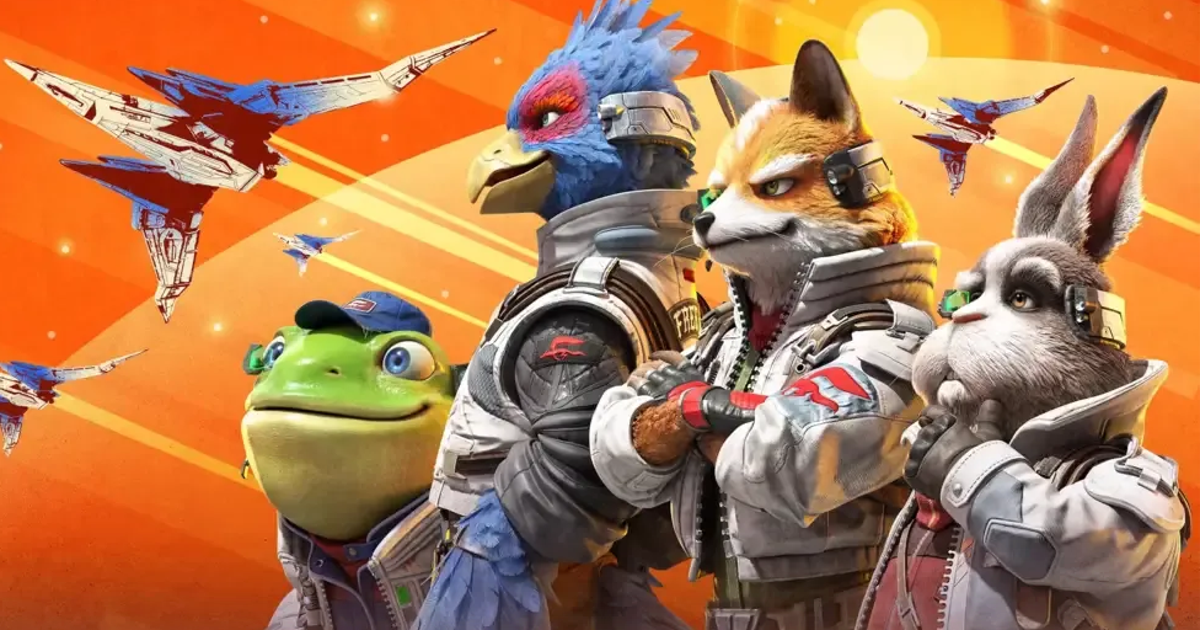
Velan’s remake, rooted in tradition but executed with real skill, leans hard into the spectacle and delivers impressive results—though the story could use a pinch of sharper insight.
I’ve just finished Keza MacDonald’s outstanding Super Nintendo, a mostly warm-hearted book about the company that “helped the world enjoy itself,” yet its final pages add a note of caution that feels entirely understandable. MacDonald voices a worry—one I share—that Nintendo has been playing it too safe for a while, and that (aside from a handful of exceptions) its release cadence has grown noticeably conservative. Clearly, it’s time for the next Splatoon, and I’m not talking about Raiders. On the hardware side, Switch 2 doesn’t mark a particularly bold step, and so far its games largely mirror that approach; Super Nintendo rightly laments the missing “freewheeling creativity” associated with the Iwata period in particular. As MacDonald puts it: “Nintendo knows full well the pull of nostalgia. But if it doesn’t keep pushing new ideas while respecting its legacy, Nintendo won’t be able to hold onto its cherished place in popular culture.”
The importance of this context became clear the moment Star Fox was announced—another entry that Nintendo seems determined to keep returning to. Likewise, Super Nintendo points back to the late, dearly missed Satoru Iwata’s warnings about the risks of clinging to the status quo, along with his stance during the Wii and DS years against the idea that “advanced graphics” were the surest route to progress. Iwata said: “This used to be the golden rule that drove success, but it no longer holds.”
With that in mind, I went into Star Fox expecting the worst—only to walk away thinking: hurray for advanced graphics.
There are two main reasons it works as well as it does. First, it’s built on a game that already had a strong foundation. Velan Studios—a team created by Vicarious Visions veterans, who are no strangers to Nintendo ports—picked up on that and made the sensible call: if it isn’t broken, don’t try to mend it. As you’ve likely done by now, you guide the lead squad through the Lylat system to take down the sinister Andross, blasting through waves of enemies both in space and on land, while dodging missiles, asteroids, and a range of other dangers—whether robotic or living. It still feels brisk, upbeat, and charmingly old-school, carved into compact, highly replayable chapters, with several routes to the climactic confrontation depending on whether you complete or miss specific objectives. There’s still genuine excitement in slipping between those stone arches and tracking Falco through the waterfall, or in stopping the bomb countdown on Fichina with only seconds left. And it’s still entertaining how quickly you can wipe out huge end-of-level bosses—either using fully upgraded lasers or unleashing your entire stockpile of bombs.

The second big reason this Star Fox lands so effectively is simpler: it’s been made by a studio that truly understands the kind of game it’s tackling, and it leans into that strengths. Velan gets that the on-rails shooter framework is a chance to fully deliver cinematic spectacle. It understands that when the camera is fixed—either normally, or during the game’s occasional switches to All-Range Mode for brief dogfights and boss encounters within a fairly tight space—it can heighten everything happening around the player. Velan pushes that advantage without holding back. Since memory can be unreliable, I can’t say I can recall feeling this energized by so many of the stages in particular. Katina’s mothership looks tougher than ever, pouring out fighters in huge numbers. Sector X’s abandoned base feels massive as you pick your way through the wreckage. Choose the warp path on Meteos and the destination turns into a striking, kaleidoscopic showpiece—an authentic visual highlight. It’s not hard to argue that this matches the creators’ original vision, before the boundaries of the N64’s hardware forced certain compromises. Even better, the Cornerian fleet actually looks like a broad space armada this time, rather than stacks of grey, oddly arranged cardboard.
Admittedly, being this faithful to the source material can cut both ways. Returning to places like Corneria may lock it in your mind as one of the standout tutorial sequences (I’d place it alongside World 1-1 as a tight introduction to a game’s core mechanics and an example of worldbuilding at its finest), yet the mid-level twists don’t quite deliver the same surprise they once offered. On top of that, the weaker chapters don’t do much to excite—despite the creatures rising from Aquas’s gloomy depths looking more eye-catching than ever, the stage itself remains a sluggish disappointment. (Then again, the toxic surge in Zoness right after—complete with snake-like creatures inviting you to dart beneath their sweeping silhouettes—makes the detour feel almost justified.) Beyond that, just one level seems less impressive than earlier versions: it may come down to screen size differences, but in my view, Solar’s fiery, flaring surface looked more dangerous on the 3DS.
Beyond expanding the scale and reach of encounters beyond almost any game in its category—if we set aside Treasure’s impressive Sin & Punishment: Successor of the Skies, that overlooked gem from the Wii era—the missions play out largely the way you remember. As a result, muscle memory should help a lot of players settle in fast: anyone familiar with (and who has already replayed) the original or its 3DS edition will know exactly when
…to plunge in and rise for the stat-enhancing rings, or to grab the laser and bomb pickups that sharpen your attacking options—meaning the different challenge mode tasks can be finished far sooner. To be candid about my fifty-first year, I’ll admit Expert Mode seemed a touch out of reach for me, though plenty of players will likely welcome the chance to put themselves to the test against the demanding medal goals and objectives laid out here. A quick note on
The game’s first-person perspective: I’m confident it’ll find its supporters (Star Fox Zero fans are probably among them), and the responsive mouse controls make it easier to aim more precisely once you’ve dialed things in. Still, it’s also frighteningly simple to nudge the view just a bit too far and accidentally slip back into third-person mode.
Aside from the stages themselves, I’m glad Fox and the others haven’t been pushed as heavily into glossy spotlight the way they were in The Super Mario Galaxy Movie. They’re mercenaries first—rough around the edges, after all. The upgraded interludes, though well put together, come off a little samey in the end: the dialogue largely doesn’t bring much humor (which, at least, matches Nintendo’s more recent cinematic output). For next time, it’s something that could stand improvement. What I can say with confidence is that the scenes do a decent job setting tension and danger, and they handle Fox’s uncertainty about where he’s headed well enough—but don’t expect major growth in character. The no-nonsense, pragmatic Peppy still underlines the case against nominative determinism, while the newly refined Slippy remains disarmingly enthusiastic (and just as poor at flying) as ever. And Falco is still, in essence, unbearable—there’s simply more of him this time, which only made me even more motivated to annoy him by taking out his targets.
Beyond the single-player mode (which I’ve genuinely loved in short sessions, and which has repeatedly stopped me from finishing this review in one sitting), there are four-on-four bot battles and online skirmishes. The three arenas included are clearly distinct, but aside from the brief thrill of teaming up as Star Wolf’s mixed roster—and, if you have a USB camera, giving yourself a furry makeover—there just isn’t enough here to keep your attention locked in for long. At least, that’s how it played out for me. It reminded me of the kind of satisfying yet clearly tacked-on multiplayer extras that defined the Xbox 360/PS3 period: features that might pull in a small, committed fan group, but would probably struggle to keep a healthy player base a few months down the line.
In the end, it’s the campaign and its many challenges that you’ll probably come back to most, and Velan has wisely spent most of its effort there. As polished in its execution as it is careful in its overall setup, Star Fox comes close to the top tier of its particular subgenre. A win for nostalgia over reinvention, then—though you’d hope that success has given the series’ creator the chance to work on a sequel that delivers a bit more of the forward-looking side.
A copy of Star Fox was supplied for this review by Nintendo.