Explore every nook of a spellbound island in an adventure shaped by classic influences.
There’s a game here that genuinely captures the essence of going on an expedition. It also seems clear that bringing it to life took serious effort. Mina the Hollower required six years of development and building—moving from what looks like an early programming prototype into a sprawling journey across a carefully constructed island. Along the way it blends platforming and combat with puzzle-solving and a surprisingly immersive focus on world-building. You can feel echoes of Zelda and Bloodborne in its DNA. You’ll square off against tough enemies and flip through the in-game newspaper. In short, those six years of creative work show up everywhere: in the detail of the places you travel through, and in the depth of the secrets and lore scattered across the island.
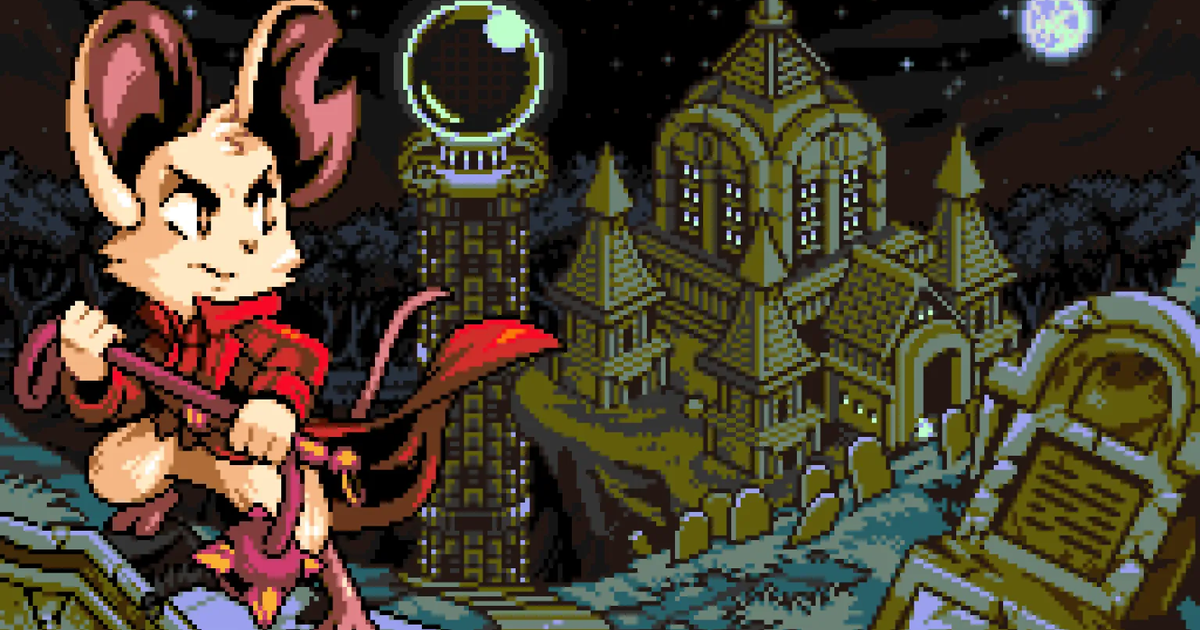
At first glance, it may feel like a lot—and honestly, it often is. The good news is that the core ideas are fairly direct. The mood leans into gothic horror, though it comes with a delightful edge. You’ll encounter tombs, unsettling homes, and enchanted farms, and you’ll even find yourself facing an enraged spirit that unleashes plenty of otherworldly mayhem. Still, you’re a little mouse with determination on your side: you leap over gaps and swat down vampire bats, but you also crawl along narrow ledges and discover new zones by slipping beneath tables and chairs.
The structure is exactly what a well-made Zelda-like should deliver. All over the island Mina inhabits, there are a number of devices you have to activate. Each one points you toward a different area—endless autumn, a decorated graveyard, and more—so you move through distinct environments while contending with new enemy types and major bosses. From a hub town that keeps unveiling additional details about itself, you branch out toward these objectives and, in turn, open up new paths in multiple directions. The twist is that reaching fresh locations requires you to figure it out for yourself, using your tools, talking with the people you meet, and checking the daily newspaper for clues. And yes, writing things down as you go.
This part matters a great deal. Mina’s go-to weapons include whips, shield bashes, or gigantic doom hammers. Each of them can be strengthened and improved in engaging ways. Still, the single most important item I carried was a sheet of paper and a pen. This is a game that thrives on open-ended situations—on noticing things you aren’t equipped for right now, or more often, things you simply haven’t learned how to interpret or approach yet.
There’s a book on a tall shelf in the library. How are you going to grab it? There’s a blockade that appears to cut off the only route to Septemburg, the train station that stays frustratingly out of reach. The beach shows you where you might want to go next, yet no clear way leads you there. Every one of these clues has to be taken seriously. Just like how you’ll need to keep track of every house in the main town with rooms you can’t access yet, you’ll also need to pay attention to every slightly suspicious mirror, and every NPC who gives you something that feels meaningful—even when it sounds a bit nonsensical.

To me, this captures both the heart of the challenge and what makes Mina the Hollower so distinctive. Its makers—shaped by the intertwined, fascinating worlds of Zelda and Bloodborne—are willing to throw you off balance just enough. They’re bold enough to offer plenty, yet somehow never quite everything, while still giving you the time and room to sort it all out. It’s a sign of assured game design and a welcoming embrace of the genre: the kind of genre where you repeatedly run into things you can’t reach yet, as part of a lineage that ultimately traces back to a specific lake from the original Zelda. But it’s also a demonstration of trust in you, the player. You’re a tiny mouse facing an entire island packed with terrors—yet you can do it. You can fight through battles, jump across gaps, and uncover every secret.
(Years ago, someone told me that the biggest “most important” number in existence—I might be stretching the details here—was 7+/-2. They brought it up in connection with human memory, or at least short-term memory. Most people can hold roughly seven items at one time. Some manage closer to five. A small number can push up to nine. Within that range, you might find phone numbers, shopping lists for quick stops, beats in a narrative, and items on an itinerary. I can’t confirm how accurate any of that is, and even while I’m writing this, it still feels like the kind of oversimplified advice you see on TikTok or Instagram Reels. Still, the point is this: if you’re the sort of person who gets anxious or overwhelmed by what your memory can hold, Mina the Hollower shouldn’t scare you off. It gives you far more to track than you might expect—but then you end up stuck in a good way, wonderfully and creatively stuck. From there, you can work your way through each dead end in sequence until you realize you’ve checked them off one by one.)
I should add one thing: the game isn’t only about memory and puzzles. That’s just the side of it that gives me the easiest access to its world—its creativity, and the feeling of entering a place built from vivid pixels. More often than not, you’ll be thrown into intense, sometimes relentless platforming sequences. The game includes gaps, falls, spikes, and ledges: some are slippery, others are surrounded by lava, and many are ready to give way beneath your feet. Everything is presented in a top-down view, which adds another hurdle when it comes to timing jumps and figuring out which walls you can clear and which ones are simply too tall. Enemies may come at you from the ground or hover above it, so you’re constantly planning how to deal with them. (Some will even change their approach on the fly. As for enemies, my favorites are tied between the wailing turnip and the zombie snowman. That should hint at how varied the roster is.)
There’s also the digging mechanic. As a Hollower, Mina can burrow into the earth and come up somewhere else.
You can only stay underground for a short stretch, so timing matters a great deal.
To top it off, besides using this as a stealthy escape move, you’ll also need to figure out how resurfacing changes your jumps—crucial in areas where you can tunnel beneath obstacles, but also where there are openings you must navigate.
You can bore down under specific objects to either destroy them or retrieve them, and you can also dig in certain spots to uncover some of the game’s endless hidden chambers. It’s all thrilling, yet confusing to move through—especially once combat enters the picture. My experience felt like threading a needle, slipping in and out of the “fabric” as I went. That comparison helped me sort through what was possible at any given moment, whether I was aboveground or below. It also kept me moving, letting me face some of the toughest moments in the game without getting stuck in analysis. The game consistently urges you to lean into speed and aggression: the health system pushes you to attack enemies to obtain plasma, which you can then convert back into HP. Keep moving forward!
Along with opponents and bosses—including hidden and optional ones—and the process of assembling this huge world, discovering in a From Software style how different landmarks link up, there’s also no shortage of tools, upgrades, and bonuses—or, in the game’s own terms, trinkets and sidearms. Sidearms open up extra weapon options, though they’re easy to lose or run out of. Trinkets are more complex, letting you equip modifiers that reshape your character and support different builds. Are you looking to lessen the first lightning strike you run into, or to unleash a harmful pulse while you burrow? With plenty of synergies and pairings available, you can tailor Mina to suit a wide range of playstyles.
You can find all of these items across the world or pick them up from shops, so you can swap them in and out whenever you head into the game’s underground counterparts to From Software bonfires. After a while, you’ll strengthen this area enough to unlock a map as well. That said, the map only goes so far—it shows the broad layout of each region, but it doesn’t spell out the clever ways they connect.
In the end, what truly makes the game shine is uncovering those links for yourself. Even though I enjoy fighting bosses, I still remember a standout early moment: one part of the island suddenly dropped me into a preview of another, or I unlocked a train. That train captures the game’s appeal perfectly. It’s not simply a way to fast travel—it’s also a train! Using it to get around lets you wander through the cars, look around, talk with characters, and explore more of the world. And sometimes…?
Everything is wrapped in charming chiptunes and Game Boy-style pixel art, bringing a real sense of nostalgia. The connection here is layered. This game wouldn’t exist without a handful of iconic 8-bit releases, yet it doesn’t only reference those classics—it also recreates what it feels like to first discover them, along with the wonder that comes with that experience. It even reflects the bold creative leaps and aspirations of the fans behind them.
A copy of Mina the Hollower was provided for this review by Yacht Club Games.