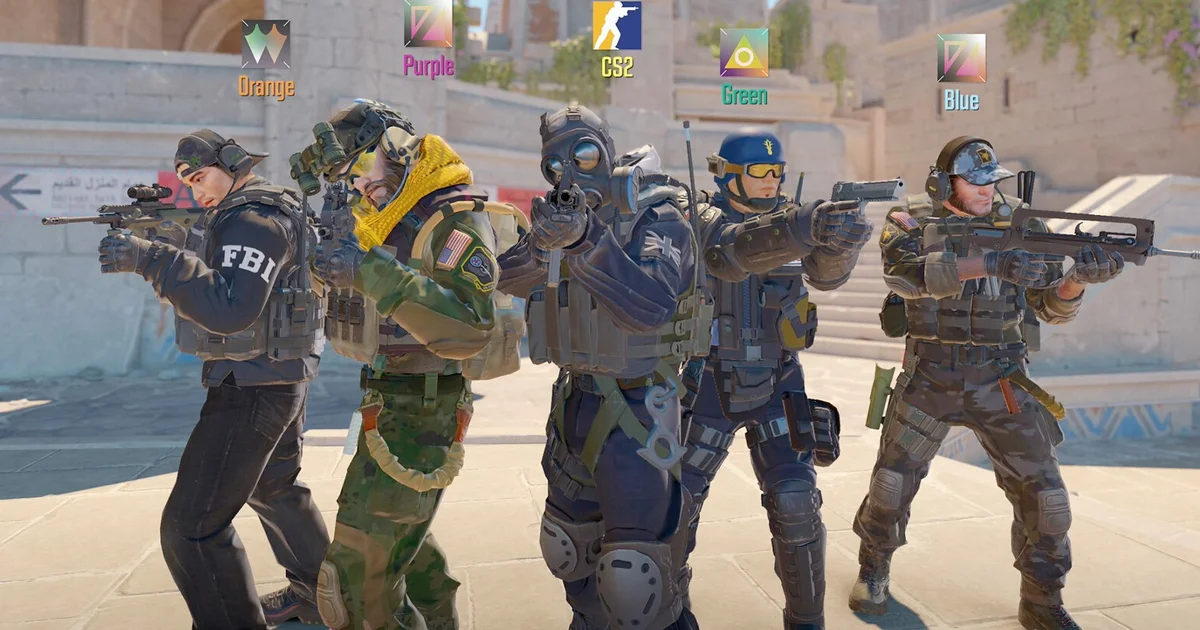
A week ago, Letitia James, New York’s attorney general, announced that the state intends to bring a lawsuit against Valve over its use of loot boxes in Counter-Strike 2 and Dota 2. She argues that both children and adults are exposed to “illegal gambling,” comparing the loot box system to slot machines and Valve to a casino.
This is an important move for the state, no doubt. But what could the lawsuit mean for Valve and the people who play its games? To get some perspective, we spoke with Justin Jacobson, a New York attorney who works in the video game industry. Jacobson says the key issue will come down to whether New York can establish one pivotal point: do digital items actually have real-world value?
“In other places where similar cases have advanced, like the Supercell case and Kater v Churchill Downs. Those legal disputes largely concluded that a virtual item isn’t a thing of value; its value is limited to aesthetics, with nothing beyond that,” Jacobson said. “You could argue, ‘That skin is highly prized,’ but it’s not valuable in the same way a purchase of food is valuable.”
That New York is taking action against Valve is noteworthy on its own. Compared with other states, New York’s legal framework has distinct features that may matter during litigation. For example, New York’s gambling rules differ in meaningful ways from those in much of the rest of the United States.
“Its gambling rules don’t require that something be freely transferable through a permitted marketplace. Some other states impose that kind of condition, and that’s often where arguments break down,” Jacobson notes. “There’s no legal route to sell what you’re ‘gambling’ for in those Supercell games or comparable titles. The heart of the attorney general of New York’s argument is that Valve designs these skins to retain value. Valve has a financial reason to care about that trade: it earns money when you buy keys to open the boxes, and it takes a share from items sold through the community marketplace… So there’s a clear incentive for these skins to carry value.”
There’s also the issue of how these digital items are actually valued, especially when set against the limited worth described in Valve’s terms of service. New York, again, appears to have a different approach. “The central point is that New York law looks at what’s really happening in practice. What conduct is taking place, what the real circumstances are—rather than treating what’s written in your terms of service as the main focus,” Jacobson explains. “Other states often lean heavily on the terms of service and what they say, which can give companies some protection.”
He adds: “And the attorney general’s case is built around evaluating the full context—internal messages, accounts that weren’t banned… They even described having an Office of Attorney General investigator purchase items, amassing enough money to cash out for a Steam Deck, then reselling that Steam Deck to an electronics retailer. If an investigator can do that, then in practice, anyone could. That’s why I think this situation is a bit unusual: Valve, whether intentionally or not, has woven the skin element into the bigger system. League of Legends isn’t exactly inviting players to swap skins through convenient URLs, right?
Even though the question of whether loot boxes qualify as gambling isn’t new—something that has already reached Canadian courts in the dispute involving EA’s FIFA loot boxes—Valve’s particular loot box setup could draw even more scrutiny.
“Valve has also built market research features that look somewhat like a stock market, including Steam trade URLs that make item movement easier than in many other games. On top of that, Valve has been tracking skin gambling and related sites, while still permitting third-party marketplaces to function without regulation,” Jacobson says. “If you read the summons and the complaint, the attorney general points out that certain marketplaces were shut down by mistake, Valve was told, and they were then put back online. So Valve isn’t only letting these continue—it’s also restarting them when it accidentally flags them. The difference here is that Valve may be encouraging the behavior. That’s what the lawsuit is trying to address: Valve’s role in this marketplace.”
Although there are clear differences between this situation and other cases in the United States, Jacobson also points to Kater v Churchill Downs as a possible pathway for New York. That case involved a Washington court panel that argued Big Fish Casino amounted to illegal gambling under Washington law because its virtual chips qualified as a “thing of value.” As Jacobson breaks it down: “You could buy extra chips, but if you completed certain actions, you could earn a bonus spin. That kind of setup was somewhat exceptional, and it may still offer guidance here, since the court decided that this virtual item had value because it allowed you to avoid paying again just to get another spin. That constitutes a thing of value. Otherwise, you’d have to work around the timer or buy energy, and so on. It will be interesting to see whether New York reaches a similar conclusion.”
There’s also the question of public and political framing. As many have noted, the New York case against Valve also touches on the possibility that Valve is promoting gun violence. The filing says: “Furthermore, while this case addresses illegal gambling, it is vital to recognize that Valve’s marketing of games that glorify violence and firearms contributes to the alarming epidemic of gun violence, especially among young gamers who may become desensitized to severe violence before their cognitive development is complete.”
Jacobson also acknowledges why the case can look favorable from a political standpoint—particularly in gambling-related disputes where public attention often concentrates on specific risks. “Their main focus is gambling that involves minors, along with the addiction dangers tied to loot boxes. These companies effectively designed loot box systems to mimic casino machines, where it feels like you’re about to hit your [jackpot] and then it pulls you in… In reality, those outcomes are all predetermined. Opening a box just shows you what you get for entertainment. If that weren’t the goal—capturing a person’s reaction like, ‘Oh, that was so close’—why would anyone bother?”
So what happens next? While court cases can move slowly, there could be significant steps taken that may not only affect Valve financially, but also influence Steam users located in New York. What actions are pursued will depend on how strong New York’s case turns out to be.
“What I found especially interesting is if the court issues a temporary injunction,” Jacobson reflects. “That would mean telling Valve that, while this is being worked out, it’s not allowed to sell in New York. That could seriously harm Valve. It would come down to the strength of the evidence; there are rules and requirements around when injunctions can be granted, but for me, it would be a major predicament.”
Jacobson, who represents clients inside the esports ecosystem tied to Valve’s games, told Eurogamer that skins connected to esports are heavily shaped by geography. For instance, European squads whose skins are available in Counter-Strike 2 loot boxes tend to be most popular with fans across the EU. He also pointed out that these games are widely followed around the world, not just in America (or even New York).
Still, when it comes to general Steam gaming spending, the effects could be substantial if an injunction is approved. “If general microtransactions are banned in New York for Steam and Valve products, that could drive a significant drop in revenue. The New York-exclusive skins probably won’t matter as much as the actions taken in the EU. And if there were an EU-wide directive classifying loot boxes as gambling, many countries could feel the impact.”