Like many people who watched the reveal trailer for Clair Obscur: Expedition 33 last year, my first reaction was simple: “Get that impressive battle system into my hands, right away.” After all this time, I finally got a chance to play an early slice of Sandfall Interactive’s upcoming action RPG—clocking in roughly three and a half hours, starting from its opening prologue.
At this stage of the journey, the expedition group at the center of the story has left their hometown, Lumiere, convinced this is a journey with no return. Their target is The Paintress, a cruel force that erases allies by marking dark numbers across a giant pillar on a far-off island that can be seen from Lumiere’s shore. The most recent number carved into ‘The Continent’ is 33, and with it comes the vanishing of anyone who has reached that age—wiping out, among others, Sophie, the romantic interest of expedition leader Gustave, and further shrinking an already-thin population.
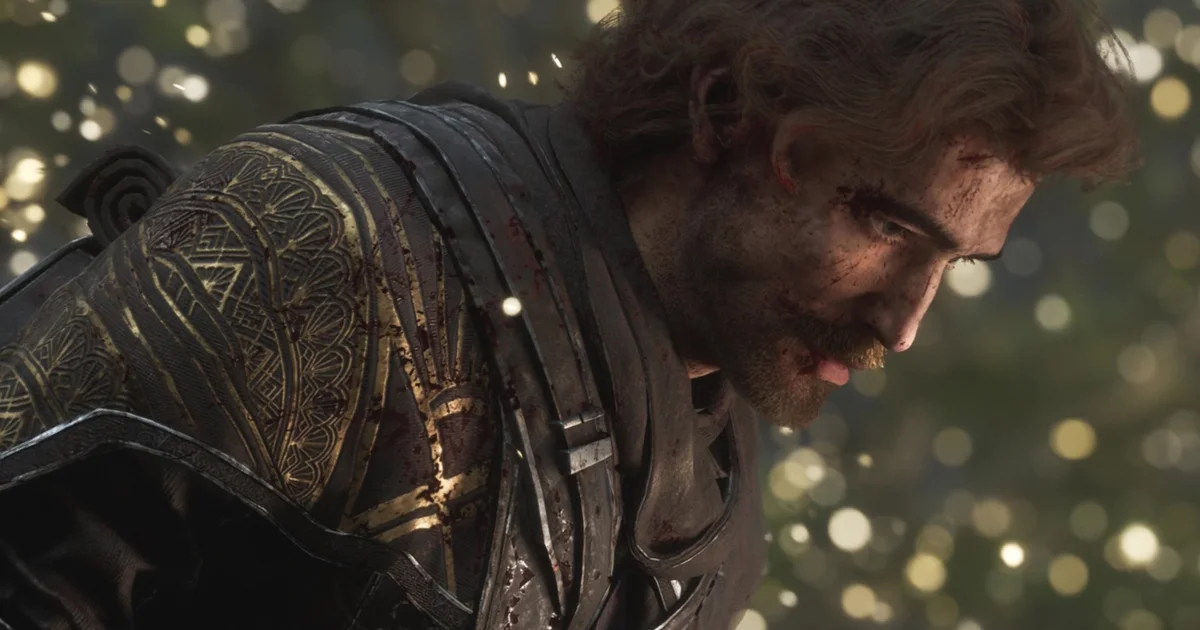
But when the team finally reaches The Continent’s coastline—hoping to break the cycle of loss and prevent total extinction—the plan goes sideways. A shadowy, extremely hostile old man, seemingly unlike anything these young travelers have encountered before, wipes out most of the group almost immediately. Gustave and a handful of survivors are left scrambling for a quick escape. I continue my session with Gustave through a dreamy forest, where towering stone outcrops and bioluminescent plants point me toward my first major goal: a spot called The Indigo Tree, meant to serve as the group’s rendezvous point if their landing goes wrong.
Moving through these stunning, though fairly straightforward, ravines helped me get familiar with Clair Obscur’s genuinely standout combat system. Before I dive into that, though, I want to address what happens between fights—because this part has arguably gotten the least attention in the trailers so far, and honestly, it left me a bit disappointed after my time with the game. To be clear, it isn’t all negative: there are signs of promise here that I’ll get to shortly. Still, in the opening stretch, my interest kept slipping whenever I wasn’t actively in battle.

The game’s atmosphere is undeniably striking. Once I finally pushed past the thick treeline, a wide cliffside view opened up, revealing huge, jagged rocks suspended in the air—each one pulling your attention back to that ominous pillar marked with 33. The Indigo Tree’s glowing crown also stretched across the sky, echoing the sense of an otherworldly Erdtree from Elden Ring. Later, I explored a coral reef zone where the world behaves like the ocean—though it’s still just air. Seaweed-like fronds drifted upward, big fish darted through dense undergrowth above me, and bubbles rose lazily past my screen.
That visual polish goes beyond expectations, particularly given Sandfall’s comparatively small team—and the temptation to simply stare at the scenery from a distance is hard to ignore. Still, when I’m moving through these vivid, lively spaces, it can start to feel like Dead-end Nooks and Crannies: The Game, because there’s no mini-map to help you navigate its branching layout. I do need to add that detouring is almost always worth it: I repeatedly found a glowing item at the end of a side spur. Some of those were bright white orbs that signal more regular loot, like Chroma currency, while rarer purple orbs sometimes rewarded me with buff-enhancing Picto armor or Chroma Catalysts that are used for weapon upgrades, along with other prizes. These collectibles are usually guarded by dangerous enemies, and even paths that seem straightforward often turn into ambush setups—forcing you to fight your way back to the main route.
Everything looks fine at first glance, but progressing through it—along with a level of excessive motion blur I couldn’t turn off in this build—made traversing these lush areas feel more drawn-out than I expected. It was the ideal recipe for sending my collectible-FOMO-obsession into overdrive, which is a sensation I don’t mind leaning into as long as I’m always aware of where I’m supposed to go next. Unfortunately, Clair Obscur doesn’t provide any map to help you keep your bearings in these huge, intimidating spaces, so I ran into plenty of dead ends and had to retrace my steps. As the preview progressed, that started to wear on me.
| Image credit: Eurogamer/Kepler Interactive
One detail I wasn’t prepared for, though, was a central overworld hub that connects all these different environments. After taking down the boss creature in the woods, I stepped through a portal that dropped me into an area that strongly recalled returning to Hyrule Field in Ocarina of Time, or wandering the outskirts of Midgar from the original Final Fantasy 7. With the camera pulled back and Gustave dwarfing a delightfully small version of the larger world, it sparked the exact kind of warmth I hope for from a modern release—like revisiting a PS1-era Final Fantasy, but presented with the rich visuals and lighting you’d expect from an Octopath Traveler diorama.
I also ran into shortcuts and obstacles here that needed to be unlocked before I could push into other parts of the island. On top of that, when I moved toward higher-level zones, big red warning markers appeared—but that didn’t stop me from trying to explore them anyway, just to see how my luck would hold. I have a strong hunch this overworld hub will be a place we keep returning to throughout Clair Obscur: we’ll explore its various, distinct corners to move the story forward, then head back to check out a new area with what we learned from earlier visits. Even a teaser montage near the end of the preview suggested there may be ways to travel by air and sea within this region once you’ve gained the right skills and party members. It’s easy to see why this mix of Metroidvania-style exploration with the core RPG structure could be so appealing. I kept wanting to play that fuller version of Clair Obscur, because what I sampled felt oddly narrow and restricted.
To be fair, the preview only covered an early slice of the game’s first act. Any limitations like that are understandable. I just wish Sandfall Interactive would offer a map so we could better take it all in, rather than removing any kind of HUD or UI outside of battle.
The fights are excellent, even if the menus seem to pack in a bit too much text.
And honestly, the battles—wow. They truly surprised me. I often found myself itching to jump back in, because the turn-based combat feels unusually smooth. For example, each party member starts every turn with a pool of action points. Those points drop when you carry out special moves or use your free-aim option to shoot at glowing enemy weak points from range, but they come back when you take regular actions. Beyond that baseline, each character’s distinct skill set adds extra layers to your tactics and battle planning.
Gustave, for instance, has an Overdrive ability that lets him unleash a crushing Lightning blow with his mechanical left arm—provided you’ve built up enough charge through earlier special attacks. Lune leans more toward magic, and her elemental strikes leave behind elemental “stains” that can then be pulled into other attacks for bigger damage. As more abilities open up, you start thinking about how well they can work together, and even this early on there were plenty of chances to set up strong combos that meaningfully boosted damage.
Above: Your free-aim ability can lock onto enemy weak points, allowing you to strip away a large chunk of health. Below: Many skills include quick-time events to strengthen them, and landing perfect timing on the orange bar gives you a Perfect hit.
Still, it was Maelle who really raised the stakes. Her épée techniques are built around moving from one stance to the next without interruption, stacking additional bonuses and effects as long as you keep the sequence going. That creates a constant push-and-pull between different “flow” states—for example, an aggressive posture strengthens her attacks but also leaves her more exposed to extra damage, while switching into a defensive stance improves her protection at the expense of offensive power. If you can ignite an enemy (something you can do by using her fiery Spark technique while she’s in her defensive stance), you’re then able to shift into her 200% Virtuose stance—the peak of Maelle’s offense triangle shown in the preview, and an especially satisfying strike once you’ve built up to it over several turns.
The payoff is even better when you nail a perfect counter from the Virtuose stance. Players can dodge or parry every attack that comes their way using time-sensitive button inputs. On the default difficulty, getting the timing down can be tough—but nothing beats the satisfaction of parrying an attack three times in a row and watching your team, whether as individuals or as a unit during a group attack, deliver the most impressive counterstrike I’ve seen in a game in ages. It’s genuinely outstanding content, presented with a sharp eye for flashy visual flair that makes you shout “Heck yeah” at the screen. Even the Persona series doesn’t quite match the level of artistry on display here, and I found it hard to stop watching.
That combat is exactly what keeps fueling my excitement for Clair Obscur: Expedition 33, but for the love of all that’s sacred, I’m going to need a proper map if I want to enjoy the game’s exploration features as much as I think they deserve. Like that ever-present 33-marked pillar on the horizon, I can clearly see the promise built into this game. I just hope its full release on April 24th doesn’t end up bogged down by tedious navigation—making it harder for us to experience everything it offers at its best.