So endearing that finishing it is hard without a twinge of melancholy. A brief journey, but one that sticks with you long after the credits.
Having a companion is a real treat. Getting more than one would be pure luck. When I think back to childhood playmates, they’re naturally tied to the time period: Sunny D, Apple Fruitang, MTV, bicycles, and VHS tapes all drift through my memories. Oddly enough, though, what I cherish most are the longer walks—even if the details are a little hazy. Like many kids before settling into adult life (my paper round came years later), we didn’t have a great deal of money. What we did have was often used up on sweets, so we regularly covered miles on foot just to skip the bus. We even had a squeaky metal cart that helped carry everything as we set off for the distant pitch-and-putt or tennis courts.
Adult friendships work differently. There’s less free time, more obligations, and a whole lot more arranging things in advance—and you won’t find any gummy sweets or gobstoppers on the table (and honestly, it’s probably a relief that gobstoppers have mostly disappeared; I’ve got no idea how kids managed to stuff cricket balls into their mouths without anyone calling it out). True friends can pick up right where they left off, as though no time has passed, even if it’s been “far too long.” With that in mind, let’s return to this review before I wander too far. I played Lego Voyagers with my son—someone who still understands what it means to live for the moment and get excited by challenges, even when they’re not spelled out in a group WhatsApp chat. He hasn’t had to deal with friendships slipping apart the way they sometimes do, where everyday partners slowly turn into just occasional hellos sent across long distances.
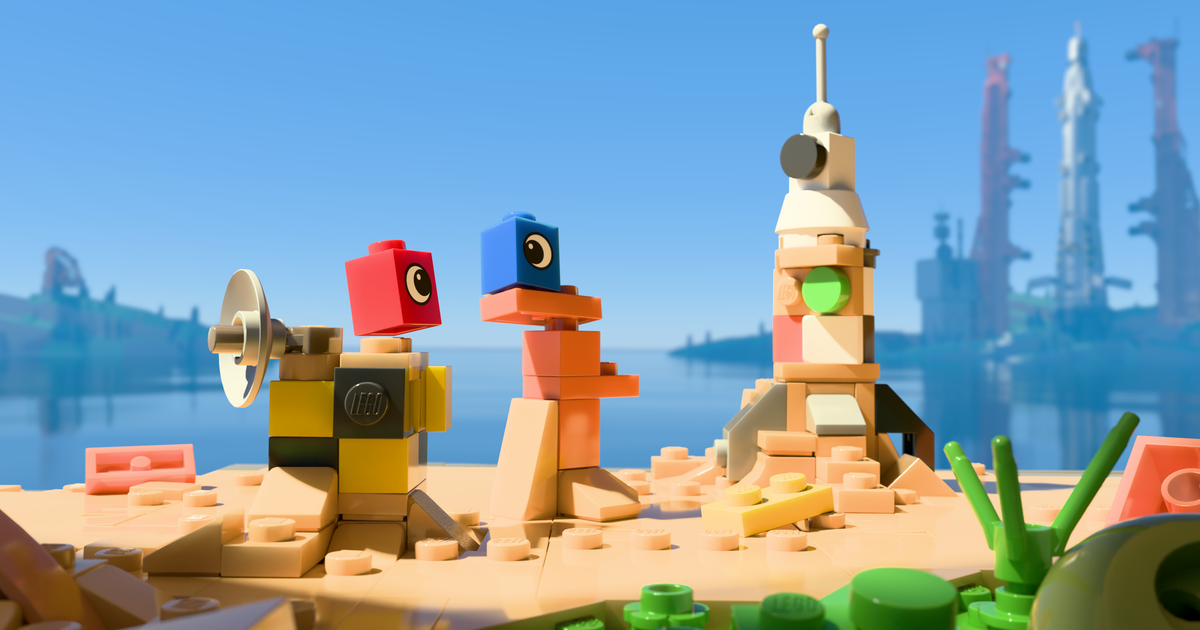
Lego Voyagers, the quasi-sequel to Light Brick Studio’s Lego Builder’s Journey, is a fully cooperative adventure. While Builder’s Journey asks you to construct with Lego bricks to crack movement puzzles across a chain of linked—but separate—dioramas, Voyagers opens up its levels for you to explore. There, characters who are basically individual red and blue blocks with an eye each (capable of producing playful sounds) build together, and somehow they feel more animated than their plain design suggests. The result is a noticeably different rhythm: it comes across less like a straight line of narrative puzzles and more like a quest full of problem-solving moments. It’s also among the most thoughtful portrayals of friendship I’ve seen in a video game, delivered with a refreshingly light touch.
In most of the industry’s most traditional Lego games, character is drawn from a playful sense of fun and parody. Lego versions of famous heroes and villains are often treated as caricatures, usually performed with plenty of energy—yet they still tend to feel more like a West End-style show than pure theater. Lego Voyagers, though, communicates personality with restraint. It relies on music, sound, and small movements rather than broad slapstick comedy. One scene in the game’s latter half nearly sent my son into full-on frustration—though explaining it would make it sound far less important than it felt at the time. Either way, it’s a good reminder that subtle details, especially the bricks themselves, matter.

Voyagers isn’t especially difficult, and it isn’t long either. My son and I took just under four hours to reach the finish, moving at a relaxed pace. It strongly rewards cooperation, much like how my wife might keep a door open while I steer the buggy through. Neither of those tasks is hard on its own (unless you’re dealing with a stubborn door), but trying to handle both solo could leave you unintentionally backing into a coffee shop—doing little maneuvers you’d normally associate with Twister (even though I’ve never played Twister, I can still imagine it!).
This is Lego Voyagers: two friends bounce and roll through a Lego world, placing blocks and activating mechanisms to go further. Sometimes the job is simply to put bricks together to get to a higher platform. Other times, you’ll need to repair something by finding the right Lego parts. And occasionally, you’ll encounter platforming sections that require using a machine for help, including a train, a dump truck, and a rocket.
The rocket—some of it appears at Red and Blue’s peaceful remote island house after a failed launch—is central to how they move through the world. You’ll track down where it’s made, repair it, and then go on to do much more. It works like the glue holding everything together, like the sort of laid-back afternoon hangout: an easy walk with no pressure. To be fair, I did raise my voice when my son and I had different ideas about what “forward” meant while sharing control of a vehicle. My wife also had to put on headphones as we took turns arguing about whose job was tougher during the flying and landing of a miniature spacecraft. Still, this is mostly a game about guiding your way through challenges rather than struggling just to get moving ahead. There’s no danger, no crisis, and no anxiety—only a bit of good-natured disagreement. Nothing that a joke or two can’t smooth over.
As we got close to what I believed was the start of the ending, I told my son, “I don’t think you’re going to like what’s about to happen.” Almost exactly as I expected, I was right. He wasn’t happy, though it felt appropriate—these final moments were as close to perfect as I can imagine for this kind of story. As a short but delightful puzzle-adventure, Lego Voyagers presents itself with a sense of polish that never turns into pretension. It’s so charming that it’s hard not to feel a little wistful once it wraps up. Look closer, or consider it through the lens of real lived experience, and it will land more deeply with anyone who knows what genuine friendship looks like. Sometimes, all you need is a simple “hello.”
A copy of Lego Voyagers was provided for this review by Annapurna Interactive. A single copy of Lego Voyagers can be played cooperatively online (via the Friend’s Pass) or on the same console.