Few racing games match the brilliance of Burnout Paradise. It’s tempting to claim none do, even if the battle for the top spot remains fierce. The title is so influential that it sparks a bigger question: why has nobody managed to deliver a racer on the same level since? Only a small number of people may have an answer worth considering.
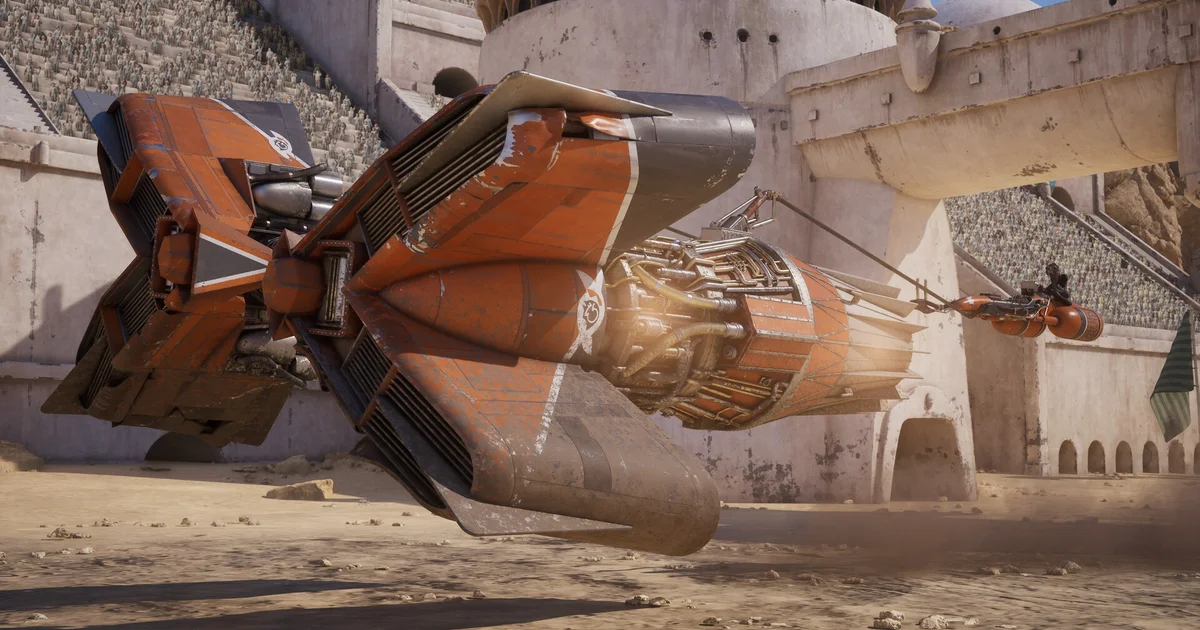
Thankfully, at this month’s Summer Game Fest, two of those voices were on hand. Matt Webster, the founder and CEO of Fuse Games, joined by creative director Kieran Crimmins, are now deep into work on Star Wars: Galactic Racer. Since both were part of Criterion during the making of Burnout Paradise, they took a moment to look back at the game’s appeal and talk about what Fuse Games hopes to replicate—and surpass—once again.
“It’s like catching lightning in a bottle sometimes,” Webster told Eurogamer. He pointed to the Burnout Paradise team’s determination to turn their arcade-style racing into an open-world experience. Back then, relatively few games attempted something along those lines, which helped open the door for real imagination.
“We were figuring it out as we went,” Webster continued. “The online multiplayer in Burnout Paradise—people were simply enjoying the ride, not thinking of it as a game was the game! Now we’ve got Forza Horizon 6, which nails that feeling perfectly. It’s undeniably impressive and creatively inventive, but at its core, what you’re taking part in is a community-driven driving experience.”
“Paradise marked a major step forward across several areas, so you can’t just copy it and expect the same cultural impact or the same kind of moments for players,” Crimmins added. “The truth is, people try this over and over. Everyone wants to build the best possible game, the most compelling game, but it’s like trying to capture lightning in a bottle. Getting there requires innovation—something new—and keeping the player’s experience at the center of your decisions.”
As the saying goes, capturing lightning in a bottle is incredibly hard. Still, Webster, Crimmins, and the rest of Fuse are genuinely aiming to pull it off again with Galactic Racer. They want to push the genre further, and Webster believes he knows what’s missing right now.
“Consequence is absent,” he said. “It’s tough to create consequence when there’s a rewind feature, right? That’s why consequences don’t really show up. So how do we bring consequence into the framework? How do we make room for consequences not only when you crash, but also through the choices you make? Think about your build—what are you trying to achieve here?
“Our goal is to push the genre forward, and there are some parallels with Paradise, too. We’re focused on inventing exciting new ideas—that’s the point. The difference is that it’s happening inside a Star Wars racing game.”
Crimmins underscored the importance of consequence, using the game’s “levels of depth” as a clear indication of their direction: “That’s why we have a range of vehicles from the Star Wars universe, including four that aren’t merely cars. We understand that you need to make a leap to become a genuinely transformative release for the industry. I truly believe Star Wars: Galactic Racer has that potential.”
Webster agreed right away: “Yes, it’s about taking risks, I think!”
Eurogamer will share more about Galactic Racer soon, so if this conversation about matching the legacy of Burnout Paradise has caught your attention, be sure to watch for further updates from this pair.