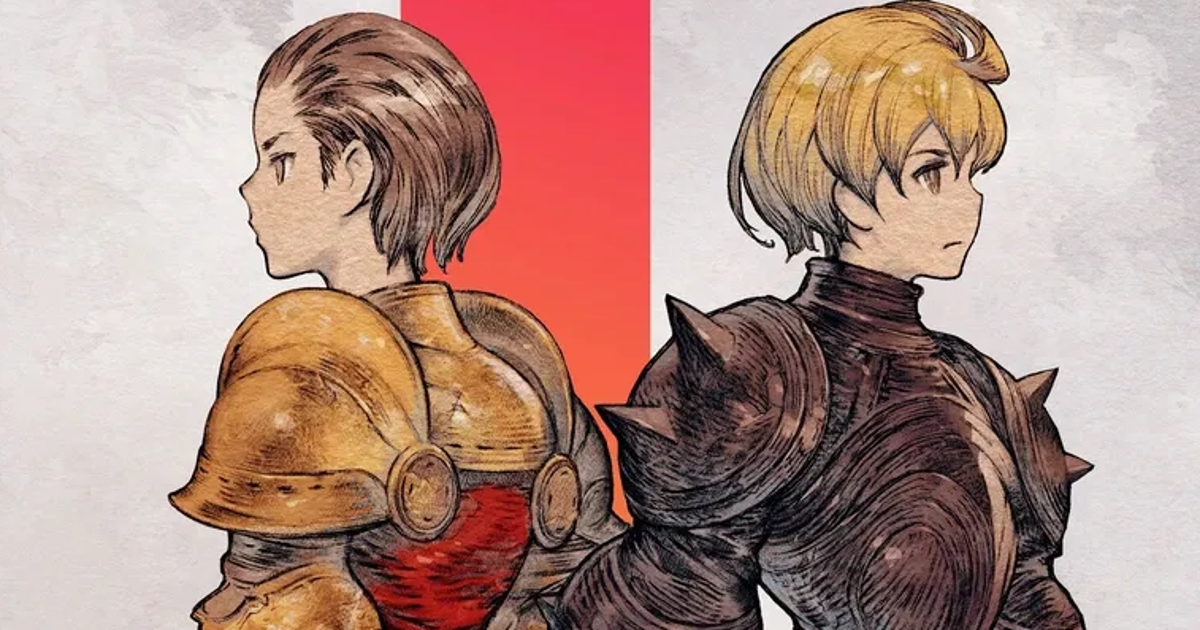
The heavily political 1997 PlayStation release is widely viewed as one of the finest strategy games ever made. This remaster offers a strikingly fresh take on a story that was already considered timeless.
Ramza Beoulve’s tale is presented like a historical record—a retelling shaped by one historian’s account and then passed on to you by another. It’s also unmistakably subjective: an archivist assembles broken fragments of information with a definite slant, aimed at celebrating the victories of your protagonist, a man whose influences and sources were suppressed by the church. Because of that, you can walk away with different conclusions depending on how you read the material. History is frequently unreliable, and even when the victor writes it, essential context is often left out.
That’s at least how I see it as I step into Final Fantasy Tactics: The Ivalice Chronicles. By presenting the events as a saga drawn from records, Square Enix has effectively given itself permission to revisit this material as many times as it wants—how often do we see essays, romantic retellings, TV adaptations, or films framing real-world history again and again? This is a familiar approach with celebrated classic works, and Ramza’s saga remains one of gaming’s standout stories.
That’s why I’m not overly bothered by the changes The Ivalice Chronicles makes compared with the 1997 original. If I wanted the unmodified PlayStation version, flaws and all, I could simply return to the original release (or the classic edition that’s been largely preserved within The Ivalice Chronicles, complete with pixel art). Still, I don’t—what I want is this reimagined viewpoint, a chance to reassess the Japanese groundwork from nearly three decades ago.
On the gameplay side, Final Fantasy Tactics still feels current. It may not have been the first “proper” tactics-style game on the market, but it continues to rank among the best. Its appeal lies in a kind of directness that later entries—and many other franchises—don’t seem to replicate. There’s a Zen-like restraint to how units and their actions are selected, and the leveling mechanics are so specific that you can completely crack the game within the first four hours, if you decide to. Stand in a field, yell at your friends, and toss stones at them for a few days—and somehow you’re empowered to strike down gods. Maybe that echoes the closeness you build with your allies: traveling together, setting up camp in mountain passes, and standing shoulder to shoulder against the state with your brothers-in-arms?
Or maybe that’s simply the version of events I find myself enjoying. With leaner party sizes (usually five or six units) and a central cast of characters that feel genuinely developed, these smaller stories come together naturally. Ramza—set up to become a knight both by the narrative and by his stats—often takes the lead for me, while a mercenary I hired in the opening town has grown into a celebrated ninja. He hangs back in the dark, removing healers and archers before they’ve even realized he’s there. Then there’s the bold Mustadio, who knocks enemies down, disables units so they can’t flee, and lets me watch in helpless awe as my Summoner calls in Bahamut to annihilate an entire army with one spectacular, disastrous Mega Flare.
Some of the game’s toughest fights have been left exactly as they were. That’s fine, because you can still meet these encounters with a sense of purpose—and a jolt of dread—when enemies permanently smash your favorite weapons and armor, or by leaning into a bargain-basement strategy so blunt it’s hard to believe it was ever part of the developers’ plan. And yet it was, and it still is. The sheer number of approaches you can take at any given moment tilts heavily toward the excessive—and it all flows from such a compact, carefully arranged sandbox of options that it’s almost unreal to see the flowchart take shape in front of you.
For longtime Tactics players, the biggest missing piece in other retellings of this narrative is found in The War of the Lions, the PSP version that introduced additional characters, classes, and cutscenes. I appreciate this straightforward presentation, even if others might feel differently. For me, it feels like a more faithful look at an old classic—and that’s how this edition should be experienced.

Still, for everything Square Enix has pared back, it’s more than made up for it with double the new material. Ramza’s story of class tension—a country weighed down by rigid, dogmatic suppression, with an aristocratic rebel casting off his privileged background—is easier to access here than it’s ever been. And that makes sense: Yasumi Matsuno, the designer behind Tactics (who previously led the intricate but mysterious Ogre Battle series), set out to build a tactics role-playing game that would feel more welcoming to the typical player. His plan had two goals at once: broaden the genre’s appeal and tell a story about class struggle as well as the dangers of unreliable historical reporting. Go figure.
In The Ivalice Chronicles, the translation and localization noticeably outclass the original release (for example, the Assassin’s “Stop Breath” ability is no longer voiced as “Stop Bracelet”) and the voice work is among the biggest improvements across the whole package. In fact, I’d go so far as to call it one of the best cases I’ve seen where voice lines are added after the fact in a way that feels truly integrated. Elsewhere, Tactics Ogre Reborn stumbled a bit with its voice acting when it launched in 2022, but Tactics feels far more aligned. The directing is stronger, and—perhaps because the source material is so solid—the intent comes through more clearly: The Ivalice Chronicles feels closer to a stage production organized by the Royal Shakespeare Company than to the usual kind of anime-style adaptation. Emily Carey, known from House of the Dragon, and Ben Starr from Final Fantasy 16 turn in excellent performances. That said, much of my respect goes to Joe Pitts as Ramza. Somehow, his vocal delivery captures the young revolutionary better than I ever expected, and I can’t really imagine approaching the game now without the special mix he brings—naive optimism paired with hard-earned, cynical persistence—that brings his 32-bit likeness to life.
There’s an abundance of detailed, specific lore embedded in this game. Of course there is: Ivalice is the most “developed” Final Fantasy setting in the franchise’s history, spanning Final Fantasy Tactics, Vagrant Story, Final Fantasy 12, Final Fantasy 12: Revenant Wings, Final Fantasy Tactics Advance, Final Fantasy Tactics A2: Grimoire of the Rift, and the often-overlooked tower defense spin-off Crystal Defenders,
all arranged within this same universe (though separated by centuries in some cases). Even if the links between the games remain murky at best, it’s still a rewarding experience to sink into the unfolding history at your own pace—and to watch how the struggles you’ve…
Sure! Here’s the rewritten content with synonyms and restructured sentences, while keeping the HTML tags intact:
plays into the broader story being presented. The lore section mirrors what you’ll see in Final Fantasy 16 quite closely, which makes sense given that both games fall under Square Enix’s Business Unit 3. While it’s a relatively small addition, it meaningfully deepens Ivalice, bringing a level of complexity that makes exploring its world feel even more engaging.
Then there’s the interface. I’d expect an overhaul that’s been nearly three decades in the making to incorporate some of what we’ve learned about user experience—but what truly sets Tactics apart is the care put into its refinements. By holding R1 (or whichever shoulder button you prefer) to accelerate animations and zip through each exchange, the game feels more immersive than a simple on/off option. You can speed up movement and attacks, then slow things down again to pinpoint exactly which enemy unit is focused on you, or how much damage it’s landing—giving you finer control over what you choose to examine. Along with autosave, it’s a major win when you’re farming or running back through a tough showdown.
If your passion for tactical role-playing games was sparked by the 3DS Fire Emblem series (I know there are plenty of you), Square Enix has taken inspiration from Intelligent Systems-style presentation—highlighting key combat details so you can check them instantly as you plan your next move. At a glance, you can view your hit chance, predicted damage, and the underlying logic behind each piece of information (including affinities, elevation, whether your attack will be met by a counter, and more). It feels like it must have always been part of the experience, yet launching the original game from the main menu quickly proves it wasn’t. Honestly, I can barely remember how I handled without it before.
Looking closer at the mechanics, the turn order now appears along the far left side of the screen, taking advantage of the 16:9 format and placing that crucial data where you can notice it without it taking over your view. This is a real improvement. Mages may be fragile, but they pack real power—so seeing whether an enemy archer gets to strike before you drop your Meteor on the boss is important information to have right in front of you, rather than something you have to rely on memory. It also makes the overall gameplay easier to approach, which is especially helpful if you want to test the updated difficulty options (split into Squire, Knight, and Tactician, with Tactician at the highest difficulty and the closest match to the PlayStation version).
While I think this is close to the definitive version of the Tactics formula you could hope for in 2025, there are a couple of odd decisions baked into the package. The biggest sticking point loyal FF fans have with the Ivalice Chronicles concept is the visual presentation—why isn’t there an option to play the remastered content using the original graphics? And why is the classic pixel art kept for the base game alone, available only without all the added enhancements?
It’s not that the visuals are unpleasant (after about 60 hours, they genuinely started to grow on me). And this isn’t the usual pixel-smoothing routine—the individual squares are still there, and they translate well in HD. Whatever processing filter Square Enix used creates a watercolor-like, painterly look that fits nicely with this once-fated world as it goes through its own transformation and renewal, rising out of the ruins of a long-vanished catastrophe. Still, requiring you to adopt that aesthetic in order to access the voice acting, the lore encyclopedia, the updated user interface, and some tweaked difficulty settings is a bit of a letdown.
Even so, these issues don’t really take away from the strength of this remaster. Square Enix reframes Final Fantasy Tactics with its own benefits. One of my favorite books of all time is Anthony Bourdain’s Kitchen Confidential. The book’s “Insider’s Edition” features Bourdain revisiting the text—written in pen—crossing out sections that no longer matched his perspective, adding notes with new anecdotes, and including commentary on what he was thinking at the time. It’s a deep reconsideration of the original material, and you ultimately get more by seeing his critical reflections than by reading the first version straight through. That’s how I look at Final Fantasy Tactics: The Ivalice Chronicles. We’re lucky that director Kazutoyo Maehiro and designer Yasumi Matsuno have returned for this project, layering the original experience with the perspective gained from 28 more years in the industry. That careful attention adds value to a re-release that might have otherwise turned into little more than a quick money grab.
“Now, in 2025—a time when inequality and division continue to be deeply embedded in our society—I share this story again,” Matsuno said ahead of the game’s launch. “The resolve to push back is in your hands.” Final Fantasy Tactics has always carried major weight. It’s wonderful that this release gives even more people the chance to discover it for the first time, or to rediscover it again.”
A copy of Final Fantasy Tactics: The Ivalice Chronicles was provided for this review by Square Enix.