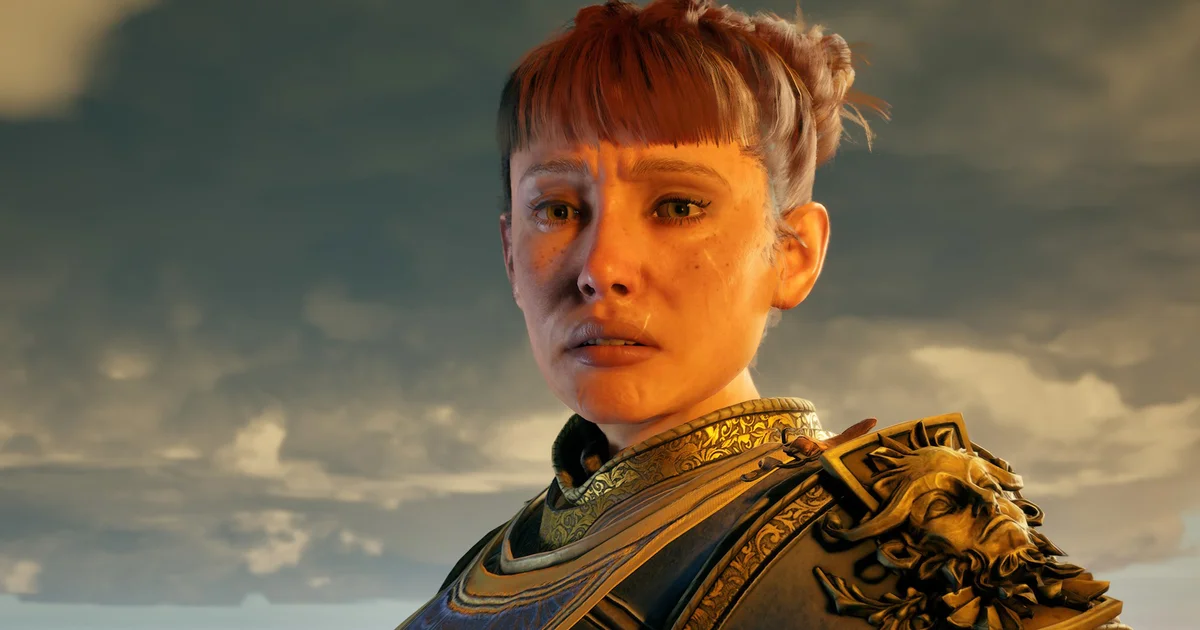
One comparison you’ll hear often when people talk about Solasta 2 alongside Baldur’s Gate 3 is how closely they resemble each other visually—fair point, because they do look alike. Both titles tap into Dungeons & Dragons themes, use an isometric perspective, revolve around party-based play, and lean on turn-based combat. They even share a few voice actors, including Amelia Tyler (who serves as narrator in Baldur’s Gate 3) and Devora Wilde (who voiced Lae’zel). If you only glance at them, it’s easy to feel like they’re almost the same game—a thought that’s especially exciting for Baldur’s Gate 3 fans, a view reflected by millions. That kind of comparison may well be part of what’s driven Solasta 2 to reach 500,000 Steam Wishlists, since some of Baldur’s Gate 3’s appeal has clearly carried over. Still, comparisons can mislead, especially when they bring big expectations along with them. Talking with the Solasta 2 team before its early access release (set for tomorrow, Thursday, March 12) and playing it myself makes it obvious that there’s far more going on beneath the surface.
The biggest difference comes down to scale and ambition. When Larian built Baldur’s Gate 3, the French studio Tactical Adventures had only a small slice of that workforce. With roughly 40 employees, Tactical Adventures is vastly outnumbered by Larian’s estimated 400 staff members, not counting additional outsourced assistance. That gap in staffing and resources shows up in Solasta 2—particularly, as Tactical Adventures shared with me, in how deeply the story is developed. Solasta 2 includes choices and knock-on effects, but it doesn’t reach the same level as Baldur’s Gate 3. So while one title might let you reshape events around your preferences, you shouldn’t expect that kind of world-altering freedom here.
A more noticeable divergence appears in the companions and in how relationships work. In Baldur’s Gate 3, companions sit at the heart of the experience, each carefully crafted and prominently presented. Figures like Astarion and Shadowheart are central to the journey, helping players form meaningful—and often romantic—bonds. Solasta 2 goes about things differently. Rather than featuring established personalities, its cast reflects you. You don’t just play a single hero—you control four characters at once, belonging to a sibling group, a chosen family of orphans. Even if you aren’t related by blood, the “family” setup complicates any hope of romance. “Initially, we contemplated romance, but it became somewhat challenging to navigate,” CEO Mathieu Girard notes in a video interview. In practice, that means romance isn’t part of Solasta 2, reshaping the game’s interpersonal dynamics in a fundamental way.
At its core, Solasta 2 is built around the idea of family. The story kicks off after the death of your orphanage ‘mother’—a presence with a mysterious, hard-to-pin-down past, who “raised” others as well as you. That includes the questionable Deorcas (voiced by Devora Wilde) and the troubled ‘brother’ Rickard (voiced by Ben Starr), both of whom strongly shape the adventure you end up taking. There’s also an ongoing mission designed to keep your constantly bickering household together, which is a motivation I haven’t really run into before—and one I genuinely enjoy.
There’s a practical, gameplay-driven angle to your family too. Instead of starting with one character and recruiting a party as you move forward—something many RPGs do—you begin by forming a full sibling team of four right away, with each member customizable in the same way you’d tailor a standalone protagonist. Tactical Adventures has put a lot of focus on character individuality and customization in Solasta 2, especially with the move to Unreal Engine 5. The detail level is impressive, and you get a broad set of tuning options. Personally, I’ve ended up with a mustachioed halfling wearing a small dagger tattoo that dribbles a drop of blood beneath one eye—somehow it looks rather sharp.
Putting together four D&D characters creates plenty of room for intentional tactical coordination, very much like the classic CRPGs of old. In fact, marketing director Pierre Worgague tells me it’s probably more accurate to call Solasta 2 a tactical RPG than anything else. In theory, the depth of the Dungeons & Dragons Player’s Handbook is echoed here for strategic discovery (“in theory,” since a few classes are still missing; the game isn’t fully complete yet). And if that sounds like it might be a lot, there’s no need to worry. One of Solasta 2’s smarter touches is how it can streamline complexity for players who prefer things simpler, while still delivering depth for those who want it. For example, if you’d rather not spend hours crafting each sibling at the beginning, Solasta 2 can take that work off your hands by auto-building your party with compatible support roles—such as healers or tanks—based on what you need. It’s a considerate feature in a game that’s packed with little improvements like this.

As you move deeper into the game, you’ll run into the group dialogue system, letting your entire sibling team talk together instead of funneling everything through one character. You can also set personality labels for each sibling—such as “Golden Child,” “Scapegoat,” or “Jester”—and those tags determine their likely behavior based on how you interpret what they represented during your upbringing. A character marked as a Jester is prone to inject humor, just like I tend to, while a Golden Child-aligned character will aim to do what’s right, similar to the way my editor Chris Tapsell carries himself (Editor’s note: I didn’t make him say this). Their conversations can lead to disagreements and tension, and you’ll have to choose which dialogue path to pursue.
Another meaningful difference shows up on the world map, and I’m genuinely excited about it. In short, Solasta 2 includes a world map that gives you an overland view laid out in hexagonal grids, with areas concealed by fog of war. You’ll travel across it to reach quest objectives, but you’ll also cross it just to explore—turning up unexpected places and running into random encounters along the way. “The goal was to emulate the classic experience of navigating through paper hexagonal maps from tabletop games,” shares Mathieu Girard. I think it nails that feeling. Moving around the world map becomes an engaging activity, full of tactical decisions, a strong sense of adventure, and those little surprises created by random events.
I highlight these differences to make it clear that Solasta 2 isn’t simply a re-skin of Baldur’s Gate 3. The franchise has often lived in Baldur’s Gate 3’s shadow, particularly since Solasta 1 entered early access around the same time Baldur’s Gate 3 launched about six years ago. Even so, Solasta 2 feels genuinely distinct. It has its own approach, with strengths that stand on their own. It may not hit the same peaks as Baldur’s Gate 3 in areas like narrative depth, character acting, and cinematic polish—where it can sometimes come off a bit plain—but it performs especially well elsewhere. For me, the biggest draw is how Solasta 2 structures combat and the many ways Dungeons & Dragons lets you approach problems. Everything feels clearer and more direct.
…and once you grasp the options before you, the excellent interface runs smoothly with gamepads—an admittedly small marvel—so there’s no need to rely on radial menus.
For a Dungeons & Dragons fan like me, there’s another strong reason to pay attention: as far as I know, Solasta 2 is the first Dungeons & Dragons game to adopt the updated 2024 rules, bringing along refreshed spells and revised weapon proficiencies,
With new classes, altered ancestries, changed backgrounds, and more. The home bases—“strongholds”—are still to be confirmed, because they aren’t actually part of the Dungeons & Dragons Systems Reference Document (SRD), which forms the foundation of what Solasta 2 is trying to deliver. Even so, Tactical Adventures is hopeful they can be added if it proves feasible. “That’s an aspect we still wish to investigate,” Worgague says. “We need to confirm we can put it in place, so there’s no commitment on that front, but it genuinely sparks our internal curiosity.” There are plenty of features poised to make Solasta 2 stand out as a distinctive role-playing experience.
“Right from the beginning, we’ve aimed to underline what makes us different,” Girard notes, “but the comparison to BG3 is unavoidable, so we can’t really sidestep it. I’m convinced we’re different, and you’ll feel that as you play. Larian undoubtedly has a bigger team, and they have narrative richness we may not match, but our combat system is genuinely compelling—layered and high-pressure, with plenty of room for options. Exploring the world map also gives you a real sense of uncovering a lively place, packed with routes to try and adventures to go after. You manage a full party and follow a story centered on a family, rather than just one character’s personal journey, which naturally leads to a different storytelling approach. It’s closer to a tabletop account: four people at a table swapping stories about their party and their family.
“We’re two distinct entities, and we want to ensure that people grasp the scope of Solasta 2 and have the appropriate expectations for it” -Pierre Worgague
“It’s going to feel different, too, and it’ll offer a variety of gameplay situations, even if we don’t reach the same scale and breadth as the game you mentioned. Still, for players, it will deliver something distinctive—so both titles can sit alongside each other. And since Baldur’s Gate 3 has likely drawn people toward this kind of experience, we want to meet that demand with more choices.”
“There’s absolutely room for both,” Worgague adds (he briefly mentions that the studio bought copies of Baldur’s Gate 3 for the team after it launched—“we absolutely adore the game as well”). “But we’re separate studios, and we just want to make sure players understand the scale of Solasta 2 and set the right expectations.” This, he says, will also show up in the release price, which will be positioned as “more of an indie pricing.”
Most importantly, keep in mind that there’s still a road ahead. As Solasta 1 grew alongside its community during early access, Solasta 2 is set to do the same. Although the eventual goal is to cover everything included in the Dungeons & Dragons Player’s Handbook—as Baldur’s Gate 3 famously did, though it referenced an earlier version—Solasta 2 hasn’t reached that point yet. The early access build includes six of the 12 player classes and stops at level four (that ceiling is expected to rise to six during early access), but Tactical Adventures hasn’t revealed what the final level cap will be at 1.0, which feels odd. Maybe it’s still being finalized. For comparison, Solasta 1 debuted with a level cap of 12, matching Baldur’s Gate 3.
Core elements like multiplayer aren’t in yet, since they still need extra testing; the plan is to add it with the game’s first major update in Q3. Story acts, crafting systems, factions—there’s a lot more coming. In fact, the current 10–15 hours of content is essentially a preview, and a fairly promising one. Solasta 2 delivers a solid take on Dungeons & Dragons. Of course, setting Solasta 2 beside Baldur’s Gate 3 is unavoidable, but it also creates an uneven matchup. It’s a (moustached) halfling going up against a giant. Still, as Bilbo Baggins demonstrated, you shouldn’t underestimate a halfling.