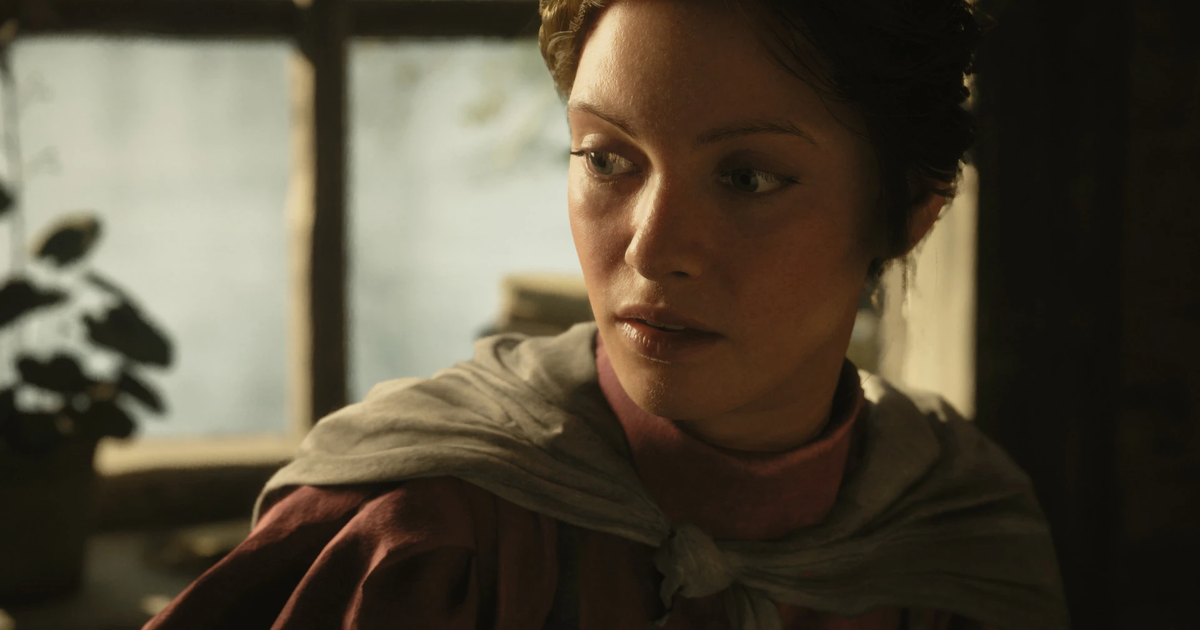
Eriksholm: The Stolen Dream delivers striking cutscenes and a tight, disciplined take on stealth that keeps things deliberately restrained, though it doesn’t quite unify every element into a complete whole.
The stealth strategy space lost one of its standout studios two years back, when Mimimi Games—behind Shadow Tactics, Desperados 3, and Shadow Gambit—chose to wrap up its remarkable journey. With no new Shadow entry coming from the genre’s longtime specialists, River End Games has stepped in. This new group of veterans, with experience that runs from Unraveled 2 to Battlefield, aims to fill the void, and Eriksholm: The Stolen Dream goes a long way toward satisfying that craving.
First impressions suggest a game that strips the genre down to what matters most. You’re introduced gradually—guiding quick-footed Hanna, the lead character, as she moves through her hometown while law enforcement crowds the streets. It takes a bit of time before Eriksholm hands you any tools for attacking, and considerably longer before you have the full roster of abilities from the other two characters, Alva and Sebastian.
In the early stages, you’ll spend a lot of time leaning on the essentials: cover, darkness, and smart distractions to slip past the officers. From the start, it’s clear Eriksholm handles these fundamentals with confidence. Progressing through the story unlocks more options, including the ability to throw stones to pull guards away, a medium-range stun delivered via a blow dart, and a powerful chokehold performed by the team’s strongest member. (He’s also, incidentally, the only character who can swim—however you interpret that.) Alva is able to climb drain pipes, while Hanna can move through vents. These are familiar stealth tools and character roles—similar in spirit to Ezio’s skillset, but split across three distinct characters that work together. Done this way, encounters become more elaborate while still offering a rewarding blend of solo play with co-op-like coordination.
To be clear, this isn’t a sandbox. Eriksholm is precise about which characters and abilities are available at any given moment. You won’t spend much of the game cycling through every tool in its entirety, which quietly reveals the truth: at heart, it’s essentially a puzzle experience wearing a stealth game costume. That point isn’t meant as a knock—plenty of excellent games rely on the same idea.
Each confrontation is built around a particular solution. Looking back on my playthrough, I can only remember a handful of moments where there was real room to improvise with how you put the required actions together. Guard A has to be taken care of before Guard C, and you need to be ready to choke Guard B, and so on. Some players may see the rigid design of this comparatively short experience as a drawback, but I found it enjoyable to break down what the game wants you to do—often by trying different approaches, sometimes by studying guard routines, checking where cover sits, and watching for distinctive environmental details, then refining the plan until it worked on the very first attempt. Eriksholm also strikes a carefully tuned difficulty: it challenges you without becoming irritating, and frequently makes you feel sharper—particularly when all three characters combine smoothly to get through tougher sections, with your unseen prompts steering you to act at just the right time inside a meticulously planned sequence. It’s a delicate job to build tactical gameplay that stays engaging without drifting into “too easy,” and while opinions will naturally vary, I consider this balance one of the standout strengths of Eriksholm’s otherwise very capable design.

Its presentation is just as striking. The story unfolds in a northwestern European setting during an alternate early-1900s era. Rather than leaning fully into steampunk, it feels more like a remix: Eriksholm’s city and its surroundings come across as convincingly grounded. Although the design is inspired by pre-war Scandinavia, you can also spot subtle touches drawn from northern France, Dover, and even the harsher landscapes of Scotland, blended into the architecture and color choices. The visuals themselves are gorgeous—streets and lanes that feel genuinely lived-in, detailed shanty-town clusters, damp smuggler caves shrouded by moss, medieval fortifications armed with World War I-era weaponry, and much more besides.
It’s a bold adventure, and even though the wide-angle camera does a clever job of hiding the budget, Eriksholm still consistently comes off as a premium release. One clear example is its mix of pre-rendered cutscenes, which include impressive facial motion capture—digital performances that show real emotion and capture small, telling nuances, such as conveying vulnerabilities the character is trying to suppress.
You can also tell these moments weren’t cheap, simply because they don’t appear very often. Thankfully, in all honesty,
As much as one can admire the exceptional performances of
In the cast, Eriksholm’s biggest weakness is its storytelling. It functions well enough as the glue between the game’s different, varied areas, but it leaves you with the sense that something essential is missing: a real hook and clear, meaningful stakes.
Eriksholm expects you to supply quite a few pieces through its world-building and narrative. That approach can work brilliantly when the premise offers enough intrigue to tie everything together, or when intentional ambiguity—like unreliable narration—invites the kind of endless speculation that can fuel entire YouTube careers. Here, though, it doesn’t land. The game seems so engrossed in its sweeping conspiracy that it neglects some key information that would help, for example, clarify the antagonist’s motives. Based on what I could piece together, he mostly just feels unpleasant.
It’s a shame, because there are genuinely enjoyable parts. Take Alva: she fits a Fagin-like mold, effectively running a slice of the city while directing a crew of Artful Dodgers under her command. The push-and-pull between her hard, calculating brutality—needed to sustain her rule—and the maternal instincts she tries, often unsuccessfully, to bury becomes one of the most compelling emotional tensions in a narrative already crowded with conflicting impulses. If a sequel ever arrives, it ought to center on her. The game also sprinkles in humor; some of the most memorable moments come from throwaway scenes like couples bickering, guards getting on each other’s nerves, a deceitful partner, and the range of lives you and your player character never directly disturb.
Even with the clear skill on display, though, Eriksholm never quite gels completely, and the ending may leave you with an odd sense of emptiness. It wraps up with an abrupt cutscene instead of delivering a satisfying final encounter or a properly climactic sequence. That said, it doesn’t mean the game lacks standout set-pieces: there are several thrilling, pulse-pounding moments. Smart use of the environment. Big, tense stealth scenes during high-pressure military clashes.
What we end up with is mainly a highly enjoyable game featuring a lean plot and a disappointing finish. The stealth sections—exciting and heart-racing—energize you, but the storyline that connects them casts a longer shadow. In the end, it feels like two different halves rather than a single, fully integrated experience, making the final chapter feel like a major missed chance to create something truly unforgettable.
Satisfying. Lavish. Addictive. Great fun. All the right compliments fit, and in a space where many people choose to listen to podcasts instead of paying close attention to a game’s story, it can be easy to claim that a mediocre narrative doesn’t matter. Still, the story is supposed to be the thread that leads you forward—your drive, your emotional connection to an alternate reality. An airplane can stay in the air without tires, but it won’t land where it needs to. And it can’t even get off the ground without them either. I know, I know; I’m just imagining a situation where the “tires” get sorted out once you’re already in flight—maybe a dog chews them. Right. Stop. You get it.
A copy of Eriksholm: The Stolen Dream was provided for review by Nordcurrent Labs.