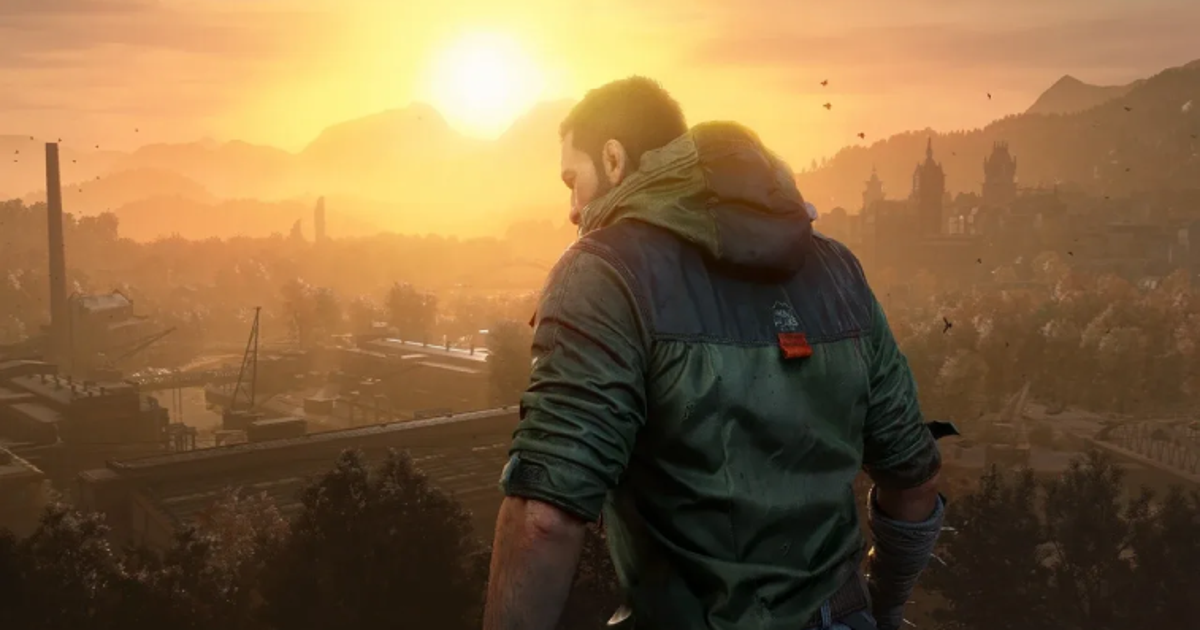
Kyle Crane is back, determined to strike back at the sinister scientist who has been running experiments on him for the past 13 years, in an entertaining adventure through Techland’s best moments—though it can be a little uneven now and then.
To start things off, back in 2011, we met Dead Island—Techland’s divisive, melee-heavy zombie romp—taking place on the sun-soaked island of Banoi. Three years later, Kyle Crane returned in Dying Light, descending into Harran as chaos spread through the streets. After protecting the city and the remaining residents from corrupt influences (or not, depending on the specific ending you chose in the expansion Dying Light: The Following), he’s now back on the hunt for the person who has tormented him for the last 13 years.
Spending time with Dying Light: The Beast—originally imagined as a proper expansion—feels like a showcase of some of Techland’s finest work. The biggest return, naturally, is Kyle Crane: after breaking out of a bright underground complex that calls to mind the Resident Evil line, he steps into the open daylight of Castor Woods, a former tourist spot in an unspecified part of Europe. Before long, he’s working with—and trusting, perhaps a bit too quickly—Olivia, who wants to strengthen Crane’s beastly abilities by drawing blood from a set of terrifying experiments called Chimeras. At the same time, a group of survivors has been sealed inside the town hall in Caster Woods’ Old Town, which becomes the main setting for many of Dying Light: The Beast’s missions.
Some additional faces also reappear, but since Dying Light: The Beast has only been out for a little over a week, this review stays spoiler-free—so you’ll have to do a quick Google search if you want to know who returns. Otherwise, this Techland mix leans into a faint The Last of Us vibe, especially during select indoor moments, where Biters (the name for zombies in Dying Light) are left in a catatonic state while unsettling clicking sounds break the silence. Even the musical identity of The Beast has been reworked with a pared-back, folk-leaning tone, echoing the feel of the HBO series. And if you’re still on the fence, there’s one unusual material referenced: Cordyceps.
You’ll also spot Dead Island’s vehicles again, including ranger trucks dotted across the scenery, as well as The Following’s surprisingly idyllic countryside that helps offset the industrial atmosphere of Caster Woods. Meanwhile, the tight streets in the Old Town should feel familiar to anyone who has played Dying Light. And speaking of the Old Town—unlike Dying Light 2: Stay Human—someone appears to have been keeping up with the weeds; after more than a dozen years into the apocalypse, the area looks unusually neat.
Once Crane is released into Castor Woods—apparently doing surprisingly well given what he’s been through—he quickly ends up helping a wide range of survivors take on Biters, bandits, and the armed units under the command of the main antagonist, the Baron. The Baron is an Albert Wesker lookalike, and his malicious plan is built around creating yet another supercharged zombie-human hybrid. Helping out usually means wading through relentlessly repetitive delivery-type quests, though they’re clearly shaped to push you to explore Dying Light: The Beast’s locations—spotting unlockable safe areas, abandoned convoys, and bug-infested shadowy regions that hide treasures, maps, and even more assignments. As in Dying Light, there’s also a persistent focus on restoring power and water, and Crane even remarks at one point about the plumbing overhaul he’s working on.

Dying Light’s many upgrade paths have been streamlined into a single page, and numerous skills carry over from the earlier game. This entry introduces Crane’s enhancements, including a straightforward “beast mode” where he shifts into a savage Hulk-like brawler—springing high into the air and smashing enemies with his thick, muscle-packed fists. In regular play, Crane still relies on an assortment of melee tools, from baseball bats and hammers to machetes.
Image 1: The antagonist of The Beast, Albert Wes- The Baron. 2: Either Kyle Crane has just finished the golf course, or he’s misplaced a glove. 3: Dying Light: The Beast continues the series’ love of stunning sunsets. 4: Despite how entertaining the flamethrower is, it pulls zombies in like moths and drains fuel incredibly fast.
Everything can be boosted through blueprints, including everyday upgrades such as fire, ice, and poison. Oddly enough, the game introduces ranged options fairly early, though using them remains risky and can quickly summon dozens of the fast-moving undead called Virals. There’s also a stronger focus on valuables as a kind of money, which means Crane doesn’t have to lug around several weapons just to sell them off at the first chance. And, as always, crafting is back—letting players produce a range of items, including Molotov cocktails, bandages, lockpicks, and, a bit surprisingly, a grenade launcher as well as a flamethrower.
At the center of Dying Light: The Beast is its ongoing day-night cycle, and the nighttime portion is even more dangerous than it was in the original. When darkness falls, you get the sudden arrival of the quick, aggressive Volatiles, and Techland has smartly removed the mini-map that previously helped players dodge these threats more easily in Dying Light. This,
The relentless push after the Volatiles builds a palpable sense of pressure, heightened further by the sharp plink of strings the moment Crane is finally spotted. Unlocking the different safes
Building homes and towers remains a major focus, and, as with much of Dying Light: The Beast, this often depends on Crane’s remarkable parkour abilities.
Image 1: Driving doesn’t work quite as well as it should, largely because the undead don’t seem to recognize roads. 2: Much like Dying Light, you’ll spend a good deal of time fiddling with electrical junction boxes. 3: Getting set to enter beast mode. 4: Spreading cordyceps? No need to worry.
Ah, parkour. As Dan Whitehead pointed out in his Dying Light review, parkour was already starting to lose its appeal even back in 2014. Still, we’re here, leaping over rooftops, clinging to ridiculously slim ledges, and jumping across those conveniently placed stretches of mountain rock. In small (and freely chosen) doses, it can be oddly satisfying. But when you’re pushed into dizzying ascents to reach the top of a church or a power pole, the thrill fades a bit. In fact, as Eurogamer’s Matt Wales mentioned earlier this week, Dying Light: The Beast can be awkward at times to truly enjoy. Its approach to vehicles is a good example. The undead appear to gravitate toward streets and paths, so steering a vehicle turns into extra, unnecessary work—bump into too many roaming Biters and your truck may fail, frequently leaving it as a magnet for Virals. I also find myself ending up in the passenger seat by accident, though I can’t really blame Techland for that.
If it all sounds a bit meh, that impression doesn’t hold—Dying Light: The Beast frequently lands with exciting set pieces, plus those striking yet unsettling sunsets. There’s a tense trek to a mental asylum, complete with unsettling messages from doctors who, much like in Resident Evil, are experimenting with things they absolutely shouldn’t, along with several intriguing side quests that still manage to feel disturbing. The main trail includes the touching assignment to locate two survivors whose fates were intertwined, called A Sign Of Love, while the side content features a grim task inside an underground railway tunnel, For Your Mind Only. Like a comfortable pair of slippers, the familiar gameplay loop and controls are reassuring, and for players who like to hunt for them, there’s no shortage of collectibles. You also have a lot at your disposal—Techland states there are 140 melee weapons, 17 ranged weapons, and many variations of Virals and Biters, alongside different Chimeras and human foes.
Image 1: Once you’ve wiped out these enemies, their location markers should disappear, setting up the next part of the mission. 2: Abandoned military convoys dot the valley and are worth looting. 3: When will they figure it out? 4: A brief, poignant pause amid the chaos and bloodshed as Crane rescues a family.
Dying Light: The Beast includes three difficulty options: Story, Survival, and Brutal, though I personally found Survival tough enough on its own. There’s also a selection of accessibility and control settings, plus a drop-in/drop-out co-op mode that works surprisingly smoothly, letting players team up to fight both the undead and the Baron’s soldiers.
Sadly, bugs and glitches interfered with my time in the game. Graphical problems—like stuttering visuals and objects floating in place—are one concern, but the broken day/night cycle was especially distracting. While I was calmly wandering during bright daylight, I was genuinely surprised when a group of furious Volatiles ambushed me, apparently unaffected by the harsh light. After I finally reached a safe zone, I checked the clock and saw it was just after midnight. Because this mechanic is a core part of Dying Light, it’s not an ideal situation, though Techland’s most recent patch appears to have fixed it. What still isn’t resolved (at least on Xbox Series X, in my case) is the enemy glitching. Too often, I’ll defeat every foe I need to, only for the game to fail to start the next step—forcing me to quit and restart as the only solution. It isn’t a deal-breaker, since I’ve always restarted at the start of the current encounter, but it’s still a frustrating flaw.
In the end, much like Dead Island and Dying Light, The Beast is best enjoyed like a gory B-movie, where the spectacle of huge monster zombies, explosions, and general mayhem builds a wonderfully over-the-top world. Racing around to tear through the undead with an impressive flame-powered baseball bat, vaulting over buildings, and occasionally switching into Beast mode when things start to heat up is genuinely satisfying. Dying Light: The Beast also delivers gorgeous visuals, with varied environments and characters. Like Kyle Crane, it can sometimes feel like an uneven mix, but overall it stays mostly on the right side of being understandable—and entertaining.
A copy of Dying Light: The Beast was provided for this review by Techland.