Thanks to what emulation can achieve, you can now play a selection of classic PS2 games on the PS5 through native applications, all included with the PS Plus Premium subscription. For context, the first wave of emulated PS2 titles arrived alongside the refreshed PS Plus tiers in 2022, yet those releases came with major drawbacks that made them hard to recommend. Among the issues were problems with PAL versus NTSC compatibility, limited scaling choices, and the way the games were wrapped in a PS4-style app layout. Sony had a chance to provide a far more polished experience using native PS5 software, but the newer release is unfortunately a letdown—despite including standout entries such as Sly Cooper, Tomb Raider: Anniversary, and Star Wars: The Clone Wars.
At the heart of the situation seems to be an obvious lack of care in the emulation work. The same problems seen in the PS4 release are still present two years later, and there are additional hurdles as John and Rich pointed out in the most recent DF Direct episode.
To be clear, this doesn’t mean the releases offer no benefit. Running PS2 games through PS5-native interfaces can bring useful upgrades like rewind functionality, save states, remappable controls, and the option to choose between NTSC and PAL versions. The real issue is that the implementation of these ideas often lands short—or even harms the overall way the games feel to play.
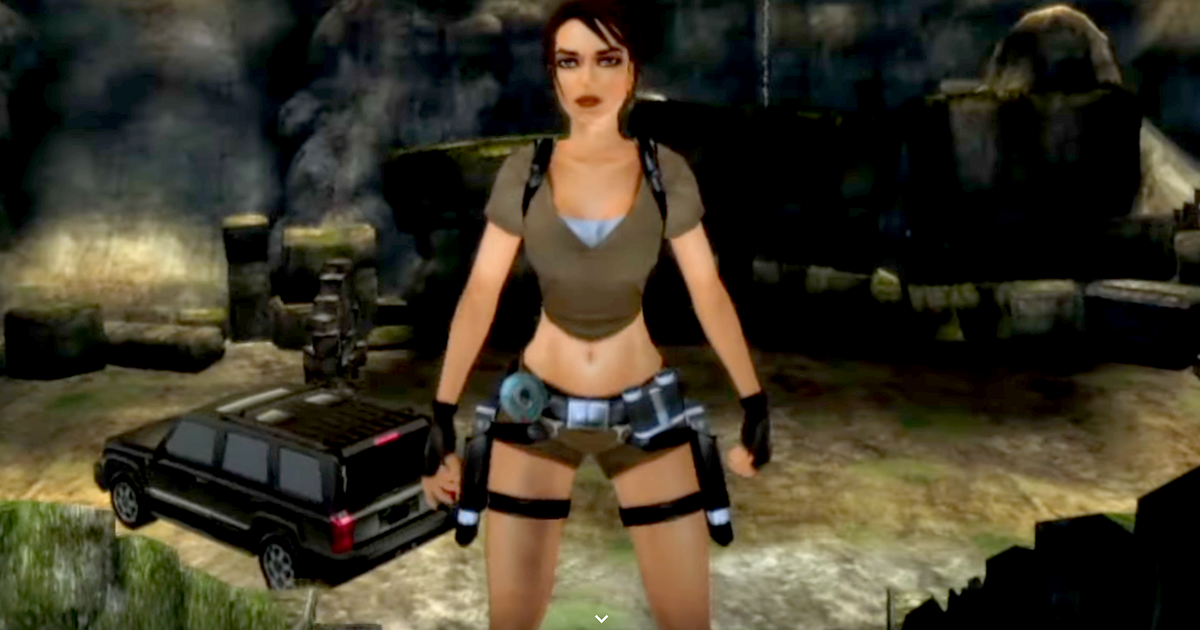
When you look at the available presets, Tomb Raider: Anniversary gives players four options: the default resolution, a modern mode (which makes blacks darker), a classic arcade option (which adds an unconvincing CRT look), and a modern arcade mode (which uses a slightly tweaked CRT filter that still feels unconvincing).
Up to this point, it matches what we typically see in official emulation efforts, but the video upscaling is another story. The suggestion that the resolution is unchanged from the PS2 original is misleading, even if it’s an easy claim to repeat—because the scaling technique produces an image that looks about as blurry as the source. This becomes especially noticeable in UI elements like text: while PS2 assets are used, the display looks stretched and doesn’t make use of the anamorphic pixels that would have been present on the original hardware, plus it’s processed with a basic bilinear filter. The result is a noticeably hazy presentation. Since third-party upscalers such as the RetroTink 4K (and even software-based emulation) can improve visuals on real PS2 hardware, it’s disappointing to see such careless scaling delivered on PS5.
Beyond those points, there are also small differences in how games perform. On the upside, some of the slowdown seen on original hardware appears to have been fixed—Sly Cooper, for example, holds a stable 30fps on PS5. On the other hand, that same title shows multiple glitches on Sony’s newest platform, including a stage that advanced without any music.
We also checked the current condition of PSP emulation on PS5, focusing on Daxter and Lego Star Wars 2: The Original Trilogy. In Daxter, we found frame delivery that feels inconsistent and jittery, and we’ve seen comparable—or even worse—frame-time issues across other PSP games available through PS Plus.
In the end, it’s hard to fully accept Sony’s approach when the retro gaming community has already tackled many of the same problems here—especially by building a range of genuinely effective upscaling techniques and filters that you would actually want to use.
Given that this knowledge is present in the retro community—and almost certainly inside Sony as well—it feels like Sony simply isn’t prepared to put in the time needed to present its classic library in the best possible form. Put another way using John Linneman’s analogy, it’s like someone releasing an emulator with the default settings and just handing you the controller. Sure, you can play the game, but wouldn’t you rather have an experienced enthusiast configure it for you just right?