Even if it’s only a coincidence, the timing feels striking. The free Switch demo of Tomodachi Life: Living the Dream hit on the 15th anniversary of the 3DS just this week, and—at least to my eye—it feels wonderfully fitting. Tomodachi Life is probably the 3DS game I think about most often. Not exactly because it’s nostalgic for me, but more because it turns into one of those unexpectedly vivid daydreams. On paper, the series looks like a mash-up of Animal Crossing and The Sims, with a possible dash of Tamagotchi thrown in. Still, that description doesn’t really get at what makes the franchise so oddly charming. After jumping into last night’s demo for Living the Dream, I’m finding it hard not to want more of that offbeat energy.
Putting it into categories, the Tomodachi Life lineup—with its goofy slapstick and surreal turns—feels closest in spirit to Nintendo’s own oddball experiments like WarioWare, Cubivore, or Freshly-Picked: Tingle’s Rosy Rupeeland. Those are the kinds of moments when Nintendo leans into one of its sillier, sharper moods. And sure, in a surface-level way, it does resemble The Sims: you’re partly god and partly zookeeper, steering a handful of semi-independent digital people. You respond to their wants, or guide them toward new activities and connections based on whatever you’re in the mood to try. But if it is The Sims, then it’s The Sims with its always-on “about to get ridiculous” dial cranked up.
Throughout the series, you’ll see moments where a sudden Breaking News alert stomps in to announce—complete with images!—that two of your island residents have sadly been flattened under a heavy book while they were visiting the local library. Or you might peek into someone’s thoughts while they sleep, only to find, for no clear reason, endless copies of them gliding along a conveyor belt and sinking into strange green goo. Even though the demo for Tomodachi Life’s upcoming Switch release is brief, that brand of silliness is absolutely there.
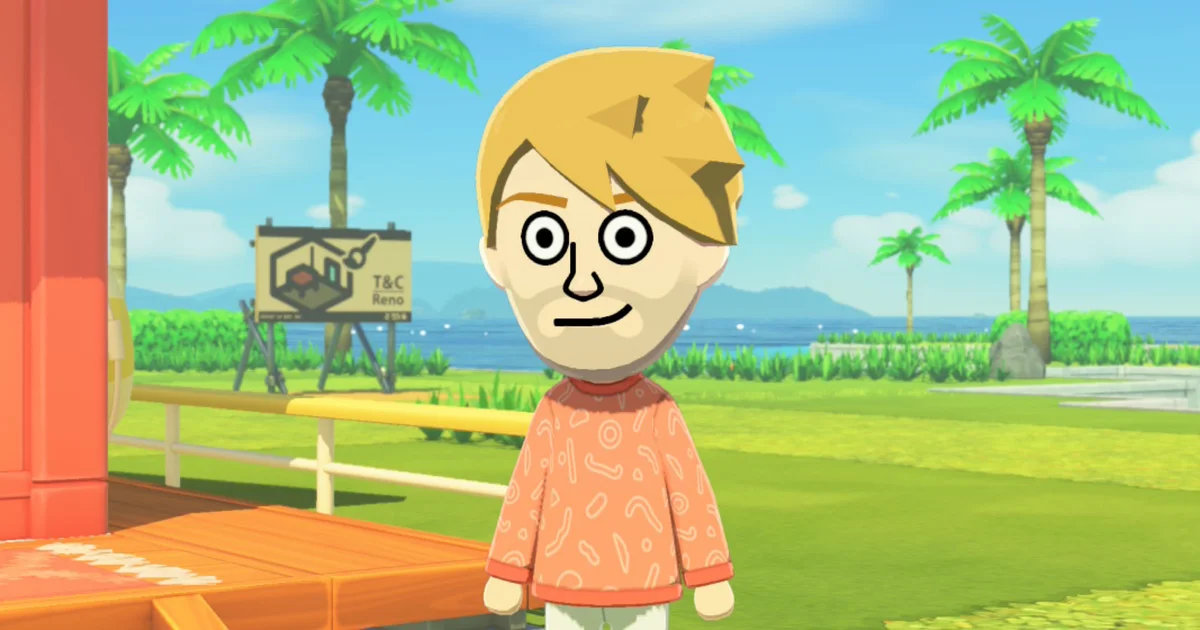
It all starts, though, with your island. First you’ll be asked to name it, and because everyone in Living the Dream talks using simple—though oddly lovable—synthesized voices that feel like rogue, self-aware text-to-speech software, you’ll probably want to set up a phonetic guide as well (“Matt oh pea a” — honestly, getting the pronunciation right took me ages). Then, naturally, you’ll need a Mii. These are the same little avatars we couldn’t escape during the Wii days, though now they show up only occasionally, like a long-suffering older relative at family gatherings. I genuinely love these tiny characters, and their straightforward expressiveness fits the game’s comedy perfectly. Oh, and now you can even add ears!

In Living the Dream, you’ve got a couple of routes for handling Miis. You can make them from a set of prompts, or go all-in with full customization, even giving them distinct personalities. If you already have a Mii saved on your console, you can import it too—something that’s exactly how I ended up in a mild spiral, because my “Mini-Matt” started theorizing that we were effectively the same person after noticing we share the same birthday. The whole “forced captivity” feeling didn’t help either, especially as my tiny Mii lookalike wandered restlessly around an otherwise completely empty room.
Earlier Tomodachi Life games leaned a bit toward a vivarium vibe, with most of your Miis’ moments playing out inside the tight confines of their one-room apartments. They’d only occasionally step out to take part in scripted happenings at other one-screen spots on the island, which helped create a somewhat claustrophobic mood—and, to be blunt, it also narrowed the entertainment. Living the Dream, though, borrows a new page from Animal Crossing, giving Miis their own homes and a small, shared outdoor space that you can customize. They’ll happily wander around it, interacting with nearby objects and other Miis along the way. It’s just adorable.
When Miis want something, they’ll “ponder.” Their preferences gradually turn into needs you’ll have to meet to keep them satisfied. If they’re hungry, you might grab them an apple from the grocery store (or, if you’re feeling generous, 16 in-game pounds’ worth of sushi). Or—like happens during the demo—they may start looking for a fresh connection. That’s how islander number two, Heck, ended up joining the cast. With multiple Miis interacting on their own, the full, wonderfully strange appeal of Tomodachi Life quickly comes through. Mini-Matt and Heck hit it off right away, and before long, Heck decided this should become a real friendship. “What should they chat about?” he asked, so I filled in the prompt and sent him on his way.
“Hello, Matt!” Heck said brightly the next time they crossed paths. “Would you care to talk about a baked bean?” Mini-Matt was delighted. “Here’s a fun thing about me,” he replied, “I make a habit of photographing every baked bean I come across.” The exchange was going great. “Hold on—seriously?!” Heck shouted, clearly excited. “Me too! Honestly, living surrounded by hundreds of artsy baked bean photos has been a lifelong dream.” After that, they barely separated. I’d see them giggling together on the grass, trading “made-up rumors” about themselves, and later, they’d even complain about having terrible mobile reception. And once I brought in a third islander, the kind of scatterbrained Betsy, I couldn’t help laughing when Mini-Matt’s plan for helping her after a small tumble was to ask, “Have you tried moving?” The crisp, consistently funny absurdity of Nintendo’s dialogue is completely—delightfully—endearing.
I end up wandering into Heck’s thoughts after he starts daydreaming by the wishing fountain, and I prod him with my giant finger while he precariously steadies himself on a sharp ledge, with a bungee cord looped around him. “Touch me and I’ll snap at you,” he warns, so of course I nudge him, then watch him bounce in the air in spectacular fashion as I grin like the ultimate troublemaker. The Miis—their bright animations and entertaining little moments—are what really grab your attention, and even though the Living the Dream demo comes with a fairly small set of options, I’m already sold.
More additions are also hinted at, including new enrichment activities and upgraded island conveniences—such as a furniture outlet and a pawn store, soccer balls, and yoga DVDs. There are also fresh traits and animations you’ll be able to unlock, giving you even more ways to tailor your Miis. I’m curious to see how the shift from the 3DS version’s mostly skit-based simplicity—often feeling more like an interactive sitcom than a game—into a tighter Animal Crossing-like structure will play out. It may be a little odd that there’s still no word about Switch 2 enhancements for this Switch 1 release, but regardless, I’m excited to revisit Tomodachi Life. And I’m absolutely here for the strange, wonderful bits.