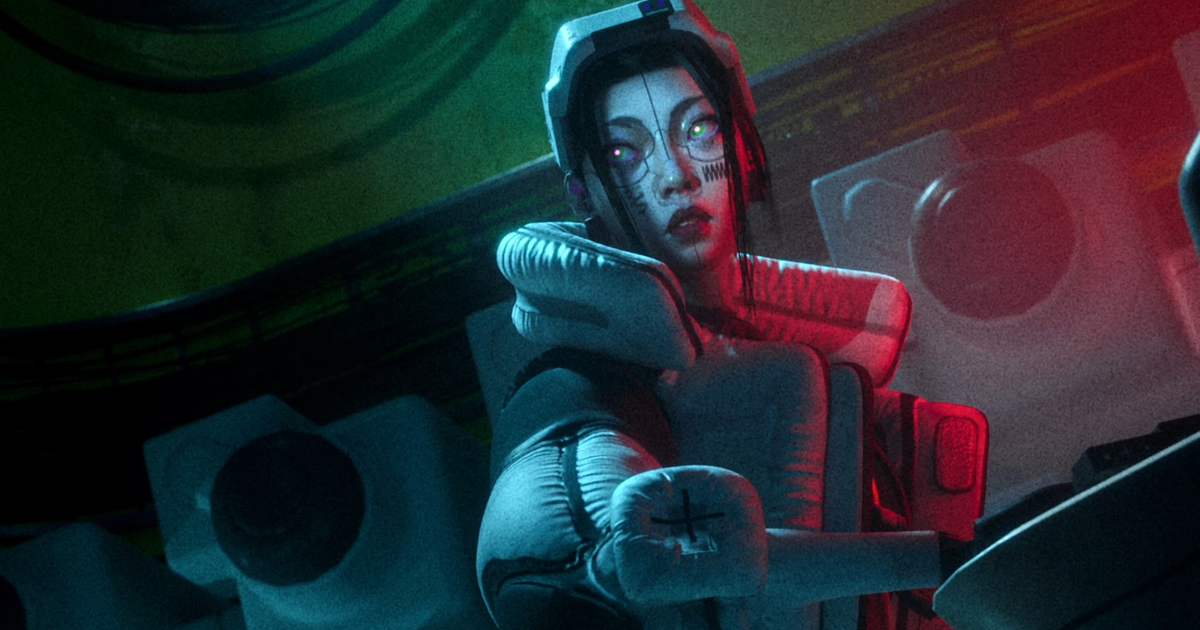
Marathon is still early in my time with the game, but so far I’ve been genuinely impressed. Behind the lively art style and the standout approach to fonts is, at its core, a truly strong Bungie shooter—one with plenty of depth and flexibility in how you play. Right now, the part I’m enjoying most is digging into its Shells: the combat avatars that, as Marathon’s story frames it, you control remotely across the war zones of Tau Ceti IV.
There’s a lot to like about Marathon’s Shells. For starters, each one delivers a different way to experience the game while remaining just as worthwhile as the others. During much of the server slam, I gravitated toward Recon, using her ability to track enemy players so I could anticipate moves and stay ahead as I learned the rules. After the full release launched, I spent the weekend leaning into a more sly approach with Assassin’s cloaking abilities, and I’m currently trying Thief—whose power to track down loot and steal from players brings a noticeably different rhythm to engagements.
The design also feels practical in a way that extends to their very informative names. That emphasis on purpose is a big part of why Marathon appeals to me. I also think Bungie offers some lessons worth paying attention to, particularly when you consider a few recent, well-publicized FPS releases that didn’t land as well as people hoped.
Over the past ten years, multiplayer shooters have shifted noticeably—from classes toward characters. That change has turned avatars from generic soldiers into recognizable individuals, complete with distinct traits and (usually) their own backgrounds. It began with hero shooters such as Overwatch—though you could reasonably trace the idea even further back to Team Fortress 2—before spreading into tactical titles like Valorant and even Battle Royale games such as Apex Legends. DICE even tried something similar in Battlefield 2042.
This approach has paid off for a lot of teams. Overwatch, Apex, and Valorant have all built large followings that revolve around their characters. Lately, though, we’ve seen the strategy stumble in a big way more than once—starting with Concord in 2024, and continuing more recently with Highguard.
It’s important to stress that neither Concord nor Highguard was a bad game. Many communities tend to treat “successful” as shorthand for “good,” and the scale of disappointment in these cases has fueled the belief that Concord and Highguard were far worse than they actually were. They weren’t great—both had a mix of issues, including pacing and level design—but they also had solid fundamentals and likely could have grown into something exceptional with additional work.
Still, they never got that chance, largely because players responded so strongly to the way both were marketed (even if there’s plenty going on behind the scenes, which helps explain the context). As hero shooters, both relied heavily on their worlds and characters to sell the experience, but they struggled to persuade players in each case.
For me, that means I don’t think people should judge a game before they’ve actually played it. That said, I can see why players passed on Concord and Highguard before they even arrived. The connection is similar to what’s happened with the MCU since Avengers: Endgame—audiences seem tired of feeling pressured to invest in characters in a surface-level way.
Hero shooters can feel a bit presumptuous. They drop a dozen characters in front of players and then ask them to care based mostly on appearances and a handful of voice lines. In many cases, we only start to connect with fictional characters over time—through story context: their goals, their bonds with other people, the conflicts they face, the obstacles they overcome, and how they change along the way.
Round-based multiplayer shooters don’t offer that kind of narrative setup. So character development has to move in the opposite direction. Instead of letting attachment build naturally, these games ask players to commit from the start, with the understanding that familiarity will come as the season (or a similar period) unfolds. That leaves far more riding on your first impression—so much so that, for developers, it can feel like they only get one opportunity to get it right.
That strategy can absolutely work, as Blizzard and Valve have shown. Even then, both companies had an edge: they came in early when the hero shooter idea was still fresh and exciting. It’s also telling that Valve’s newest shooter, Deadlock, is being built in a semi-open alpha—introducing characters gradually and encouraging players’ relationships with them step by step.
When it doesn’t go well, the result can feel like you’re being introduced to a dozen Blorkos all at once—without the “post-credits” buildup, but instead through the pre-release trailer. That was my takeaway from how Concord was initially promoted, even though I ended up thinking the actual game was decent. In the same way, a big chunk of the negative reaction to Highguard seemed to boil down to, “Who’s this guy?”
Marathon comes across as something different, even while drawing on many of the same tools used in hero shooters. Each Shell has its own look and abilities tuned for specific playstyles. At the same time, it’s candid about the fact that the Shells are simply the player’s platform. That framing leads to a more straightforward view of how you relate to the “character” in a setup like this. That honesty is exactly why it works so well. It manages to split the difference between character and class—giving you a distinct avatar to step into while still letting the gameplay (and your choices) do the heavy lifting.