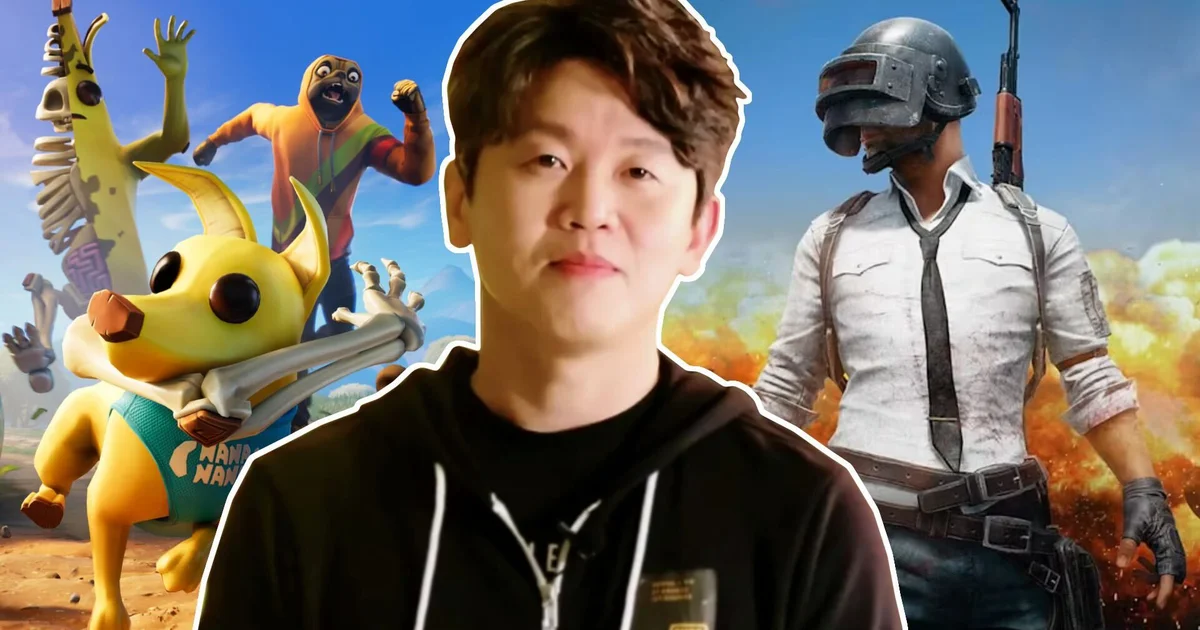
“When we first launched, there was a shooter genre, including a subgenre called battle royale,” says Taeseok Jang, Krafton’s head of the PUBG IP franchise group, during our conversation on an upper floor of one of the Korean publisher’s many modern offices in Seoul. “But nowadays it has grown into its own separate genre—and, essentially, the shooter genre has become a subset of battle royale.”
Jang’s final point likely doesn’t mean that every shooter automatically fits into battle royales. More likely, he’s arguing that shooting is now only one piece of the bigger picture. If that’s what he intends, I’d agree with him—at least to a degree. Consider PUBG: Battlegrounds, now part of a larger PUBG line that exists without Brendan Greene. What began as a battle royale has increasingly turned into a platform for partnerships and live events, bringing in major names like Balenciaga and Lamborghini, along with K-pop acts such as Blackpink. On top of that, additional game modes keep arriving, with Xeno Point being the latest example: a PvE looter-shooter roguelite that’s enjoyable, even if it doesn’t fully land. Meanwhile, Call of Duty: Warzone’s high-gloss cosmetic crossovers have also become a familiar internet meme—along with Fortnite’s own.
Fortnite, by its own high standards, is not exactly thriving. Based on conversations with Epic and on assembling the unstated, but clearly suggested, meaning of its metrics, it appears Fortnite’s overall playtime has dropped—what Epic’s Steve Allison described to me as “the natural conclusion” from the data. Even though it “still holds the title of the largest game in the world on numerous fronts,” as Allison told me, Epic has since increased the cost of V-bucks and let go of a large number of developers.
Much of this connects to deeper pressures facing the industry right now—reduced discretionary spending, sharper competition fueled by the engagement economy, and more. Still, with no truly breakthrough entry for a stretch, and with extraction shooters like Arc Raiders and Marathon suddenly becoming the talk of the shooter scene, it feels as though the landscape may be shifting.

Even so, Jang doesn’t see much reason for concern. “I believe we are in an extremely good position,” he tells me through a translator. “Whether it is Apex or Fortnite—whichever has a dedicated fanbase and distinctive gameplay—there’s still room to earn even more goodwill from players.” He also adds that battle royale titles benefit from a “uniqueness” in how they play, which helps them stand out from other options and attract a wide audience—a significant advantage on its own.
This brings us to an almost ironic turn in PUBG’s broader strategy. After Fortnite ‘borrowed’ the battle royale formula from PUBG in a way that was close enough to trigger a long legal fight, the trend is now moving backward. PUBG is shifting toward a “platform” approach built around user-generated content, much like Fortnite and Roblox, while also pursuing additional partnerships and licensing deals. A collaboration with Payday—using PUBG’s mechanics but adopting Starbreeze’s “structure”—is planned for later this year. In a separate presentation, Jang also points to possibilities for “TV shows, animations, and cartoons” built around the PUBG franchise.
“It’s not simply about Fortnite, or about PUBG’s strategy,” he says after I mention the amusing cycle developing between the two. “When we look at the market, games that manage to keep their audience tend to have been described as ‘metaverse’ at some point—before it became one of the key strategies these companies use.” That label did catch on, though now it’s hard not to associate it with how, for instance, Meta has tried—often comically—to turn fairly standard virtual spaces into something like a never-ending money machine.
Still, Jang does make an important observation: the gaming version of ‘the metaverse’—a game that works as a social hub, offering more than one kind of activity and occasionally featuring brand sponsorships—has been a solid approach for some time. “To succeed as a long-term service, you need to bring in a mix of different and varied content, along with multiple game modes,” he continues. “And I think this isn’t just about PUBG or Fortnite, or about specific companies, or specific IPs.”
“Where PUBG and Fortnite really stand out is in preserving their distinct qualities [in] gameplay,” he says, underlining that the battle royale structure can be a strength compared with other live service games that have faced tougher circumstances recently. In his view, it comes down to “the core content that can deliver those varied experiences for players.” He also notes the importance of having enough users ready from the start.
As for the twist in the once-adversarial relationship between the two games, Jang takes a far friendlier tone. He doesn’t frame it as “competition”—he frames it as respect. “I think Fortnite is doing well in terms of delivering this kind of content to players,” he says. “As a partner and as a company that shares the market, I have a lot of respect for them, and honestly, I feel they’re executing exceptionally well.”
Epic’s numbers appear to support that point—Statista estimates its gross revenue at roughly $6 billion for 2025—even if some of the company’s laid-off employees might see things differently. For PUBG, Jang believes “there is potential for further growth,” beyond the already massive audience it has built. After all, the game hit 1.34 million concurrent players in March of this year. So the unusual, contradictory loop of success in video games keeps unfolding across these two sides of the same broader genre. Like games in general, battle royale remains lively—right up until it doesn’t.
This interview is based on a visit to Krafton and PUBG Studios in Seoul, South Korea. Krafton provided flights and accommodation.