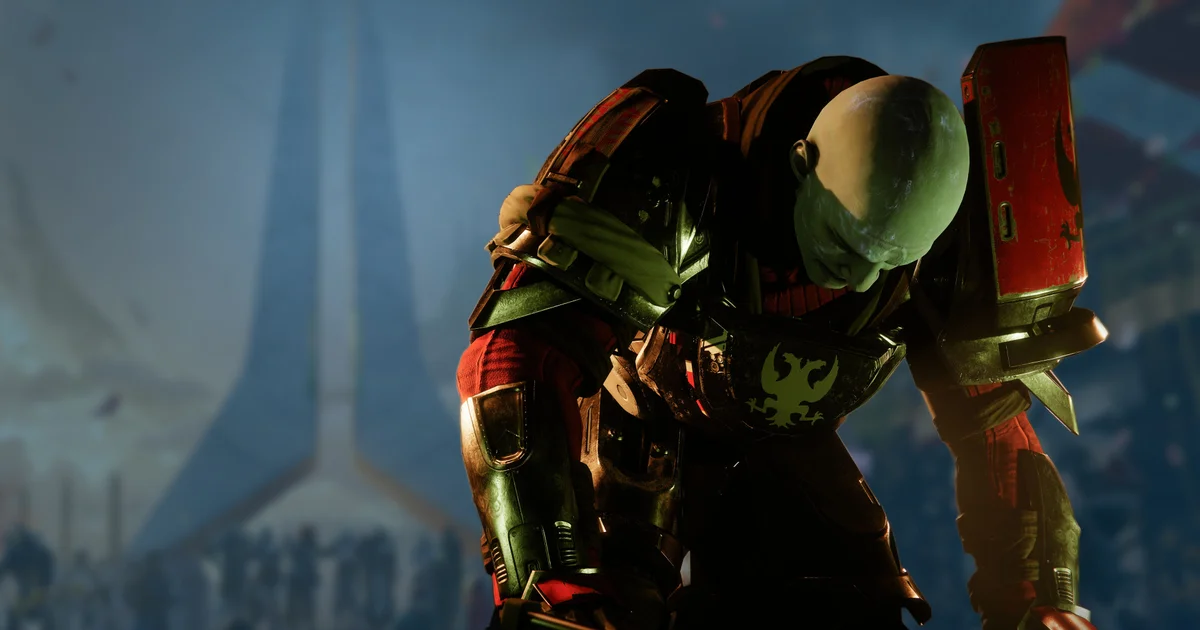
So, Destiny 2 is starting to slip away, and it could end up pulling much of Bungie with it. I’ve gone into detail about how a stubborn focus on earnings instead of a devoted player community and well-considered staffing choices, has damaged what the game is at its core. For many of us, the signs have felt obvious since early as 2023. Destiny 2 hasn’t looked like the game I fell for over the years, and learning about its looming decline left me unexpectedly downcast.
Honestly, I think I’m mourning it. That may sound dramatic, but this franchise has been a steady presence in my life for more than ten years—surviving romantic relationships, friendships, homes I’ve lived in, pets I’ve had, and plenty more along the way. When I look back at the highs and lows, Bungie and Destiny 2 feel like a small-scale reflection of the unusual situation many of us are navigating as we head into 2026 and beyond.

My first run-in with Destiny happened on the PlayStation 4 in mid-June 2014, when I downloaded the alpha test immediately after its major reveal at that year’s E3 (rest in peace). As a Halo fan and an ambitious would-be pro in my University days, I was hooked right away. Shooting that used Halo-style damage indicators? An intriguing sci-fi-fantasy mix wrapped around the eerie remains of a galactic civilization? Peter Dinklage bringing Shakespearean energy to some of the wildest lines you’ve probably ever heard? What’s there not to love?
I wasn’t really a social player back then. Before Destiny, my gaming circle was basically my PvP squad (often a rotating bunch) and a handful of fellow nerds I’d chat with in the lobbies of less-known fighting games. Still, Bungie’s vision of a “massively multiplayer first-person shooter”—or MMOFPS, if you’d rather burden yourself with the full phrase—filled a need I didn’t even realize I had. Before long, I was in a fireteam with close friends, staying up into the early hours just to squeeze in one more Strike, or to casually outsmart Atheon again in the Vault of Glass. I even hauled a TV and my PS4 over to a friend’s place for a weekend to play Destiny 1’s House of Wolves DLC after it dropped, since my apartment’s internet was too unreliable to bet on.
Over the years, Destiny grew into a major part of my life—and even my work. One of my most cherished achievements is putting together a cover feature on the game for my (very old) stomping ground, games™ magazine (pictured). There was a close-knit crew at the publisher who treated Destiny like it was a religion. For a while, it dominated our thinking. Between 2014 and 2026, the duology has absorbed more than 700 hours of my time. That’s close to a full month.
As the game continued to develop, it became clearer that Bungie wanted to follow up by building on Destiny 2—a controversial plan for anyone who had collected every exotic and cleared all the top-tier pinnacle hurdles. I was cautious, but still hopeful. By that point, issues with the game engine were already widely discussed, and the tension between Bungie and Activision was starting to show (Activision, after all, had put $500m into the project by then). Opinions were split even when the sequel launched. Many players agreed to the new world state Bungie set in front of us, but still longed for what came before.
Destiny 2 had trouble right from the start. And if you’re releasing a game into a space where even your most loyal supporters are asking you to prove your worth, it’s going to feel like an uphill climb from day one. It didn’t settle after launch either: people criticized what was actually there to play when Destiny 2 arrived in September 2017, and the DLC that followed—Curse of Osiris in December 2017 and Warmind in May 2018—didn’t exactly spark excitement.
I wasn’t captivated either. I moved from being a dedicated, daily Destiny player to someone who would only jump in for an evening or so during Tuesday’s “weekly reset”—collecting quests, cashing in bounties, and then putting the game down again until the following week. That’s when it began to feel like a second job: something I felt I had to do rather than something I truly wanted. Covering the game as part of my job didn’t help; my relationship with Destiny became entangled, even dependent.
Then Forsaken showed up. And wow, what a comeback. It felt like “classic Destiny” was back. And it only took a year. Year 2 of Destiny 2 felt as refreshing as a pre-moistened towelette on a long-haul flight; the story leaned into a clear “Galactic Western” style, gameplay got major adjustments, and we finally got Gambit. Gambit! I’d wager around 50 percent of my total time in Destiny has been spent in PvP. I know I’m not the majority there. But my younger goal of becoming a Halo Pro never really disappeared, and the detailed maps of D1 and D2 felt like my hunting grounds. I still have a soft spot for my old Monte Carlo assault rifle—unfashionable even at its best, but devastating when you’re willing to use a “Warlock slap” and ignore other players’ personal space.
Even though I loved PvP, Gambit was something completely different. It blended PvE and PvP together and offered genuinely strong rewards to anyone willing to put in the work, and I believe it laid the foundation for Bungie’s long-awaited effort to bring Marathon back. You can spot the early building blocks of Gambit in Marathon right now (even if I can’t help wondering how this will land if the developer tries to pull in a more casual crowd by watering down the game’s difficulty and PvP side of things…).
Forsaken through to Shadowkeep (2019) were the peak years of Destiny 2 for me. The very best. Still, there was always a voice in my head saying, it’s not as good as the first game. The amount of time I invested in the sequel is proof that I didn’t take that warning seriously; I likely spent more hours in Year 3 and Year 4 (with the Beyond Light expansion arriving and ushering in the game’s 2020-21 era) than in any other stretch of my Destiny life. But things were about to head downhill.
Starting in 2020, Bungie announced it would remove older, less “actively-played” parts of the live game and move them into its widely known “vault.” It took the studio two years to undo that regrettable choice, and the subject still gets brought up among fans when talking about D2, even when the conversation is fairly casual. To this day, you can still jump into Shadowkeep, Beyond Light, and The Witch Queen—the first of those barely hanging on. But by then, the original Destiny 2 campaign (the one it launched with) and the early DLCs had already slipped away.
Even the Forsaken expansion that players could purchase didn’t escape the same fate, being sent into the digital shadow realm in that window—and it’s frequently described as the “point of no return” by many longtime fans. That vaulting decision, paired with Bungie’s refusal to budge, was widely seen as a betrayal. I don’t think the game ever really recovered. In fact, the removal of the Red War campaign later came back to haunt Bungie in 2025, when a writer, claiming Bungie had copied his sci-fi work, brought the dispute to court. In the end, the case was settled quietly outside of court.
After that, my time with Destiny 2 moved along in a fairly routine way. I feel like the game hit its creative high point between Forsaken and The Witch Queen—which I genuinely regard as the best FPS campaign of its era, across the board—and then things gradually started to feel a bit flat. By this stage, even some of the most prominent voices in the community had turned on Bungie. I was willing to overlook certain aspects (the final boss and the notorious “Vex washing machine” notwithstanding), but I can’t ignore that poorly handled character, Nimbus—arguably the weakest NPC across the entire 12-year run. A series that used to spotlight vivid, memorable worlds and sandboxes built by top-tier teams now gave us Neomuna: an abandoned tech demo space where the lights are on, but no one’s actually there—more like Canary Wharf running on a PlayStation 3 than a believable location in a grand sci-fi saga.
At least Bungie managed to land on a conclusion that felt worthwhile, I suppose. The Final Shape was a release that had been a decade in the making, and even with a few rough edges, it achieved something impressive: bringing closure to most of the narrative threads spun across the previous ten years. Still, given that the core audience was already openly up in arms, the player population kept slipping, and the studio was entering a long stretch of layoffs and layoffs-related redundancies, it looked like Destiny 2 had already hit its first “end” back in 2024. Like every Guardian keeping faith with their ghost, it’s been living on borrowed time ever since.
I’m going to log back into Destiny 2 to say goodbye properly. I want to return to the Tower, take my Warlock through the solar system for one last ride, and assess the state of things as Bungie moves on from its masterpiece. I expect plenty of departed Guardians will join me on this final trip, trading memories of how great it used to be.