Paralives starts off on a wonderfully upbeat note. We fade in to a view of the camera tracking a moving train as it rolls smoothly over a quiet countryside scene. As it draws nearer, you slide into an overhead look, and then the roof pops free—revealing the passengers inside. This sets up the tutorial for movement: you’ll steer the little character into the next car, where a group of riders calmly watches the scenery drift past. A pleasant man leans back with contentment beside his girlfriend; across the aisle, a cluster of friends shares a laugh. Elsewhere, another man stares off into the distance, nodding along to something playing through his headphones, while a father nearby keeps a close eye on his son. That household selection screen—somehow capturing so much about each group’s relationships just through simple observation—feels like the heart of a Sims-like experience, packed with cozy touches and fresh concepts.
Paralives is, as you’d expect, drawing serious anticipation—and then some. I first took notice years ago after seeing someone share a looping gif that highlighted some impressively capable building tools. Since that time, life-simulation fans have chipped in over $2.5 million to support its development. That brings us to today and Paralives’ eagerly awaited early access launch. While it’s clearly arriving in a very early-access state—just last night, I watched my character level up 2,911 times during a single work shift—it still feels like a genuinely exciting start.
I may be rushing things, though. At its core, Paralives is unmistakably influenced by The Sims. You begin by putting together a household—starting from scratch with everyday people shaped by your own storytelling goals—either by picking one of the provided templates or by jumping straight into the full character creator. It isn’t quite as straightforward as The Sims 4’s Create-a-Sim, but it’s close: instead of editing real body parts, you adjust a model that represents your character’s physical traits (and I’m guessing there’s some EA patent behind that choice). As you fine-tune height, body structure, muscle definition, facial features, hair, and more, the tool can produce a wide range of Parafolk—then you finish them off with accessories and layered outfits for different situations.
Next comes choosing a home, either by starting from nothing or by grabbing one of the many pre-made houses placed across Paralives’ map. I’ve only sampled the building tools for a short while, but I’m already impressed; the grid-free approach feels exceptionally flexible, and it even includes other nice options like curved walls. On top of that, lots of items include distinctive—and sometimes unexpected—customization features. For example, you can tweak the wood floor texture separately from the color, and you can also adjust the depth of picture frames. Meanwhile, furniture often can be resized along individual axes, and the details will reflow to match—so a single bed can become a double, or a chair can be reshaped into a sofa.

Once your semi-autonomous creations finally have somewhere to live, Paralives quickly shifts into the kind of social storytelling sandbox Sims fans have enjoyed for more than 25 years. You’ll guide how your characters relate to one another, make money through hidden jobs, shape their personalities by building their skills, and of course handle their day-to-day needs. Still, what really makes the game—especially even in early access—feel worth digging into is how developer Paralives Studio expands on those familiar building blocks. And (as unclear as that might sound) it starts with a vibe.
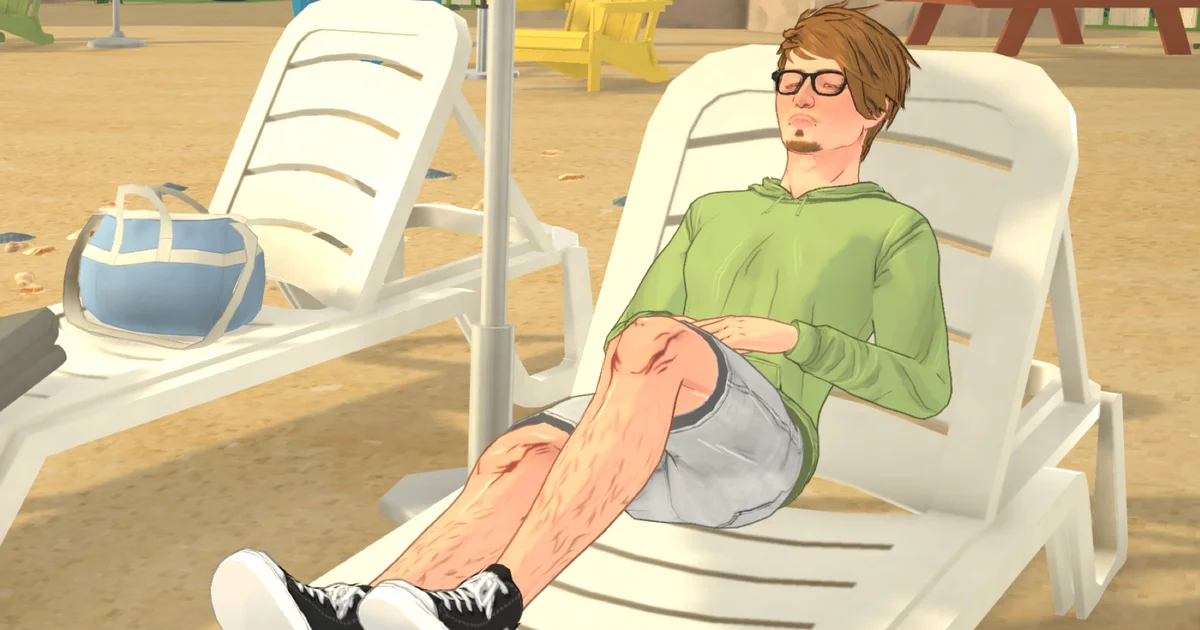
Even during its calmer scenes, The Sims can feel like it’s seconds away from turning into chaos. Its underlying systems, the bold tempo, and those brightly animated expressions all add to the feeling that melodrama is right around the corner. It moves fast, it leans into slapstick, and I wouldn’t want it any different. Paralives, though, takes a more relaxed route—aiming for a softer, more cozy-like pace with fewer high-stakes moments. You feel that in the presentation: Paralives Studio leans into a gentle sketchbook watercolor look that naturally suggests calm; it shows up in the relaxed soundtrack; and it’s also present in the layout of its relatively open world map.
Melino—what this specific early access map is called—is an inviting, delightfully steep landscape. At its core is the historic town, where character-filled buildings cluster around narrow cobblestone lanes, all funneling toward a central plaza lit with twinkling lamps and lined with market stalls. Cozy cafés, small boutique stores, crumbling ruins, and even a lavish museum fill the surrounding area. As you travel farther out, the hills slope down to a sandy beach with ocean views that look straight out of a postcard, while in the other direction they rise into harsher, rugged terrain. Train tracks cut across the streets, weaving through additional city districts. Beyond that are forests and farmland. The area is large enough, and the walking pace relaxed enough, that getting around on foot can take a good chunk of time. While bicycles are mentioned as something coming later, bus stops are already offering a nicely themed method for fast travel.
It’s a beautifully put-together setting, packed with a lived-in kind of charm. Even the interiors feel like they have personalities. Inside the museum, for instance, you’ll run into a large gift shop, plus tables piled high with local souvenirs you can browse and buy. You could spend hours in a classy restaurant with an impressive basement bar, or, closer to downtown, sit back and watch everyday life unfold from welcoming coffee shops where couches sit by the windows. Elsewhere, there are boutiques that sell vintage clothing, a modern gym, and more. The ready-made homes also each feel distinct. My Paraguy is in a compact split-level apartment overlooking the plaza; from its rustic balcony, you can see the distant beach. (Right now, only one lot interior and household residence load at the same time, so it isn’t completely seamless—but at least things are placed where you would expect, rather than abruptly sending you to a loading screen). Altogether, it delivers a version of life that feels ready for Instagram, far removed from the kind of chaos The Sims is known for.
This doesn’t mean it lacks drive. Residents move through the streets on their everyday schedules, and their character designs—perhaps…
lean a little too regularly into model-perfect polish—are distinctive enough that you’ll spot familiar faces almost right away, creating a friendly sense of shared community. There’s also a shifting selection of events that helps the spaces feel more purposeful. The plaza hosts treasure hunts and market days, and if you stay around long enough over the weekend, an outdoor movie screen will be put in place. Parafolk also head up into the mountains for evening yoga retreats or join in on activities that run on a regular basis along the hiking trails. Beyond that, you can find optional daily community requests posted on noticeboards too.
Paralives’ laid-back cadence carries through into its well-known life simulation features. That’s especially noticeable in the way its relationship system plays out. Unlike The Sims, you can’t just, for example, rush a bed-and-wedding scenario by repeatedly hammering the flirt button. Instead, relationship growth revolves around conversation openings that show up only occasionally during character interactions. At any given moment, there’s a limited set of dialogue options—sometimes including a sort of skill check. These outcomes are shaped by an intricate network of character traits, benefits, and enhancements tied to factors such as skills, mood, needs, recent events, and personality (the personality itself is set early by distributing points across physique, intellect, creativity, and charm, along with choosing a social perk, a talent, and a “vibe”). Some personality styles even include their own separate needs meters, letting especially driven Parafolk make the most of their extra energy. Over time, these mechanics deepen further as you start upgrading more areas of a Parafolk’s life, unlocking additional perks and modifiers along the way.
Underneath the surface, Paralives appears to have a lot going on—which the user interface doesn’t always handle as smoothly as it could. I’ve sometimes struggled to take it all in and keep track of everything. Even so, the choices you make feel far more consequential, with many small decisions shaping whether your characters end up matching the people you hoped to create. Will everyone be drawn to this slower, more deliberate rhythm? Probably not, but it helps form a game with real substance—where moments and decisions can build over time, making the experience more engaging.
That said, I should probably repeat my earlier reminder: Paralives, as its developer has noted, still has a long road ahead while it moves through early access. You should definitely expect bugs and glitches. The camera can be unpredictable; pop-up windows frequently get stuck over the action; and Parafolk can easily end up caught in an endless loop and unable to carry on. There are also oddities in the animations: too often, Parafolk don’t make eye contact during conversations, instead choosing to stand so close that their face rests in their companion’s chest, or so far apart that it barely counts as social engagement. On one memorable occasion, I watched my character accidentally set his apartment on fire while making a jam sandwich, then gradually meet an unfortunate end as the fire brigade repeatedly flooded the screen with “We’re on our way”.
Still, rough edges are something you should expect, and Paralives continues to be a genuinely exciting start: an energetic (far more than Krafton’s uninspired, AI-heavy early access attempt, InZoi) take on the Sims-style formula that brings fresh ideas, along with a distinctive atmosphere and pacing. It’s not the same kind of creation as The Sims—especially when I’m still enjoying the chaos—so it may be better to see it less as a replacement and more as an additional companion to the genre’s lineup. To be fair, I haven’t put enough time into Paralives yet to judge just how much content there is to do right now, or how long the novelty of early access will last. However, there’s already a solid development roadmap in place, and I’m looking forward to finding out where it goes from here.