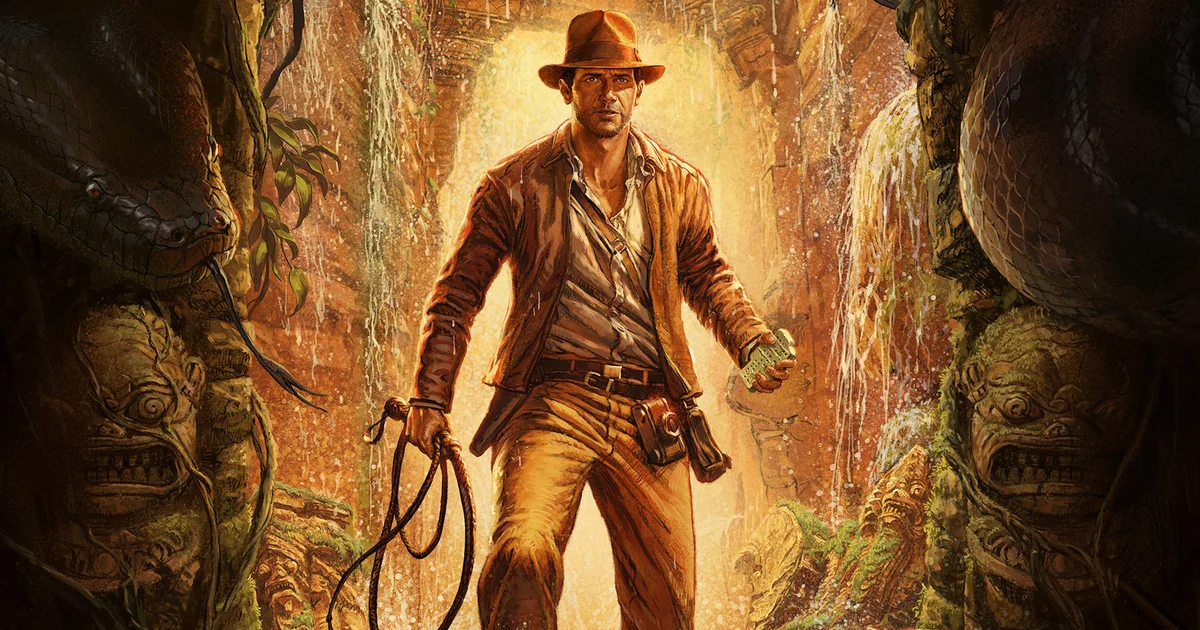
Isn’t it just satisfying when a developer treats a classic movie franchise with the care and respect it deserves? Robocop: Rogue City from last year was a great example of that approach, giving fans the chance to step into Robocop’s, well, Roboboots, and wander through some of the series’ most iconic locations—while also bringing back recognizable characters from the films. Now you can add Indiana Jones and the Great Circle to the slate of stand-out adaptations, because that was exactly the reaction I had after spending three hours with MachineGames’ upcoming Indy adventure at a recent media preview.
Right from the opening chapter, The Great Circle kicks off with a striking recreation of Marshall College, where Indiana Jones coaches budding archaeologists between missions to track down unusual artifacts that are said to have had something to do with Jesus—at least, reportedly. As you’d expect, the experience is packed with Indy easter eggs, and on the strong PC setup I was playing on, everything looked genuinely stunning. If my preview session hadn’t been constrained by a strict schedule, I could easily have spent an hour (or more) roaming the office spaces and classrooms, taking in every last detail—seriously, this game feels like it’s practically begging for a VR mode.
And another instantly recognizable figure shows up too, in the shape of Marcus Brody. During this early stretch, Brody and Indy trade quite a bit of dialogue, underlining that MachineGames put real effort into The Great Circle’s character likenesses and voice performances. You’ll be pleased (and yes, literally) to know that Troy Baker turns in a strong, gravelly Indy delivery that sounds remarkably close to a younger Harrison Ford. With a lesser team, this might have become distracting, but MachineGames clearly made the right call.
In addition, the first chapter gives us a clear candidate for the game’s main adversary: Locus, played by Tony Todd of Candyman fame (though I wouldn’t rule out a twist—he’s got that kind of presence that suggests he could end up on the “good” side). Indy encounters Locus while the villain is lifting artifacts from the college displays, and after a quick scuffle that leaves Indy unconscious, the game shows you how its puzzles are meant to work. The Great Circle wants you to feel like both an adventurer and an archaeologist, and a large chunk of its puzzle-solving leans on careful investigation—along with paying attention to both visual and audio hints around you.
For instance, in this early section, Indy and Marcus need to identify which artifact Locus has taken. That means collecting every discarded item and putting each one back where it belongs. It sounds simple on paper, but in practice I had to look for clues embedded in the artifact itself, line them up with details from the damaged display, and even listen closely to conversations between Indy and Marcus. This extra layer of detective work made the whole moment feel far more consistent with the spirit of the films.

While we’re on the films, I should also bring up the maps. Instead of appearing only on a pause menu, the maps in The Great Circle are physical objects that Indiana keeps held out in front of him as he explores. It’s a small design choice, but it makes the experience feel far more like you’re truly out there searching for discoveries—rather than simply following a marker. Yes, the map includes waypoints you can head toward, but physically holding the map while you move makes the “treasure hunter” vibe feel far more convincing. Also, you don’t begin with these maps; you have to track them down as real items scattered through the world. Once you do find them, you can use them to hunt down remote zones that might hold collectible newspaper clippings or fresh archaeological puzzles.
That brings me to another point. During my preview run, I played through three separate levels—each one a “open-world-lite” space of different scale. Marshall College was the most compact, the Vatican area came next at a medium size, and then there was an even broader section set in Giza. More on that shortly.
To start, let’s talk about the Vatican, which offered players a range of route options depending on how you wanted to play. For example, at one point I was able to use Indy’s whip to climb up to a ledge, then slip past a guard without drawing a confrontation. There was also a bit of lighter exploration involved—finding a key hidden in a guardhouse so I could unlock a door—and closer to the end of the level, a gate took me straight back to the opening area for some Souls-style backtracking, in case you want to track down every collectible and hidden spot you missed the first time around. Several gates like this showed up in the section: some were easy to spot, while others demanded more of the archaeological detective work I mentioned earlier. One example: a door was disguised as a painting, framed by two bull ornaments that had to be adjusted until their positions matched an ancient sketch.
Giza, though, was even bigger—still fairly restrained compared to something like a Sniper Elite map. This zone felt the most lively and naturally flowing, with NPCs drifting around and chatting while Nazi soldiers watched over the area or patrolled assigned zones. In true open-world fashion, Indy is given a main goal to pursue: head to a blue tent to meet a contact called Dame Nawal. But it’s up to the player whether you deal with that immediately or veer off to look for tombs worth exploring. Along the way you can uncover lots of optional, off-the-path treasure caches in these side areas. Even so, sticking to the main storyline also turned up plenty of extra finds, and much of what I came across ultimately fed into missions assigned by Nawal.
One detail that really set this segment apart was watching Indy start to lose his composure when he had to tend to Nawal’s pet snake. That moment played out in the background while Gina—Indy’s partner for this point in the game—and Dame Nawal filled the scene with some meaty exposition. It’s also worth noting that on bigger maps like Giza, you can fast travel between destinations via signposts, as long as you track those signposts down first.
As expected, you’ll run into plenty of Nazi soldiers blocking access to certain areas. Even though combat in The Great Circle isn’t always optional, it usually is—particularly when it comes to firearms. Indy has a pistol, but during our preview session we were told to ration its use, since the blast would alert other enemies to Indy’s location (and those foes would, of course, show up with their own weapons ready). Indy may be a capable fighter, but he feels far more vulnerable to bullets than characters like Nathan Drake and Lara Croft. For that reason, you’ll want to avoid extended gunfights, because they’ll likely end with an immediate game over screen.
Instead, the best approach is to rely on stealth and close-quarters technique to move forward without drawing attention. What I liked most about this style is how, in a Jackie Chan fashion, I could use almost anything around me to land hits—vases, bottles, and at one point even a rolling pin. Players who like the swagger of Yakuza might feel right at home, and characters like Ichiban and Kiryu would probably approve. The fighting in The Great Circle has a satisfying spark of invention, and I actually laughed when I tried to bring down a massive opponent by hurling a fire poker at his head—only for it to ricochet off, bounce harmlessly, and then spark his anger. Whether it was a deliberate setup from the developers or not, it still came across like a classic, slapstick Indiana Jones beat. One of the most memorable parts of combat is the punch audio. They’re perfect, and I could happily listen to them all day. The result is melee combat that feels heavy and punishing. Still, Indy’s quieter stealth sequences are just as rewarding. If you’re a fan of Hitman, you’ll likely enjoy yourself here: some levels offer disguises, and you can also keep enemies from noticing you by picking up and hiding bodies in darker corners.
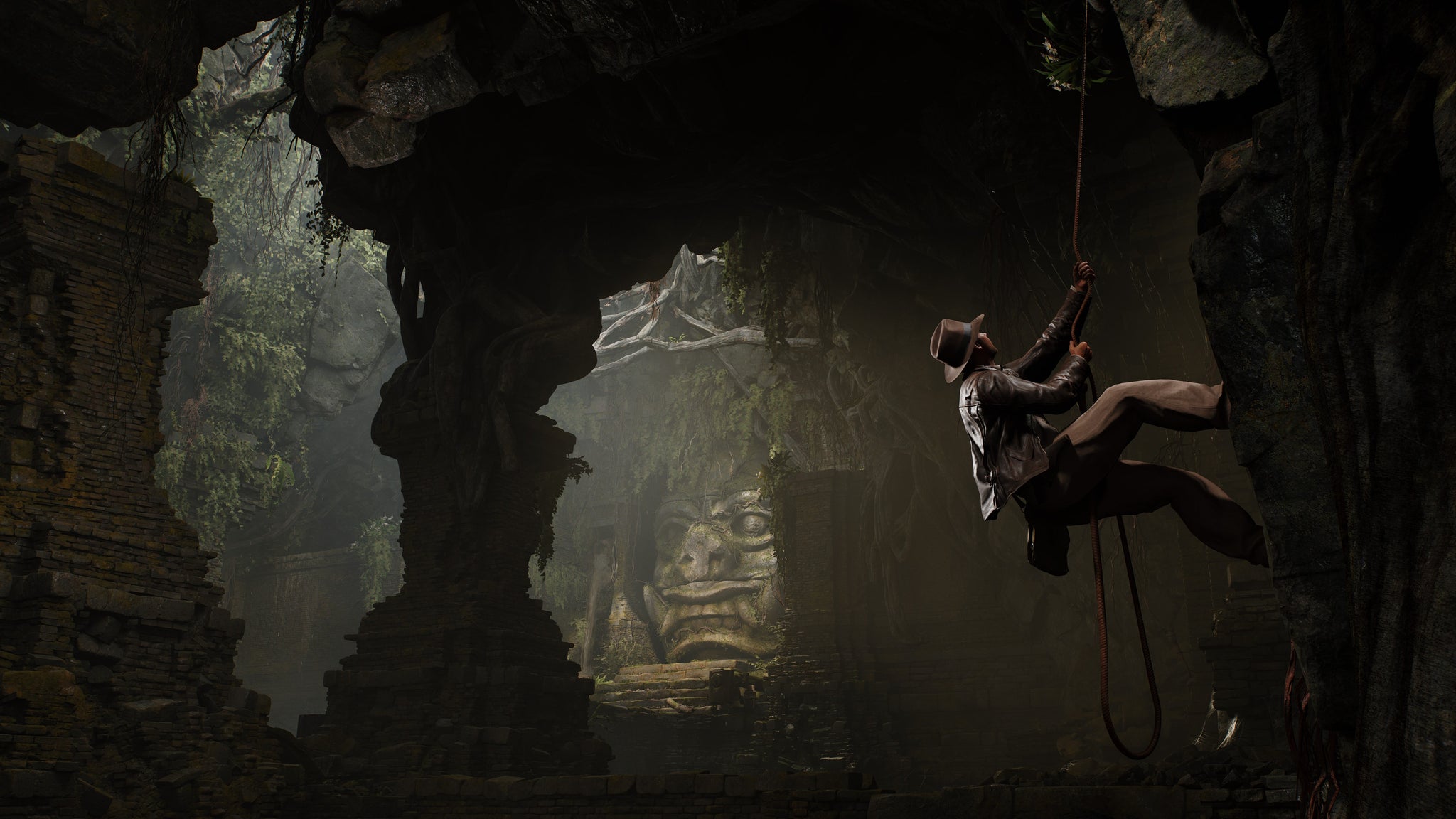
And we shouldn’t forget Indy’s legendary whip—it’s more than just a tool for knocking Nazis around. It feels great to smack a pistol out of a soldier’s grip and watch them clamp their wounded hand while yelping in surprise, but the whip really comes into its own when you’re traveling through The Great Circle’s sprawling spaces. As mentioned earlier in the context of the Vatican level, it lets you grab onto shortcuts and climb to higher vantage points on the map. Interestingly, although the game mostly plays from a first-person perspective, the camera shifts to third-person whenever Indy uses the whip to rise. That kind of viewpoint change could be jarring, but here it’s handled cleanly, and the swap felt natural the moment it happened.
That also ties into climbing and navigation more broadly: Indy has a stamina bar you’ll want to keep an eye on. You can restore it by standing still or eating random food items—like the biscotti I found while roaming around the Vatican. A lucky discovery, for sure. Still, when stamina runs out, Indy doesn’t seem to slip off walls. I tested it myself; he just dangles there awkwardly and slowly catches his breath again. That’s useful for tough climbing puzzles, though it’s a lot less comforting when you’re trying to escape while enemies are shooting at you.
Hopefully, some of these problems will be eased thanks to Indy’s growing supply of Adventure Points. These points are used to unlock new skills as the game progresses, and you earn them by completing specific objectives—things like tracking down artifacts, solving puzzles, and photographing interesting items. Indy, after all, carries a camera during his travels. If you zoom in and photograph certain objects, you’ll get hints for puzzle solutions, additional background knowledge from your companions, or a boost of Adventure Points. Once again, this helps anchor Indy in his surroundings and reinforces the feeling that you’re playing a treasure-hunting archaeologist, which I genuinely enjoyed.
For instance, I picked up some Adventure Points by photographing a mischievous little monkey in the market in Giza. Later, I spent those points upgrading my abilities—one of which can give Indy a temporary boost when he’s near death. That provides players with a short window to crawl back toward his signature hat and rejoin the fight. You can develop many skills over time, but you’ll first need to locate the right upgrade books. They’re hidden around the environments, so it pays to stay alert for clues and concealed passageways. Valuable treasures are always just around the next corner.
Still, there’s one downside that can’t be overlooked. While I enjoyed roughly 95 percent of my time with the game, I kept getting the impression that the tomb-exploration puzzles (at least the ones I ran into under the Sphinx in Giza) were built in a slightly familiar, repeatable way. For example, one challenge asked me to reposition mirrors so beams of light could bounce around the space and eventually unlock a door. I get that the range of historically grounded puzzle ideas is probably pretty limited—those who might have designed these scenes in the past would likely have had little more than light, stone, sand, and spikes to work with. Even so, the old-style light-beam puzzle has become a common trope in video games, and meeting it two or three times back-to-back starts to feel a bit wearing.
Of course, spike traps, sand traps, rotating one object to match another, and moving through the dark with only a worn torch and a few matches are all classic Indiana Jones material—so, in a sense, the design fits the films and everything around them. Still, because I’d encountered these mechanics in other games, they never quite landed with the same sense of surprise. I didn’t feel like I was uncovering a tomb that had been untouched for centuries; it felt more like I was stepping back into territory I’d seen before, following in the footsteps of other adventurers who had already been there.
To be fair, that’s really the main criticism I carried away from The Great Circle. Beyond those somewhat overused puzzles, I genuinely think the game could turn into something truly special, and I’m looking forward to playing more. It’s taking shape as a warm tribute to Indiana Jones—similar to how Rogue City was for Robocop—and if you consider yourself a fan of the film trilogy (there have absolutely only been three movies, not sure what else is being suggested), you’d do well to keep an eye on this.