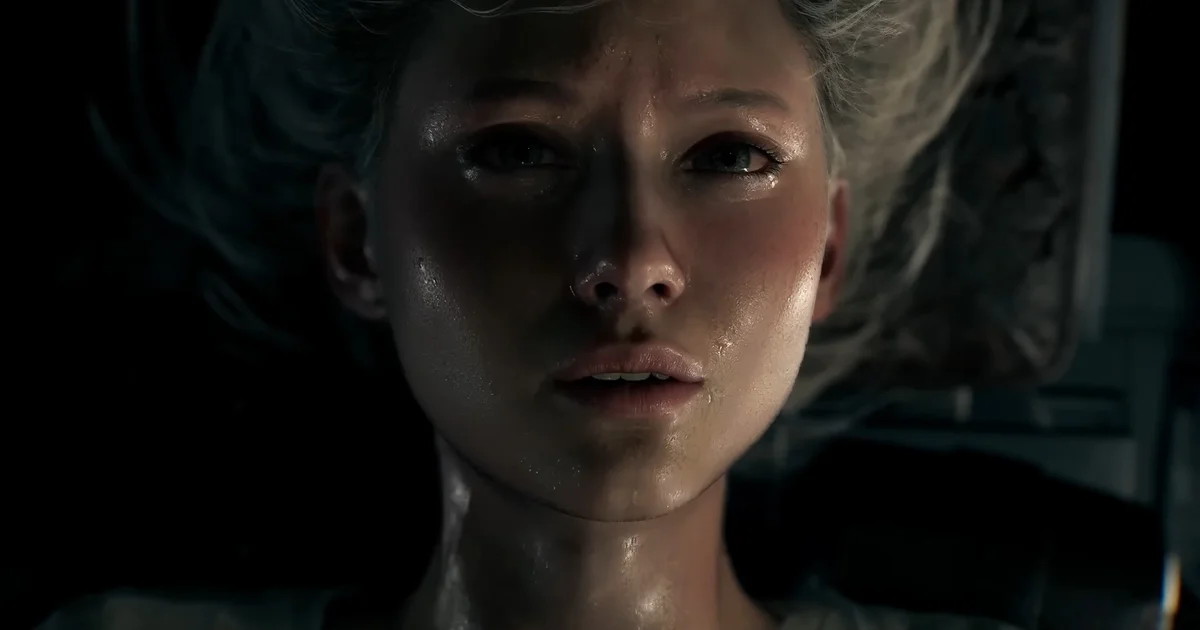
If you’ve been following video game updates closely, chances are you’re seeing a steady stream of fresh information about Resident Evil 9/Requiem right now. To break it down: Capcom has used its usual approach of giving the project a headline name while swapping a letter—here, “q”—to signal the installment number used in the reveal trailer. Over the weekend, a bunch of critics and online creators packed into a dim theater to view a pre-recorded first look at Summer Games Fest’s biggest announcement. But just a short distance away, there was something even more compelling: a hands-on session that only a limited group of people got to try.
During the private hands-on segment, I could hear the theater crowd roaring with excitement and fear through the Capcom booth’s flimsy partitions. The thin walls, though, cut both ways. Not long after I wrapped up my Resident Evil 9 hands-on time, my phone went off—an incoming note from a friend and colleague who was standing at Capcom’s display at the same time.
“Heard you yell ‘SHITTING HELL’ or something while I was conducting an interview,” the message reads. It’s pretty funny. Still—yes. Absolutely. I hope this awkward moment shows just how effectively Resident Evil 9 can make you feel uneasy.
The most interesting part of this Resident Evil 9 preview is that it feels, fairly speaking, familiar. It quickly brings to mind some of the earliest demos from Resident Evil 7. Grace Ashcroft, the new protagonist, is trapped in a tight space while a deadly stalker closes in. To make it through, players must work through puzzles and either dodge or escape the stalker.
The half-collapsed hallways and personal chambers—apparently what an in-game note calls the Rhodes Hill Civic Care Center—echo the ruined ground-floor annex of the Baker home. When Ethan Winters ran those rooms trying to avoid Jack Baker after a tense family dinner, the setup felt similar. In Grace’s case, she breaks free from some kind of grim medical experiment, only to be hunted by a shambling monster that seems to have once been human.
So what I’m really getting at is that this demo shows Capcom revisiting some of its older strengths. We’re also watching familiar tactics repeat: the monster forcing its way through walls that look solid, the sound triggered by the main objectives pulling the stalker’s attention immediately, and then a scramble to safety. Your mind keeps flipping between figuring out the next item or puzzle step and simply trying to live long enough against a relentless pursuer determined to consume you.
Capcom has clearly honed this formula. There’s an obvious understanding that players know what’s coming, too. If you’ve ever been chased by Jack, Nemesis, Alcina, or anyone else, those past memories—and the fear they spark—get turned right back on you. At one point, I even try a pointless, nonsensical input, hoping to outmaneuver the stalker’s AI. It fails, and I’m suddenly scrambling. For anyone new to this style, it should be just as frightening—if not more—because the outcome can be hard to predict. No matter who you are, it’s going to be brown-trouser time.
That said, it isn’t completely the same. This enemy includes a distinct mechanic that sets it apart from any other pursuer in the series’ history—though Capcom has asked that the precise details stay undisclosed for now. Still, it’s smart. Once you grasp what’s going on, you get a small feeling of control, without stripping away the dread.

Back to my own reactions: at one point, I had to push a heavy hospital cart into position so I could climb onto it and reach a toolbox on a high shelf. Even getting into that area was tense, but a run of bad luck spiraled into a full-blown nightmare. First, because of the cart’s weight, I have to move it using both hands. The lighter I’d picked up earlier gets dropped; the room goes dark except for the faint emergency lights washing over the bloodstained floor. The cart’s wheel is a bit unstable, so every move makes a lot of noise. Honestly—come on. Then other sounds start up: the creature has noticed me.
Since the room has only one real way in or out, I don’t rush toward wherever the monster might be coming from. Instead, I lock up in place, trapped in darkness, waiting for the shuffling and scratching to stop. Grace’s breathing stutters—and so does mine. The sounds cut out. I wait a beat, then another. Silence. I’m safe. I slowly tap the d-pad upward to grab the lighter and ignite it. The moment the light hits, the twisted beast is barely a foot away, towering over poor Grace. Shitting hell.
To be clear, this is a fantastic mix of the pieces that make horror games like this so effective. A portion of it comes from staged, scripted moments—like that cart always creating enough noise to draw the creature. But my decisions, the stalker AI’s behavior, and my perfectly unintentional timing when I lit the lighter all collide into something that nearly sent me straight out of my seat. The PR team at my demo site told me they hadn’t seen that exchange play out in exactly this way, either—and it’s a small space, clearly early in the game, with only a few options to try.
In that moment, lighting mattered a lot—and it remains important throughout the demo. It really seems like RE Engine has received a major lighting upgrade, and RE9 is Capcom demonstrating what it can do. The hospital ward Grace is in feels as though each room alternates between sterile fluorescent illumination and complete darkness, with only the flashing lights of medical equipment and similar sources breaking through. The lighting looks excellent, and so does everything else. On top of that, Grace’s strained, fearful facial expressions are the best animation I’ve seen from RE Engine so far.
This leads me to the most surprising detail in Capcom’s reveal: Resident Evil 9 supports both first-person and third-person play. All it takes is pausing the game, heading into the options menu, and flipping a setting. You can switch between them freely—just as I did during my session. Both viewpoints feel natural, though in this particular demo, first-person is clearly presented as the preferred choice. Even in third-person, you’ll still occasionally jump back to first for cinematic sequences, which suggests the transition between gameplay and terrifying set-piece moments—and back again—is part of the plan. Still, it’s great to have the option.
I’m especially curious about this because the camera choice could influence how fear builds. From where I sit, third-person tends to feel a little less intense. In that perspective, the player is slightly more separated from what’s happening. But first-person brings its own benefits, too. While searching the hospital for clues, it was easier to spot smaller items and notice finer details when I was in first-person.
Now I’m drifting into speculation—but if I were Capcom, and I were building a game to celebrate Resident Evil’s 30th anniversary, one intriguing strategy might be to create a story with multiple narrative strands reflecting the series’ various styles over the years. I’m guessing Grace is only one of at least two main protagonists, and I wonder whether her counterpart might be designed primarily for third-person play. You’d have Grace, the inexperienced young agent trapped in stomach-churning first-person survival horror—then maybe another character, a STAR, taking on explosive third-person action horror.
The fact that I’m even guessing is encouraging. It’s genuinely exciting, too. It suggests that a demo that felt familiar—aside from the technical upgrades and a couple of subtle twists—has sparked real interest and imagination. While Capcom developers talked about their goals, they said they wanted to create a horror experience that leaves players hungry to find out what comes next. After playing, I’m convinced. As recognizable as this demo seems, I don’t doubt the finished game will push things even further. The ambition is obvious. And waiting until February is going to be a tough stretch.