Would I bet on Code Vein 2 being one of the most entertaining Souls-like games I’ve played in ages? Honestly, yes. It doesn’t just build on the systems and design elements of the original—it also brings genuinely fresh ideas to a genre that’s full of tough competition. And that’s not hyperbole: after spending a few hours with Bandai Namco’s upcoming sequel, I can say it delivers a highly enjoyable experience, supported by enough depth that even veteran action players should find plenty to sink their teeth into.
Like its predecessor, Code Vein 2 places you inside a gothic horror atmosphere, styled with striking anime visuals. This time, you’re thrown to the edge of disaster, sent back through time to meet a lineup of heroes whose fates are tied to a major catastrophe. From there, you’re tasked with learning who they are—pressing forward through waves of frightening enemies and heavyweight boss fights.
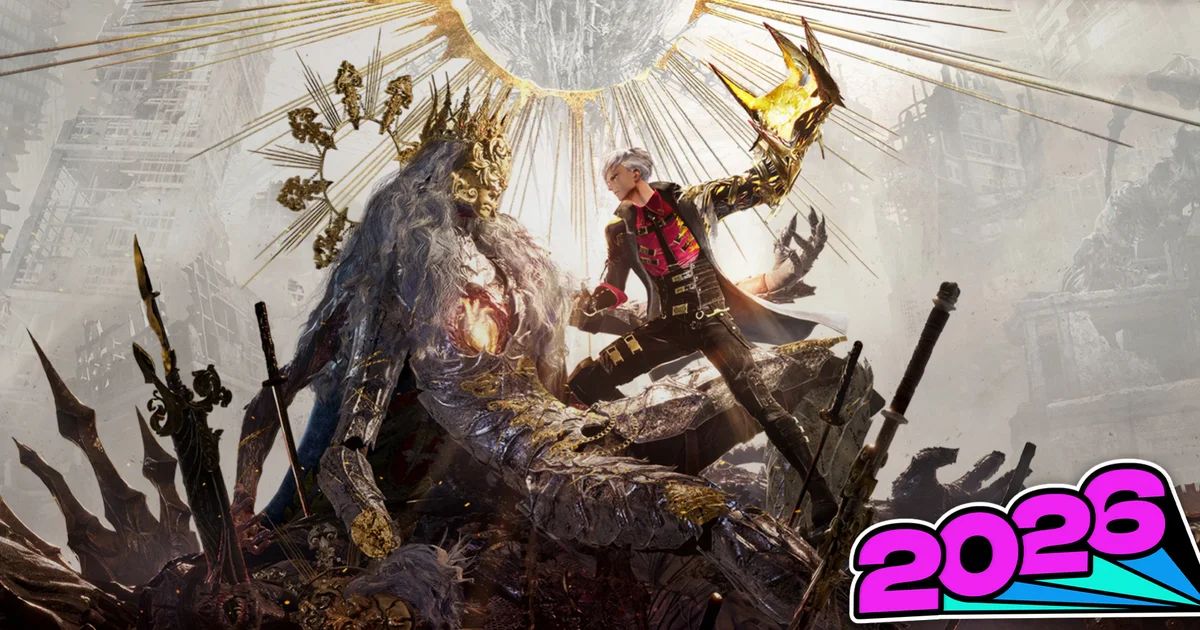
Just as in the first game, Code Vein 2 is a visual standout. Moving through a human settlement, below the sprawl of a city, and into the guts of buried machinery, the anime look holds everything together—while the tone of the world shifts from grimy darkness to vivid, almost wicked energy. In combat, your Jail attacks trigger bursts of gold, and your combos flare up with dazzling, head-turning effects. Once the action really starts, it’s difficult to look away.
The character creator also leaves a strong first impression, with far more choices than many other titles in Code Vein 2’s orbit. I was genuinely impressed by how many different ways you can shape your character, from tiny adjustments to color and form down to the smallest details. If you’d rather skip the long process of fine-tuning everything, there are plenty of attractive preset options waiting for you instead. No matter which style of Code Vein 2 player you are—from your very first minute to your 500th—there’s something here worth enjoying.
But how does it play in practice? Code Vein 2 offers more than just stylish presentation. It stands out as one of those rare action games that lets you savor the satisfying feeling of landing a solid hit. With each strike from a heavy weapon, you get a satisfying blend of visual and audio cues that lands right in the sweet spot of your brain’s reward system. Meanwhile, faster weapons trade one big blow for a rapid series of smaller hits, and the overall impact can still compete with heavier options.
Even ranged weapons keep that same energetic momentum. The end result is that each encounter in Code Vein 2 feels exciting. During my session, I leaned toward the hammer weapon class, charging powerful attacks and then releasing them on my targets. Sometimes that meant enemies went down quickly, while other times it would leave them staggered and open for a dramatic finishing move. It’s a compelling improvement over the original Code Vein, which previously felt a bit slow in comparison.

There’s also a lot of underlying depth, and it’s clear this is a step up from where the previous game left off. At the center of it is the familiar Souls-like combat structure, where stamina and a range of stats help steer how different weapon types perform. Once you’ve played one, you’ve seen the core ideas at work. Still, with how polished Code Vein 2’s foundation feels, that baseline combat remains engaging.
What really sets Code Vein 2 apart is the sheer amount of customization. Ichor makes a return, functioning as a resource you can use to unleash special attacks called formae. I was introduced to a wide range of options during the preview, and being able to swap them around was part of the fun. Your Jail attacks can be tweaked, and so can your weapons. How your character behaves in combat is shaped by a Blood Code—essentially broad archetypes, but with distinctive twists that are far more interesting than something bland like a simple: “strength +5” modifier.
One Blood Code I had a chance to try during the preview was tied to the companion Josée Anjou. Usually, you only gain Ichor by performing Jail attacks. That creates a loop where you land enough on an enemy to trigger a Jail attack, build up a meaningful stash of Ichor for special moves, and then use those moves to press the attack—setting up even more opportunities to drain foes. It’s straightforward, effective, and a solid base.
With Josée’s Blood Code, though, each normal attack generates some Ichor. That means you can access game-changing special moves without leaning entirely on Jail attacks. The trade-off is that going past the maximum Ichor limit will harm you. This shift completely reworks how Code Vein 2 feels, and it’s easy to imagine there are many Blood Codes built around similar concepts. It’s an inventive direction that nods to different play styles while keeping Code Vein 2 from feeling stale.
As for the story snippets shared during the preview, there’s definitely plenty of promise. You bounce between different points in time, build relationships with an assortment of characters, and then jump ahead to fight their more monstrous forms. If you’re willing to lean into the narrative, it can connect through a sequence of personal tragedies—but how strongly it hooks players will likely depend on how deeply it explores the histories of these past heroes.
Josée, to her credit, comes across as energetic and spirited. Still, when it’s time for her to reveal more emotionally compelling layers, there isn’t as much time spent on it as you might hope. The pace at which her family nightmare unfolds feels particularly fast. If the intention is that, amid nonstop melee encounters with a horrific lineup of deformed enemies, I should be curious about why this bloody rampage is happening, then I truly hope Josée sets the standard rather than standing out as the exception. Similarly, Lou—your sidekick who helps facilitate the time-travel journey—was someone I barely saw during the preview. Since your connection with them seems to be a key pillar in Code Vein 2’s overall story, I’m curious to see whether that portrayal will really land in the finished release.
If I had to highlight one thing about Code Vein 2 that might genuinely catch the attention of Souls-like fans, it’s this: Code Vein 2, unlike many of its peers, seems to be moving with intention—carving out its own path instead of simply drawing from the same well the subgenre has used for years. It’s leaning harder into its strengths, concentrating on what originally pulled in a dedicated audience when Code Vein debuted in 2019. It’s clear the game is stepping out of the typical Souls-like orbit, sharpening what it already does well and adding new ideas along the way.
If you’re not familiar with the wider Souls-like category, here’s a more straightforward way to think about it. You can design a stylish character with an eye-patch and beret, customize them in a robust character creator, then arm them with a firearm and send them into a world that feels distinct from its rivals. Even on that basis alone, Code Vein 2 should earn at least a passing look from anyone with even a mild interest in action games.
Code Vein 2 was previewed at Bandai Namco’s office, with travel expenses covered by Eurogamer.