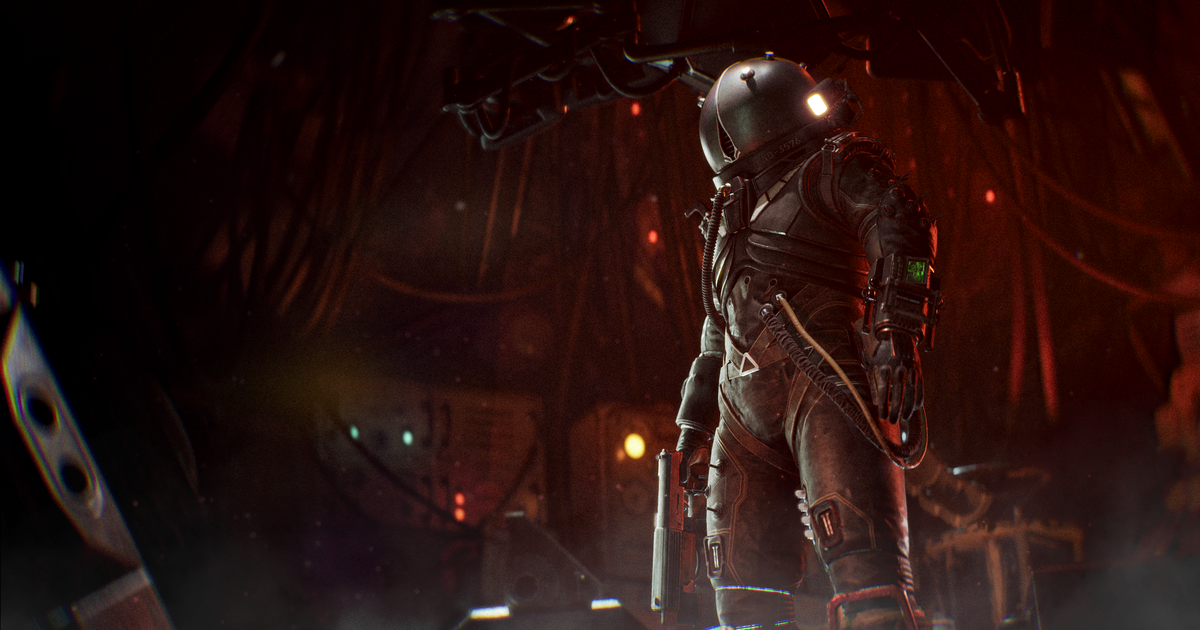
Cronos: The New Dawn is Bloober Team’s most outstanding original effort to date. It delivers an absorbing journey through a suffocating portrayal of 1980s Poland, where your adventure turns out to be far different from what it initially seems.
Cronos: The New Dawn pulls you into a vivid, authentic portrayal of 1980s communist Poland in the wake of a terrifying disaster – The Change – which has completely wiped out humankind. This strange outbreak leaves people as deformed creatures, pushing to blend into ruthless swarms of biomass while growing far more powerful along the way. Your mission falls to the protagonist – the Traveler, ND-3576 – as she travels back through time to ‘awaken’ spirits that have vanished from the path forward. One key detail to keep in mind when the atmosphere threatens to overwhelm you is: do not let them merge. The game makes sure you don’t forget that quickly.
Survival horror fans will be glad to know that Cronos: The New Dawn carries the DNA of several well-loved cult hits: Dead Space, Resident Evil, Alan Wake, and Silent Hill echo throughout the biomass-heavy environments you’ll explore. Still, don’t mistake it for a simple knockoff. Even if it looks familiar at first glance, Cronos’ borrowed influences are handled with real polish. Bloober Team has put together an experience that feels distinctly original, blending the best parts of those games into something genuinely fresh, while drawing on what it learned during the creation of the excellent Silent Hill 2 Remake. In many ways, it’s Bloober Team’s strongest original work yet.
Where Cronos truly shines is in its storytelling, delivered through notes, newspaper clippings, the setting itself, and the souls trapped within that history. Players who pay close attention and take the time to examine what this disturbing world has to offer will be rewarded. Stepping into the role of Traveler ND-3576, you head back to recover the lost spirits of those who fell victim to The Change, guided by the enigmatic Collective. Little is revealed about this group or what it wants; ultimately, it’s up to you – and the Traveler – to uncover their true motives. At the start, the Traveler follows The Collective’s instructions automatically, but encounters with other characters steadily reshape the experience into something far more personal—highlighting what The Change has done to others, and how many people refuse to let it go.
As you may already expect from Bloober Team—moving from a studio with uneven results to one that has clearly mastered psychological horror—there’s plenty more happening beneath the surface. Nothing stays exactly the way it first appears, and by the time the story ends, your assumptions are likely to be overturned in the most satisfying way.
Most of what you’re trying to figure out won’t be handed to you on a plate. Instead, you have to uncover it by really studying your surroundings and examining decorations, graffiti, scattered debris, and more. Some of these discoveries are quick, yet deeply impactful—like another Traveler who uses a prosthetic robotic arm. In the area he points you toward, not far away, you’ll come across what looks like a pair of separated limbs. Others matter even more to the bigger picture: clues about The Change are scattered through personal diary entries left behind by the dead, while your own ideas develop as you find audio logs from fellow Travelers, scientists, and military personnel, or stumble upon graffiti and comics offering artistic takes on what it’s like to experience The Change… and what role the Traveler plays in it.
As you push through crumbling spaces and move across time and distance, it’s your job to track down key figures tied to The Change so you can remove their souls with a piece of equipment called the harvester. It’s a device that feels ripped straight from A Nightmare on Elm Street, complete with needle-like blades that extend from the Traveler’s suit like claws. Working your way through this battered version of 1980s Poland—backed by a synth-heavy, period-appropriate soundtrack and the harsh, unsettling noises of enemies designed to keep you alert—you’ll also meet the elusive Warden, a fellow guide for other Travelers who seems to have hidden motives. But what are those motives, exactly? That’s the kind of question that drives you to keep moving forward.

ND-3576’s early goal of waking the people lost to The Change soon broadens into an effort to harvest anyone who can shed the most light on the condition—how it happened, her involvement, and her real identity. It might sound driven by self-interest at first, but you’ll quickly see that many of the characters in this grim tale are motivated largely by their own reasons. Safety and trust don’t come easily here. Influenced by The Warden, and shaped by the questions raised by the spirits she encounters, this rigid Traveler—who often feels almost mechanical—slowly starts to come across as more human. She begins to challenge what The Collective is truly trying to do, whether she had any part in The Change, and who she is outside of that heavy-metal armor.
Without giving away too much, as you meet more characters it becomes clear that you’re embodying the role that everyone else treats as the villain (which I find especially fascinating—it’s a point of view we don’t often get in a genre that usually casts you as the everyday hero, cop, or special agent determined to save the day). People are uneasy around the Traveler, they’re frightened by her, and they’re convinced she’s responsible for The Change, the force that took their lives. As a result, you’re stuck with the constant question of whether you’re actually helping these people—or whether you’re the monster they’ve been persuaded to believe you are. As the Traveler gradually becomes less mechanical and turns her attention toward answers about The Change and her employer, The Collective’s involvement, your role evolves in the same direction. This shift—from a robotic presence to something more human—for both the Traveler and the Warden, as they move toward a deeper understanding of what it means to be human, is both moving and unsettling. It makes you ask who these characters truly are beneath their armor, and what their real intentions might be. (I’d love to explore this further, but alas, spoilers.)
In Cronos, the darker truth sits at the heart of the story—an idea that keeps pulling you forward, always hunting for answers (“Tell me, what truly occurred in the Steelworks?”). At least, it tries to do that, even as it inserts moments focused on petting collectible cats, offering a brief, welcome break in a world that otherwise feels relentlessly chaotic, where “security” can’t be trusted.
While Cronos: The New Dawn delivers a strong sense of story and character progression, the gameplay doesn’t always land as smoothly. It plays in a way that recalls a Resident Evil-style experience, with inventory management playing a key role and resources staying scarce. I understand the appeal of that pressure, but too often Cronos tips into pure irritation instead of genuine enjoyment—more than I’d like.
The bright side, as mentioned earlier, is that even though Cronos: The New Dawn borrows plenty from other horror franchises, it seldom comes off as copy-paste. In fact, the finished game feels refreshingly distinctive in a genre that tends to stick closely to familiar structures. One highlight is the merge system, which sharply contrasts with Dead Space’s dismemberment mechanic. It’s something you have to think about constantly as you move through Cronos. Leaving Orphans behind—people who’ve been tragically twisted by a plague called The Change—means you may end up giving new enemies the chance to merge with them, making those threats even harder. Needless to say, you won’t want to squander ammo in Cronos.
Likewise, pulling out essences from people—the Traveler’s main objective—doesn’t feel quite as repetitive as it might sound right away. These essences offer a range of benefits for your character. For example, one lets you deal more damage to burning foes, while another grants you 10 percent extra Energy (the in-game currency), though your carry limit still applies. They also power some of Cronos’s most memorable hallucination-driven sequences: the souls the Traveler gathers end up lingering in a physical way, with the frustrations tied to them becoming more and more important as the game moves forward. Expect jump scares—though you can never really be prepared.
In the same way, players who ignore the merge system are likely to run into serious trouble. There’s a clear reason the game keeps urging you with lines like “don’t let them merge” or “incinerate their bodies.” Overlooking those warnings is pretty much like choosing a tougher difficulty. Cronos also introduces fresh tools that support this: an Emitter that helps you work with time-related disturbances to reach new areas, Gravity Boots for moving along walls and bouncing between platforms, and a Conductor that builds electrical routes to activate generators. Together, these mechanics bring a puzzle element to a game otherwise driven by combat, giving you some breathing room during relentless fights. Still, the Gravity Boots and Platforms may be the least exciting option—sometimes they feel repetitive and a bit like a gimmick. The game even seems aware of its habits. It acknowledges the recurring moments (particularly around activating generators), and the Traveler brings that up herself. Even so, the tools—and the new weapons that come with them—are rolled out at a pace that keeps the overall experience feeling fresh.
Your inventory is equally important, and it can still bring a few annoying moments. Inventory and resource management isn’t exactly new territory for horror games, but Cronos raises the bar. It creates a form of pressure that experienced survival-horror players will likely appreciate. Newer players, however, may find it harder to adapt. You can carry only a limited number of crafting materials and items (and you can expand that capacity over time using Cores, which you discover through exploration). That limitation forces you to plan carefully for every encounter. And, of course, you definitely don’t want to waste ammo on shots that aren’t properly charged, or throw away explosives—because it quickly pushes you toward a more cautious rhythm and to learn from mistakes (like letting enemies merge!). If you get good at this, fights become easier to manage. It doesn’t just feel empowering because of upgrades; it’s also empowering because you realize that combat here isn’t always about firing first. (When ammo is running low and things start to feel desperate, you can often turn the environment to your advantage—there’s usually a canister or two waiting to be detonated.)
Start by focusing on inventory improvements early, then keep building up your weapons, and you’ll begin on solid footing. But if you don’t think carefully about your upgrades and what you can afford to carry, Cronos: The New Dawn can slip into a frustrating loop of repeatedly retreating to save points. A common reason is stumbling onto another critical item with no room left in your inventory. Add the threats posed by the Orphans and the Merge mechanic, and you’ll be stuck dealing with tough situations again and again. The good news is that while mistakes can happen—and will happen—the game gives you the chance to adjust your build or rethink your approach, and it actively encourages you to do so.
With inventory management and the merge system working together, Cronos demands smarter, more tactical choices during fights, and you should be ready for multiple deaths. Several encounters with groups of Orphans pushed me to come back with new tactics (and extra explosives). That can be rewarding, but Cronos also has a downside: some of these combat situations—especially when you’re swarmed by Orphans or trapped in cramped areas—can feel tougher than boss fights. Maybe that’s intentional, but it caused certain boss encounters (excluding two later moments you should absolutely expect) to come across as a bit underwhelming.
Some of the best moments in Cronos feel fast, fluid, and genuinely satisfying—charging shots, bouncing between heavy weaponry and handy tools, and watching enemies explode as you weave through environments crafted with striking care. Even as the spaces begin to fall apart, they still carry the charm of Poland, which makes everything feel engaging. Still, in the rougher stretches, Cronos can really test your stamina, often forcing you to lean on specific actions just to stay alive. The stomping move shares the same button as shooting, so it’s easy to stomp on foes by accident, and it’s also all too simple to lure opponents toward explosive barrels.
If you don’t manage your resources carefully, you can quickly get stuck in brutal encounters where you’re short on ammo or explosives—Orphans everywhere, blending in without hesitation. More than once, I found myself spending hard-earned Energy on ammunition instead of holding it back for upgrades I actually wanted, all while doing my best to stop enemies from merging. I won’t pretend I played perfectly—I could’ve handled my resources better—so don’t copy my mistakes. That said, it does give the impression that the action can tip into something a bit too chaotic.
Even though I have some concerns about parts of Cronos: The New Dawn’s combat and inventory systems (and I did run into an unfortunate issue where the final boss disappeared mid-fight), I can’t deny that Bloober Team has delivered an unusually immersive experience—one that demands your attention and strategic thinking as much as it tests your patience. Push through challenging battles, use the surroundings to your advantage, and you’ll find plenty to enjoy here. The jump scares landed on me more than once, its story about illness, identity, and belonging hits emotionally even in the midst of horror, and the way Bloober Team brings 1980s Poland to life—along with its detailed environmental storytelling—makes it clear how much care went into this punishing journey. In the end, Cronos: The New Dawn highlights Bloober Team’s core strengths: learning from earlier projects and achieving major success with the Silent Hill 2 Remake. Just as importantly, it offers something fresh: a game where you have to contribute your own observations to piece together its hard-to-pin-down narrative and plan your survival. The final result really does justify the effort.
A copy of Cronos: The New Dawn was provided for this review by Bloober Team.