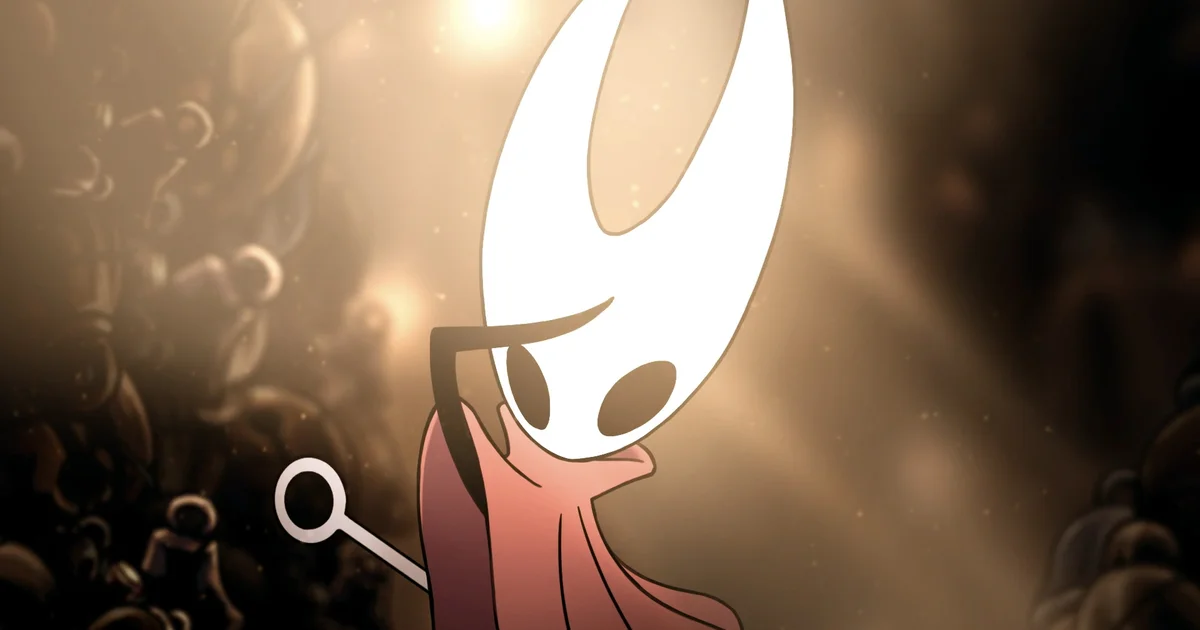
Charming yet unmistakably petty, this game is full of surprises and brings its characters to life with real authenticity.
Metroidvanias are the kind of games where I can suddenly find myself stalled in several places at once. If I head upward, I run into a boss I can’t bring down. If I go down the stairs instead, I’ll stumble into an area that wipes me out the moment I step inside. Turning left or right only funnels me into dead ends where I still don’t have the gear to push through. Stuck in every direction on the compass at once—that’s what makes a Metroidvania.
Hollow Knight: Silksong is a Metroidvania, defined by striking grace and—just as importantly, even after the patch—an intensely stubborn drive to keep going. You assume the role of a poised, quick hornet who has been abducted and must chart enchanting but frightening mini-worlds, echoing the kind of close-up wonder Robert Hooke introduced through his microscope. What an incredible place, or rather, set of places. In the damp, moss-covered ground, even the smallest ant grows into something enormous, while a bedbug swells into a hulking battle machine bristling with weapons and spikes.
Before the turmoil takes over, it’s worth pausing to admire how gorgeous this hand-drawn world looks. In it, you’ll find grottos, caves, and trails carved out of living soil. There are intricate workshops humming with spinning saw blades and steaming vents, plus abandoned seaside towns sized for creatures no bigger than the fluff in the corner of your pocket. You’ll also encounter cursed cathedrals, defensive strongholds, attic-like rooms inside palaces, and whole communities that seem to live inside twisted jewelry boxes—where the streets gleam with scattered gemstones and bits of copper and solder. Even the air, heavy with minerals, feels thick with petals and pollen. And all of that is matched with a soundtrack that’s eerie, playful, and utterly inviting—an ideal setting for a string of haunting little tales you might stumble across in a quirky old bookshop.
The world feels alive as well. Like in the original Hollow Knight, Silksong’s setting is packed with shopkeepers, mapmakers, and a variety of overlooked craftspeople and adventurers. They bring a lot of personality, and the visual style can shift smoothly from one region to the next without losing that steady inner unity. There’s always a touch of Mucha in the way the branches curl, and brass in the details of this landscape. There’s always a hint of Méliès in the flicker of the world and its odd inhabitants—made even clearer by the soft, grainy glow that follows the protagonist. If there’s ever a game suited to a magical lantern, it’s this one without question.
Here’s what I’ve learned during my time over the last week: you have to figure out how to get the most out of the experience of being stuck in Silksong. Treat it like an opportunity to improve. After all, it’s a game where you can end up stuck at just about any point, while still keeping busy with different tasks. Boss fights, sure. But also deadly rooms, tough combat situations, and especially rough platforming sections with spike-lined walls and surfaces that can’t be trusted—things that only truly make sense in 2D gameplay. I haven’t managed to get stuck in a menu yet, but give me time, and I’m confident I’ll pull it off.

With so many chances to get stuck, the next step—when you hit a standstill in Silksong—comes down to how you choose to respond. You’re blocked, so what’s the next action? I cycle through different moods and experiment with various ways of handling the danger ahead. One of my early spikes in difficulty—featuring a lethal room full of nasty scarecrow creatures, several of which brandished huge scissors—made me dig in. I kept my focus locked. It took me the whole day to get past it, improving little by little with each attempt, though things spiraled when my attention slipped and fatigue finally caught up to me. In the end, I beat those scarecrows, but once the dust settled I realized I may have gone about it the wrong way. That happened fairly early in my Silksong journey, and it’s when I recognized that I needed a more solid “stuck” approach.
A few hours later (in real playtime terms—more like a day and a half later—based on how humans measure time), an overhead boss managed to truly frustrate me. This is the only major detail I’ll reveal in the review, so feel free to skip ahead if you’d rather not know.
Sister Splinter. She looks like a kind of mole witch, at least in my mind. She hangs from the ceiling and attacks you from above with her huge clawed hands. Once you learn the timing after a handful of attempts, her swipes are fairly easy to dodge, and I also worked out how to clear the vines she drops so I can’t get trapped by her attacks. By the game’s overall standards, that’s all pretty manageable. But then, in her second phase, she unleashes those terrifying floating stinging creatures—and for me, that was the breaking point. It was the same feeling as realizing there’s a lethal eighth digit on the phone number I couldn’t quite remember.
So I decided to switch tactics. I stepped away. I wandered. I started playing more like an explorer, moving back and forth across Silksong’s tightly connected web of interconnected areas. What was I looking for? Something I had missed—a secret. A health or silk upgrade that could improve my staying power. A few more rosary beads, Silksong’s scattered currency, so I could buy new items from the shop—always a win. Possible side-bosses I might have overlooked. (I’m constantly hunting, and often coming up empty, for a side-boss that’s unexpectedly easy and pays me back with something overpowering; it hasn’t happened yet.)
And what I ended up chasing during those roamings (and that exploratory mindset has since morphed
— into my usual “Stuck Strategy,” the way I most like to play the game) — was that, deep down, I felt I’d finally learned enough, improved enough, and could return to Sister and work out how to beat her.
her crowds. In a world that hardly offers any encouragement, I wandered through passages that felt like Gormenghast and pushed into its raw, physical chambers, all in search of a fresh spark in myself.
Right—this all sounds painfully dull. And yes, at moments, these kinds of setbacks can be genuinely frustrating. Still, the Sister Splinter story ultimately wraps up in a rewarding, even if intricate, finish—one that pulls together everything I’ve come to value about this game. At some point, during more wandering and thinking than anything else, I got so absorbed in the atmosphere that I doubt I’d have reached this level of commitment without aimlessly roaming; then, Sister Splinter finally appeared. I knew I needed a dedicated approach for those airborne enemies: something precise and quick, a single strike meant to end the threat. I’d seen on TikTok talk of a particular kind of area assault—one that could reach far across town from a rainy aviary. I’d already been there before, but the constant onslaught of birds had overwhelmed me, so I’d given up on that route and chased something else.
So, was I really going to take on those birds now? Birds against mole-fisted hanging witch—what sounded less tempting? I decided the birds deserved a try. I headed out, checked every corner on my side mission, and eventually cleared those birds, earning the power-up—which also came with a further stretch of infuriating parkour—before returning to cut down the Sister Splinter’s minions. From there, I finished her off quickly. In the end, I didn’t take a single point of damage.
Spoilers over. The original Hollow Knight had moments like this, of course. But Silksong, as you’ve probably heard, is largely built from them. The setting is harsh. Even ordinary enemies will sometimes throw out an attack that deals two points of damage instead of one, and most bosses typically hit for two as a baseline. On top of that, the world itself is much more expansive—bigger, more ambitious, and filled with hazards you’ll have to learn to face as you steadily gain the abilities needed to access more of it. For my part, though, I started valuing those very elements: engaging with them, learning to move through them, and recognizing the beauty, promise, and thrill contained in every moment while I hunted for something to do in yet another stuck spot.
A big part of what changes in Hollow Knight’s world comes from Hornet, the new main character. She’s faster and more nimble than the original protagonist, so the learning curve begins immediately. Before long, she picks up a dash, but it’s an endless dash rather than Hollow Knight’s timed burst—one that pushes you to tackle encounters at a near breakneck pace and to explore the map more deliberately. She can also mantle, which makes even simple travel feel more involved. If you go back to the first game, I can already tell you that the lack of mantling will be the most noticeable and annoying adjustment. And fairly early, you also get the ability to float gently downward. Texture! Go fast, then go slow. Just enough timing shift to work into your attacks and your escapes.
Hornet also attacks from a diagonal angle, with her downward strike cutting through diagonally as well, and it takes a little time to get used to it. In fights, that means you need to judge spacing carefully so you can land a strike from above at the right moment. For movement—and the pogo-like downward blow the game encourages you to use often—routing yourself through rebound areas feels almost like being a chess knight dropped onto a bouncing castle that’s bobbing around on a ferry battered by storms. In other words, there’s plenty to learn.
And yet, there’s a lot to gain from all of it, particularly if you know what you’re doing and can move with the quick, precise confidence of a darting rapier—using sharp angles and tight openings when they matter. Bosses and tougher foes also push you to make full use of a broader toolkit, and they’ll punish you hard if you don’t. That brings us to the new menus, where you’re typically given multiple slots for special moves, a handful for passive items, and several for new offensive tools like throwing knives or traps—think of them as the universe’s most relentlessly painful tacks. Choosing what to carry into those menus can change the outcome of a fight. Then there are crests, which can completely reshape how you approach attacking, and those come with their own slots too. You can adjust all of this at resting spots, which are also where you recover after a brutal beating. In the end, experimentation really is the heart of the game, and after a few hours you’ll likely find yourself gravitating toward load-outs tuned for particular kinds of challenges.
(Quick aside: one of those early crests makes several of Hornet’s actions feel a lot more familiar to longtime fans of the original game. It’s an easy temptation, and I fell for it—but I still can’t help wishing I hadn’t.)
Hornet also heals in a way that differs a bit from what longtime Hollow Knight players may be expecting. Instead of the usual approach, she uses silk for healing—silk that’s normally created by fighting. You build it up until you’ve gathered enough, then spend it to restore health equivalent to three masks. Still, there are catches. While you’re healing you’re exposed, and that remains true even afterward due to
The same silk you use to recover is also what powers devastating attacks.
This opening gives the game room to suggest new tactics—for example, taking on certain boss encounters while staying out of harm’s way by healing in midair at precisely the right moment. It adds extra layers to how you play. At first, I had two items tied to healing. One let me generate silk each time I took a hit. The other made me invulnerable during the healing animation. But they both took up the same item slot, so I had to pick one. Which choice was better? It took me a while to see that the answer depended on what came next.
Stopping at a bench to reshuffle your gear, as well as healing there, is crucial in Silksong. The reason is simple: as the journey moves from murky swamps and long-forgotten dwellings into bright cathedrals and high peaks, the game keeps shifting what it asks of you. There are tough pogo segments that wear you down—dashing between bounce points and clinging to walls. You’ll also run into kill rooms where doors slam shut and waves of enemies flood in, often feeling more punishing than the bosses. The story dutifully keeps dragging you through fresh districts and overlooked pockets of older areas, so it feels like you’re stitching the whole world together, line by line. New quests, called wishes, tempt you away from the main route with promises of exciting new tools.
The foes you meet are both stylish and dangerous, getting larger and more complex as you press on. I especially like the clumsy cultists swaddled in sacks who swing elaborate staffs that look like antique weather vanes—often they miss. On the other hand, I’m not fond of the fluttering hornets, birds, and really anything that flies, because my aerial movement isn’t strong and I have to burn special abilities to bring them down. And then you’ve got the bosses, where Team Cherry leans into a sense of rehearsed, choreographed complexity that feels like a Busby Berkeley show.
There are plenty of bosses, and while some of the hardest fights can feel like exhausting marathons loaded with relentless pressure, the strongest moments are the ones that showcase Hornet’s nimbleness when it comes to slipping past threats. These encounters put the emphasis on satisfaction, not just brute difficulty. From a mechanical ant that lashes out with fast lava glissandos to a later showdown against a pair of tragic ballet partners—one grounded in narrative and laced with genuine feeling—the better bosses make it seem like teamwork is at the center of the fight. They’re shared productions between developer and player, where you find your own rhythm inside a pre-made routine.
Even the fights that don’t land as well can still end up oddly rewarding. For some of them, there are cheesy tricks you can lean on, but they still boil down to careful thinking and quick hands. It’s not uncommon for me to walk into a boss attempt for the umpteenth time, muttering the lessons I’ve picked up and how I’m supposed to apply them—avoid certain attacks, dash to get out of trouble, wait when you need to, and don’t go overboard with jumping. Again: there’s a lot here to learn and carry forward.
Boss battles, kill rooms, platforming challenges—taken together, they point to something clear about Silksong. At the very least, it feels like a bundle of many different play experiences woven into a single game. My favorite part of this—maybe the piece that sounds easiest to describe in theory but hardest to spot in practice—is how packed the game is with tiny, sparkling touches that reflect a development cycle nurtured with care. For instance: in Silksong, you buy your maps the same way you did in Hollow Knight. That’s straightforward enough. When you want to check the map, pressing a trigger brings it up. Also fine. But if you’re standing in water, the map won’t show, and the logic is obvious: your character can’t keep a map readable while submerged. The developer noticed that too, and they followed through by including it.
Another defining trait is the game’s unforgiving difficulty, often sprinkled with a playful, taunting flavor. Silksong carries a mischievous cruelty that actually makes a refreshing counterpoint to the eerie dreamlike atmosphere of its characters and environments. This difficulty is confrontational. It pushes you to ask why it handles you this way—the punishment of damage, how rarely you get genuine breathing room, the constant crush of boss fights (many of which demand elaborate, exhausting retries because save points are scarce), the fact that many save options require payment to unlock, and even the ones that are either broken or effectively trapped! Take a breath. Yes: you’ll often fight through the chaos in Silksong, only to reach a safe spot and discover you don’t have enough resources to rest.
To be fair, talking about difficulty is a complicated thing, since what feels tough comes down to the individual. What I consider hard might barely register for others. Still, Silksong isn’t merely difficult in my case; at times it’s deliberately and creatively harsh in a way that feels more objective. It aims to surprise you and frustrate you, sometimes even provoking real anger. I once watched Dark Souls developers enjoy their own game, laughing at how ridiculous it is, and I suspect you’re supposed to get a laugh here too. Maybe it’s twisted, or maybe I’m the one who thinks that way. I don’t like games that are difficult without reason, yet it seems there’s a part of me that can find satisfaction in a title that’s intentionally cruel—delivered with thoughtfulness and finesse, leaving you with something to sit with afterward.
(For instance: Silksong includes a shop where the door snaps shut as soon as you step out—and you have to pay to open it again. Who would think to build a moment like that? Still, if you pause and look at it, you can ask whether there’s a way to keep that door from closing if you stay alert to what’s going on. That single beat captures Silksong’s worldview and its core.)
(and that sense of humor, distilled into a perfect microcosm.)
So what’s the payoff for all this charming effort? At its heart, Silksong repeatedly suggests that difficulty isn’t just part of the package—it’s central to how the game operates. It’s not simply an unintended consequence of its structure. Even after an initial easing patch was rolled out, the challenge still feels like a defining priority. There are moments when Silksong seems determined to be as punishing as it possibly can. In that sense, playing Silksong isn’t only about getting past obstacles; it’s also about wrestling with that toughness—trying to understand why it’s shaped this way and what it’s trying to accomplish.
“I was secretly worried Silksong might come down to nothing more than great visuals. I kept thinking games like Animal Well had pushed the genre forward too far…”
This, in other words, is a conscious decision. What does Silksong sacrifice along the way? Quite a bit of goodwill, no doubt. Social media is already full of fans who can’t stomach any more of this kind of nonsense, and I can’t help but appreciate them for sticking to their limits. Those brutal backtracks! The obstacle you’re asked to prove yourself at that shows up after a boss but before the next bench—before any real sense of reward. And the constant requirement to pay for even the most basic parts of the experience. Our time here is limited, so don’t spend it on things you don’t enjoy. Ultimately, this style of difficulty means fewer players will ever get to experience everything this team has made. A lot of pleasures slip by.
(And for me, at least, I think another thing gets lost: the story. I’m confident Silksong has an appealing tale, but I haven’t really noticed it, because I’ve spent my time clinging on and trying to stay alive.)
But what does it win? First, it builds community. Back to social media—because Silksong seems everywhere. And it isn’t just people venting. Just as often, you’ll see individuals trading tips, pointing out ways to get a better handle on this hostile world, and steering complete strangers toward making their run a little more tolerable. That’s free promotion, of course. To see the game through, many players will end up leaning on the community anyway, since progress comes from what others have learned. Yet it’s more than marketing. It’s a group of people rallying to support one another, to discover the same thing together, and at times to take the rough edges in stride and talk it out.
It also earns a distinct identity. I had a private worry that Silksong might not offer much beyond polish and style. I feared that games like Animal Well had advanced the genre so dramatically that mechanical friction was being swapped out for brilliant, mind-bending puzzle work. When I finally played Silksong, I was both impressed—and, at times, genuinely annoyed—to see it sticking firmly to its own path. Once again, it’s not difficulty by itself, but the kind of fast, stubborn insistence it brings. That prankish edge is what can make you smile even while it punishes you. This game has personality.
I’m honestly surprised—and a little embarrassed—that I found myself relating to all of this. I was already in the middle of the grind, frustrated by locked benches, losing rosaries one after another, and repeatedly going back to bosses I already knew would wipe me out in seconds, even if the trip back didn’t kill me on the way there. Then it hit me: I was actually enjoying myself. Why? Because it was intentional. The challenge is woven into what the team set out to deliver. They figured out how to make a large portion of that experience feel enjoyable.
This became even clearer once I understood how small the studio behind the game really is. This is a close group of creators making something that feels designed by them—for them—and I mean that in the best possible way. Even with new patches added over time, they still made a game they genuinely wanted to build, without leaning heavily on compromise or worrying too much about trends. In a culture where Netflix algorithms tell filmmakers they have to include a fight in the first five minutes, and where eager AI and endless producers who only have a few suggestions, guys seem to be everywhere, it’s refreshing to run into this sort of originality in every form.
So while I don’t always find myself enjoying Silksong, I’m not sure I’d want it to be different. And when it genuinely starts to get on my nerves, I know I can step away from my responsibilities and wander back in on my own terms—bringing this vivid world back into focus with my attention, wherever it chooses to go.
A copy of Hollow Knight: Silksong was independently acquired for review by Eurogamer.