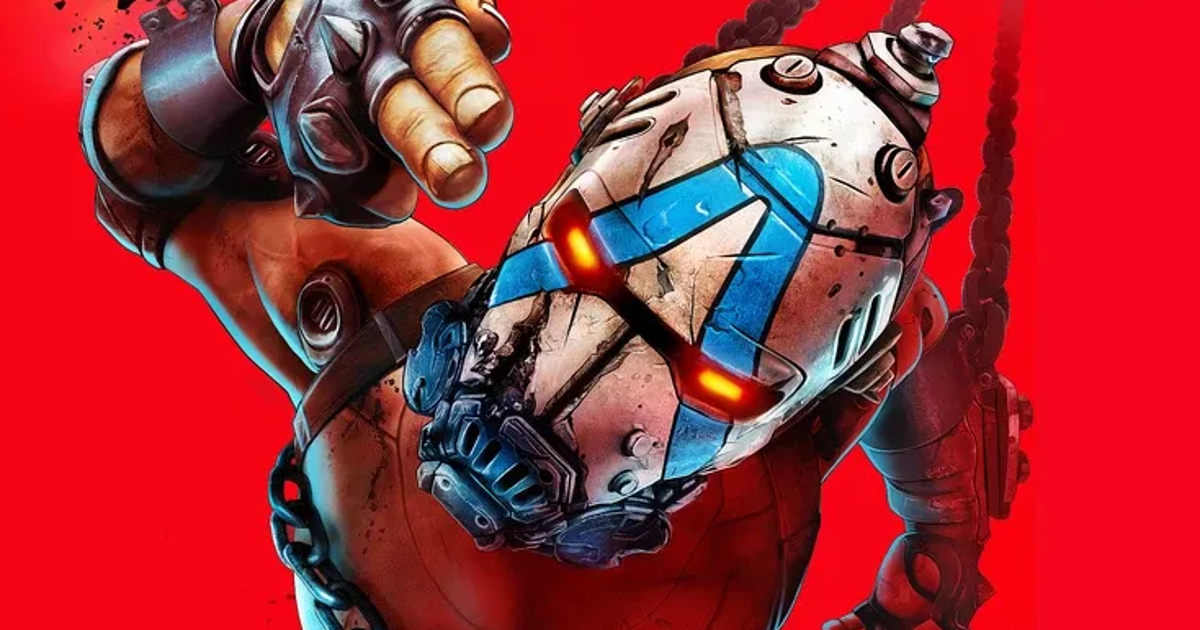
Borderlands 4 delivers a tighter, more connected storyline alongside a real open world within its quasi-cel-shaded shooting spectacle. Still, even with these small upgrades, the experience is held back by irritating navigation and combat that doesn’t quite manage to shine as much as it should.
Although I usually believe looter-shooters are among the least appealing additions to digital gunplay since Daikatana, Borderlands has always held a special spot for me as a guilty pleasure. There’s something about Gearbox’s animated spree that slips past my guard like a Jakobs throwing knife. Honestly, I even had fun with Borderlands 3—please, don’t judge.
Even so, I’ve long felt that Borderlands is missing something essential. The series manages to communicate plenty without offering a lot of substance to sink your teeth into, leaning heavily on jokes, flair, and big moments—without necessarily delivering the kind of depth you might want. Borderlands 4 moves closer to solving that problem than any installment before it, but it still doesn’t fully land the fix, and in a few stretches, the effort to get there starts to undermine the overall idea.
At last, Borderlands 4 says goodbye to its dusty homeworld of Pandora, blasting off through space for the new and more elaborate setting of Kairos. The planet is split into four distinct regions: the picture-perfect Fadefields, the rough Terminus Range, and a desert stretch called Carcadia Burn, where you’ll find mask-wearing Psychos causing trouble.
In some ways, it’s good that Kairos doesn’t entirely escape Pandora’s influence, because the Burn is clearly the most compelling area—at least until the later chapters. You can feel Gearbox’s confidence in shaping a landscape full of decay: crumbling industrial equipment and shaky stacks of corrugated shanties. That sense of character and boldness is something the other zones don’t quite match.
Kairos is ruled, in typical fashion, by an established villain called the Timekeeper, who keeps control with mind-bending implants that drive anyone who tries to remove them insane. Those who comply are forced into noticeably Destiny-inspired outfits and fight alongside mechanical allies under an organization known as The Order.
As with most Borderlands stories, the plot probably won’t stick with you for very long. Still, it has a few standout qualities. For one, Gearbox has dialed back the chaos, using humor more deliberately so it lands more cleanly without turning irritating. I caught myself laughing quite often, whether during specific story beats like “I’ve worked way too hard on my physique to have it turned into goo!” or with the outrageously timed enemy death yells such as “Now I’ll never get to live forever!”
Rather than leaning so heavily into nonstop jokes, the tone is a bit more grounded and more easy to relate to. Even when it tips toward sentimentality at times, it makes dealing with the characters noticeably more enjoyable. The voice acting helps a lot too, with performances that feel on par with Hollywood-level talent. Even Claptrap lands at exactly the right frequency. The thread of insecurity running through him nearly made me feel for the chatty little bin.

Image 1: Oh mate, golden triangles are so 2011. 2: Claptrap’s appearances are infrequent, mainly relegated to side-quests. 3: The Fadefields is the first area you explore, and by far the least interesting. 4: The Order love a bit of grey. Well, a lot of grey.
The biggest change is also how Borderlands 4 delivers its gameplay—through a true open world. While the series has always flirted with openness, this time you can genuinely head wherever you like. After a somewhat drawn-out opening, the campaign splits into three paths, each steering you toward a different region where you trade quips and gunfire with one of the Timekeeper’s twisted generals. Along the way, you’ll find plenty of side missions, hidden items, events, and collectibles.
At its core, the experience stays reliably enjoyable, occasionally slipping into something truly excellent. The campaign pushes you into impressive sci-fi set pieces, from storming a stronghold protected by a giant hologram of one of the Timekeeper’s underlings to chasing a towering space elevator stretched across a massive chasm carved open by Kairos’ explosive, debris-throwing Moon; Gearbox clearly knows how to make the world’s scale feel useful rather than empty.
Side quests, too, are built in an entertaining way. You’ll help a group of mismatched thieves plan a heist targeting one of the Timekeeper’s facilities, and you’ll step into the role of relationship counselor between Claptrap and a murderous AI trapped inside a talking toilet. Like the main campaign, these missions take advantage of the world, frequently bouncing between multiple locations.
That said, a lot of these activities often boil down to simply tapping “F” on interactable objects between stretches of shooting, and it’s disappointing that Borderlands 4 doesn’t uncover more interesting ways for players to engage with the world. On top of that, some of the dialogue-driven segments in these quests can come off a little clunky. It’s not really the dialogue itself—it’s the noticeable stretches of downtime between conversations, where you’re left waiting for characters to act on an interaction or make their way to a specific spot.
More broadly, even though Borderlands 4’s open world is packed with things to do, it’s presented through a dated, theme-park-like layout that doesn’t consistently encourage you to linger or explore between points of interest. Along the roads, you may run into groups of enemies
Every so often, you’ll see competing groups clash, but there’s rarely a strong reason to jump into those disputes. Still, one broader concern is that handling Kairos can quickly become frustrating.
Traversing the terrain can be done in several ways, from your summonable “Digibike” to an energy grappling hook and a jetpack that lets you glide over gaps. But the world…
Sure! Here’s the rewritten content while retaining all the original HTML tags:
It often feels like the design is there to stop you from using these tools, rather than encouraging you to take advantage of them. Each zone looks like a stacked arrangement of dishes—messy piles of razor-sharp rock that randomly interrupt your climb. Frequently, reaching a specific spot comes down to sticking to one dependable route, typically indirect, because your in-game GPS isn’t always trustworthy when it comes to navigation. Presumably, the intention is to push players into the right positioning before fights start. Still, moving from Dying Light: The Beast—a huge playground that thrives on motion and natural-feeling gameplay—to the straight-edged, immovable layouts of Borderlands 4 can feel like you’ve been launched and bounced around like a pinball, and that gets old fast.
Image 1: The immature vibe is still there, but BL4 is less likely to shove it straight in your face. 2: Even in Kairos, Borderlands 4 can’t shake off the long shadow of Pandora. The silver lining is that this doesn’t have to be a negative. 3: Even while I played on an older PC, Borderlands 4 proved demanding technically and still managed to deliver some jaw-dropping scenery.
Overall, the open world doesn’t really elevate Borderlands much beyond giving you extra things to do. At its core, it still plays like a hybrid of FPS and ARPG. Like past entries, BL4 lets you and your friends step into four distinct roles. And if we’re being honest, these are among the most imaginative options yet. I spent a long stretch with Vex, a “Siren” (space witch) who channels her abilities through one of three separate routes. One route lets her summon ghostly copies of herself. Another—my personal favorite—lets her call in a cat companion called “Trouble,” which can grow into a larger form known as “Big Trouble.”
Each class can be pushed toward extreme specializations, with the three abilities for every class unlocking extra sub-abilities that you can tailor to your preferences. Trouble, for example, can zip across the battlefield to ambush enemies or summon spectral daggers that he throws whenever you tell him to. It’s a huge space for players who love tweaking builds, though the system still leans heavily on spending points in passive skills that grant small, incremental perks—an approach similar to what Cyberpunk 2077 was widely (and fairly) criticized for.
Of course, the real source of power in Borderlands is still your weapons, not your class. In general, Borderlands 4’s fighting style is its wildest yet. And I mean that quite literally. You’re constantly sending enemies sprawling and launching them into the air. It’s also seriously entertaining to watch. One of the synthetic factions’ enemies is basically a dog-shaped, mobile artillery platform that fires dazzling volleys of ammunition—shots arc across the sky before slamming into the ground near you. Honestly, it’s brilliant.
That said, there’s a major downside. Borderlands 4’s invisible “slot machine” takes a considerable amount of time before it starts handing out genuinely strong firearms. A big part of the issue is that the open world stretches out the period in which RNG needs to settle into something reliable. To make things harder, Borderlands 4 keeps showering you with loot to the point where opening a weapon chest often feels less meaningful than you’d expect.
I also didn’t find much enjoyment in the brand-new weapon makers. Of the three new weapon categories, two—The Order and Ripper—center on guns that build charge and then release it. Charged weapons can be excellent when the final output is truly devastating; Gears of War’s Hammer of Dawn is a great example. However, BL4’s charged firearms don’t really make up for the extra delay, even with The Order, where charging allows multiple shots to fire at once. Early on, the game also dumps far too many auto-shotguns on you, which would be better saved for late-game surprises.
Because of that, I spent most of the early game relying almost entirely on Jakobs weapons, mainly because landing critical hits and severing heads felt far more satisfying than anything else I was using. The good news is that the balance improves as the game goes on. As time passed, I started finding more room for Torque’s explosive shotguns and Daedalus’ ammo-switching hybrids alongside my collection of ornate revolvers and bolt-action rifles.
Importantly, you’ll still run into absurd weapons that throw the game off balance for stretches of time. In my playthrough, the standout was a throwing knife that formed a black hole on impact, leaving nearby enemies stranded as they got caught in a whirlpool of body parts. It was already wildly effective on its own, but the recharge was so fast that once the black hole faded, I could disable them again immediately by tossing another knife. That turned into about four straight hours of pure fun.
To briefly address the performance worry, I can’t provide a full assessment. My PC has clearly slipped into a low-performance phase, so I was mostly shocked that it ran at all. What I can say is that I think Borderlands 4 still looks impressive even on reduced settings, and the underlying problems aren’t limited to performance.
During my time with Borderlands 4, I rarely went through a moment where I couldn’t appreciate at least one part of it. At the same time, it was just as rare for nothing to annoy or frustrate me. The game delivers a steady stream of small rewards and minor irritations—moments that had me laughing uncontrollably, followed by moments that had me groaning just as hard. That’s been true for every previous Borderlands game, to be fair. But in Borderlands 4, the sources of my mixed feelings are different than before. Bottom line: two steps ahead, one step back.
A copy of Borderlands 4 was independently acquired for this review by Eurogamer.