Baby Steps strikes a fine line between frustration and achievement, mixing a walking simulator with a climbing adventure that feels genuinely distinctive.
No other piece of timber has ever managed to carry so much nail-biting suspense. You’ll see it ahead on the route, acting like a plank bridge and forcing you into a pause where uncertainty takes over your breathing. It may be scary enough to make you step back for good—or to hunt out another path entirely, depending on how many times you’ve run into this kind of moment before. You have to cross the board, but can you reliably set your feet exactly where you mean to? That’s the heart of the challenge. Stopping helps you safeguard the progress you’ve earned and the work you’ve put into the climb so far, which has honestly been anything but easy. One wrong step threatens to undo everything. A small misjudgment can send you slipping and tumbling back down—down again.
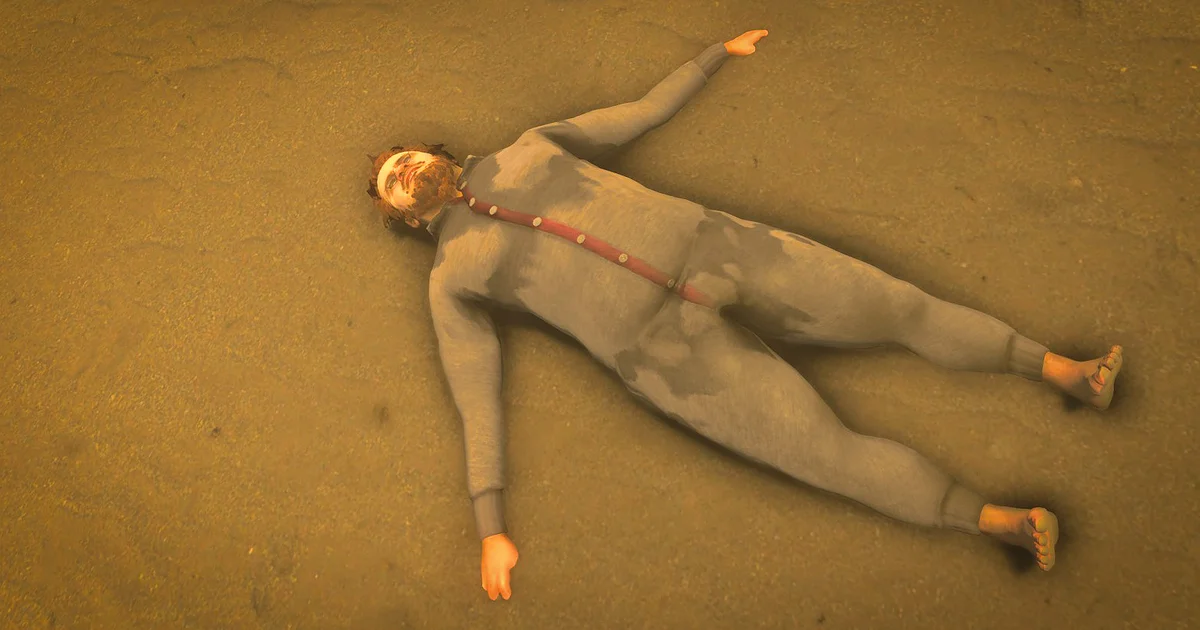
I kept falling over and over in Baby Steps. You’ll almost certainly rack up plenty of falls in Baby Steps too. In fact, it’s only natural to trip and tumble repeatedly throughout Baby Steps. At its core, this game is about hitting the ground and having the grit to get back up. The experience is packed with tough gaps and consequences that feel surprisingly punishing when you fail to handle them. It plays out like a vicious take on snakes and ladders across the space in front of you. Still, it isn’t simply about suffering. There’s also a quiet warmth and calmness to it—making the ride a lot gentler than you might expect.
Baby Steps is the newest work from Bennett Foddy, an expert who clearly enjoys getting frustrated (with help from Gabe Cuzzillo, behind Ape Out and UFO 50, and Maxi Boch, creator of Dance Central and Ape Out). Foddy previously made QWOP and Getting Over It with Bennett Foddy. The former is a finger-twisting trial about controlling a runner’s limbs during a race—and it’s notoriously hard to truly master. The latter is a climbing adventure set around a character in a cauldron (no further questions, please), swinging themselves over mountains using a sledgehammer. Both titles are tough and tend to throw you back down repeatedly to the starting point. Baby Steps brings elements from both of these ideas into one shared experience.
In essence, it functions as a walking simulator, with you steering the legs of the main character, Nate—a couch-bound person who dozes off and wakes inside a strange dream world. Your job is to explore that dreamscape, and you quickly discover that walking isn’t nearly as straightforward as you would assume. Every step means pulling a controller trigger to lift a leg, then pushing a thumbstick forward to move the leg and shift Nate’s body weight. Most of your earliest attempts will leave you—face-first on the floor—wobbling around like a stranded seal. But after a while, it clicks. Striding across flat ground becomes dependable, with only occasional slips, which is a huge relief in a game that gives you plenty of walking to do.
Of course, the real trouble starts when obstacles get involved. At first, a fallen tree blocks your way, forcing you into a bigger step than you’re used to or into a jump up to higher ground. Early on, you may be impressed that the game asks so much of you while you’re still learning how to walk. Yet with each run, your understanding of Nate’s movement sharpens; he’s actually more capable than it first seems, as long as you grasp the mechanics. Before long, you’ll step over logs without freezing in place and start taking on hills, uneven rocky climbs—and yes, those intimidating wooden planks that stretch across gaps.

This minecart track put me through a lot of trouble. What you can’t see: the steep drop on the other side, along with the 15 minutes of careful climbing it took me to get to this position. And up in the top-right: do you think you’d have the nerve to grab that hat? Meanwhile, in the top-left: there’s a bridge stretching over a mudslide.
You’re going to fall. You’ll misplace a foot, slip, tumble, and slide down an extended muddy slope back to the hill’s bottom—while Nate groans below. You may wonder why the muddy drop had to be so long and why the plank was so narrow. In moments like these, Baby Steps can feel far too strict, as if it’s set on taking from you rather than giving you a hand. The idea of retracing your route can sound exhausting, which naturally makes you hesitate more when you face the plank again. Still, there’s a key, invisible form of safety you should keep in mind.
Baby Steps offers choices. It includes a semi-open world, meaning you aren’t confined to a single, perfectly defined path. Bottlenecks aren’t always unavoidable, either. You’ll often find a handful of different routes scattered around the area, letting you pick your approach—so if crossing a plank becomes unbearable, you can steer around it and try a different way. You’re rarely forced to grind through the same climb again and again, which is a welcome breather. It doesn’t promise that alternate routes will always be easier, but it does help shuffle the experience and reduce the mental pressure.
The strength of this semi-open design is the presence of optional trials on your way. As you head toward your loosely suggested destination—maybe a light placed on a hill—you might notice a toppled spire, a battered tower, or a tree, and that sparks curiosity about what’s waiting at the top. Since it’s a climbing game, the climbing itself is naturally appealing. The problem is that you usually won’t know what the summit holds unless you spot a glowing object calling you over. On top of that, the game carries a sly streak of humor, hinting that the top might not be worth the trouble when you finally get there. It’s funny.
Optional challenges can be brutally demanding, and that’s perfectly acceptable since they’re not required. You may find them especially hard because you’ll often run into them before you’ve learned the skills you need—unless you’re returning for another go. Usually you try, stumble, think, “How am I even supposed to get past this?”, and eventually give in.
then keep moving on. That’s the point of optional content: if you fail here, it won’t interrupt your main progress, which builds the nerve to attempt these moments in the first place. And going for them matters, because they teach you a lot.
If you only take a slow, easy stroll along the gently slanted routes—like I’ve jokingly called them danger-planks—you’ll never truly get used to stepping over the planks themselves. But if you try climbing a battered tower full of danger-planks, for instance, you will start to recognize them, and then you’ll catch yourself wondering why you were ever nervous when the next plank appears. In that way, these optional trials add more than just challenge: they deepen the experience, boost replay value, and ready you for what comes later.
On top of that, the extra room in the world gives you space to breathe—crucial in a game packed with relentless pressure. If everything hits back-to-back with no break, players can find it hard to keep up. Spread out by stretches of easy wandering through lovely countryside or alongside rushing rivers, the game repeatedly offers calm, restorative scenery, and Baby Steps builds in key pauses where you can settle. During these lulls, you can sit with bigger thoughts—like how often we overlook walking and what actually takes shape inside the dream-like world Nate has ended up in. There’s a kind of story there too, though it stays abstract and hard to pin down, complete with oddly inexplicable naked donkey men. Still, it has enough mystery to hook you like a fishing line.
Baby Steps kicks off in a grimy setting, then carries you into breathtaking biomes as you move through the game.
The narrative also brings in another well-liked feature: chapters that progress each time you locate a bonfire. Every chapter signals a change in both setting and time of day, which injects welcome variety—visually and in gameplay. Even better, each chapter includes an unseen safety feature, something I genuinely value. For example: I got hit with brutal difficulty in a ravine with a fast current beneath me. To get out, I had to climb along a shaky, rundown minecart track—only to keep dropping a few meters back into the ravine after each attempt. It took me a long time to make my way up, but I couldn’t get around the minecart sitting around the middle of the track. A bottleneck.
Yet whenever I splashed into the water below, I’d be swept along—but, importantly, not beyond a waterfall that would drop me into a much earlier stretch of the world. The game could have easily gone that route. Instead, it would somehow send me right back to the point where I started climbing the minecart. Along the watery route, I even had a few different climbing chances to try. So you can see it clearly: an invisible safety net and several routes forward—and this pattern stays with you no matter where you travel through the world. Mostly. There’s definitely a sense that the game is watching your back.
Still, frustration is bound to come up whenever people talk about Baby Steps, and I’m sure of it because I went through it—and you will too, as will everyone who plays. When I swapped stories with Jim from the video team, he told me he rage-quit one evening after a cactus blocked a plank in a desert area he couldn’t maneuver around. He called it the cactus plank. I don’t remember that exact plank—maybe I never went there—but it shows how certain names and phrases can form around the game’s most notorious spots. “Mate, did you take on the Manbreaker?” There truly is a climb called the Manbreaker, and once you see it, you’ll understand why. No question, this is a game that revels in outsmarting you with tricky climbs, and sometimes the only thing you can do when something like an escalator running backward appears is to appreciate the ingenuity—and then laugh. You wicked, wicked people.
That said, the reward when you finally clear one of these thoughtfully built climbs is enormous satisfaction. That rush of beating the odds. I’m still stunned that a game focused purely on how you move your feet can hit so hard. There are no monsters to fight here—no combat at all. It’s a calm, quiet world. Yet the adrenaline surge I felt while playing this game was so intense I could hear my heartbeat pounding in my ears. My hands were so sweaty I worried I’d drop the controller. I’ve felt The Fear. And I’ve fully enjoyed what it feels like to overcome it. Now, challenges look different to me: they’re chances to test the skills I think I’ve developed. I see climbs in a whole new light. And once again, it amazes me how much can grow out of something that seems like so little.
Your reaction to frustration shapes how you move through Baby Steps, but—let me stress—it’s more forgiving and approachable than I think many people assume. Of course, it can still frustrate you, and you may still find yourself swearing, tightening your jaw, and slamming your controller down while asking why ragdoll Nate won’t stand up faster and why he always slips so far. Still, these quirks are part of Baby Steps, even when it gets rough now and then. This is a game that works in its own specific way, and there’s nothing else quite like it.
A copy of Baby Steps was provided for review by Devolver Digital.