Backed by years of accomplishments, Capcom’s daring ventures in the 360-era approach a sci-fi shooter playbook while boldly trying to shake up the genre, all with a distinctly adventurous spirit.
The human brain is organized into two halves: the left hemisphere and the right hemisphere. To put it a bit too simply, the left hemisphere handles language and reasoning, while the right hemisphere leans toward spatial understanding and intuition. I’ve long advocated for video games as a way to keep both sides of the brain working—encouraging creativity through problem-solving paired with logical thinking, and also using your hands to interact with a platform has been shown to promote cortical thickening in the left dorsolateral prefrontal cortex. In short, games can sharpen your mind.
Pragmata, in an oddly fitting twist, seems ready to push that concept into something far stranger. The core idea of the game—above all, its unexpectedly lovely story about solitude in space, what it means to be human, and the risks tied to unrestrained AI use—is that you control both a human and a robot. You’re dropped into fast, action-heavy clashes where you’re shooting, dodging, and also working through grid-based challenges at the same time. A “hacking grid” shows up when you lock onto an enemy, and then you have to sidestep, strike exposed weak points, hop or dodge incoming attacks, and figure out the most effective way to take out robotic foes amid an ongoing storm of sparks, shell casings, and sabotage.
It’s a workout for your frontal cortex, a treat for your adrenaline, and a grin-inducing workout for your hands all at once. It’s engaging, unconventional, and downright hard to put down. The thrills of combat—and how they ripple through your thinking—lets the story, despite being rather flat, slide by with surprisingly little friction. It gives Pragmata a distinct identity, even when it sometimes evokes the Xbox 360 period of third-person shooters. In my first few hours, I kept catching echoes of Watch Dogs, Vanquish, Lost Planet, Gears of War, and Dead Rising. The fact that Pragmata can feel both familiar and fresh at the same time may be among the most confounding mysteries of this fascinating console generation.
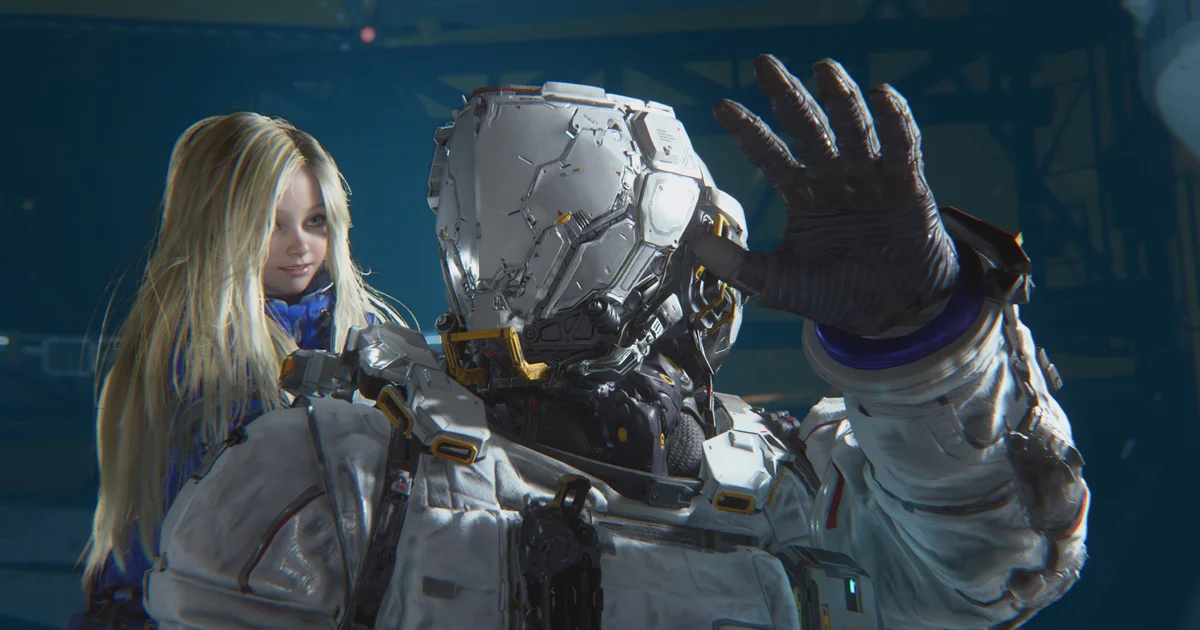
A large portion of Pragmata is about moving through an entirely alien space station, playing as the tough, down-to-earth Hugh Williams. The story kicks off when Hugh doesn’t meet the human welcome party he was expecting—instead, he encounters an android presented as a young girl, whom he names Diana (a nod to the Roman moon goddess as well). A big part of Pragmata’s emotional pull comes from the way these two interact: how they talk, cooperate, and gradually change together. In many cutscenes, it feels like the writers meant for Hugh to come across as sharp and hard to approach, almost like a hedgehog curled up, guarding a vulnerable heart beneath its spikes. Still, when Diana and Hugh are together, you can feel a steady sense of warmth and gentle personality.

You notice their warmth most clearly in The Shelter: a home base you return to between sections of the station, which slowly fills with signs of life. While so much of Pragmata is designed to feel mass-produced (almost everything you see here is 3D-printed by a rogue AI), your Shelter quickly becomes crowded with the chaotic little reminders of everyday existence that anyone raised around kids will recognize. Collectible skateboards, basketballs, and toys end up scattered around the space. Clues about what life on Earth might be like in this unusual future start appearing along the borders of your living area as Hugh and Diana swap stories about where they come from. They don’t reveal everything, but if you’re paying close attention, you’ll spot subtle threads of narrative woven into the background.
The Shelter works as a shared home, and Diana’s eager, childlike desire to go back and play with her new toys won’t stay contained—it starts to rub off on you as you play. At regular intervals, Hugh also gets fresh gear: upgraded weapons, improved hacking tools, and more useful equipment. Like many Capcom action games—Devil May Cry comes to mind—the opening stretch can feel a little restrictive and occasionally even dull compared with what comes next. Once you start earning evasions that resemble “bullet time,” along with powerful upgrades that mesh more naturally with your approach, and your loadout grows until you feel ready for just about anything, Pragmata really begins to click. That transformation takes roughly 10 hours.
And that delay is forgivable, because the heart of the game is the dynamic between Hugh and Diana. Their dialogue is excellent, the animations that make them feel lively and lovable are a standout, and letting you use them as a shifting, imposing duo in combat is—unsurprisingly—excellent. By the later half, the game asks a lot of you, and I found myself bracing through long fights as I scrambled to hack, evade, fire, and leap my way through some of the hardest boss battles. Even when the game starts reusing boss opponents (yes, classic moves), you roll your eyes a little and think “alright,” because the first time around was still a blast.

Pragmata could easily have settled into routine, uninspired shooting—popping glowing orange weak spots and calling it a day—but it doesn’t. It kicks off with combat in a smart, intuitive way that messes with expectations and bends genre habits, while also shaping what you think a “third-person action game in space” ought to feel like. As you move around obstacles, track clearly signposted attacks, and dodge the spinning “pinwheel” style assaults from humanoid robot enemies, you also engage that left-brain logic that nudges you toward solving puzzle grids. I’m genuinely amazed—and pleased—that you can do both things at the same time. Hacking is required to win fights; it’s not something you can treat as optional flavor. It’s Capcom’s assurance, built from years of success, showing up in a game that dares you to embrace it or walk away. It’s Capcom in its most experimental, brilliantly nontraditional form.
Without that engaging, fun, and defiantly offbeat combat system driving everything, Pragmata might look attractive but end up forgettable. As it stands, even amid a flurry of quicktime prompts, instinctive stick adjustments, and urgent trigger pulls, it does a good job of keeping you invested and content across roughly 30 hours total (if you’re trying to uncover close to everything it has to offer). The narrative leans into B-movie, direct-to-video legend territory (and that’s totally fine), and while playing on a PS5 Pro, I’m once again struck by the technical polish built into the RE Engine. Diana can appear unsettling and slightly uncanny, but I can’t help thinking that choice is deliberate. The team also made a smart decision to keep Hugh masked for most of the time, so his face stays out of view. If your goal is to see yourself as that bland everyman, it fits the purpose well.
I don’t expect Pragmata to win awards for suddenly teaching you rocket science or for inspiring a laureate-worthy script about the nature of humanity, but the way it challenges your intellect is truly impressive. After playing it, I feel sharper, and I don’t think I’ll run into another game quite like it for a long while.
A copy of Pragmata was provided for this review by Capcom.