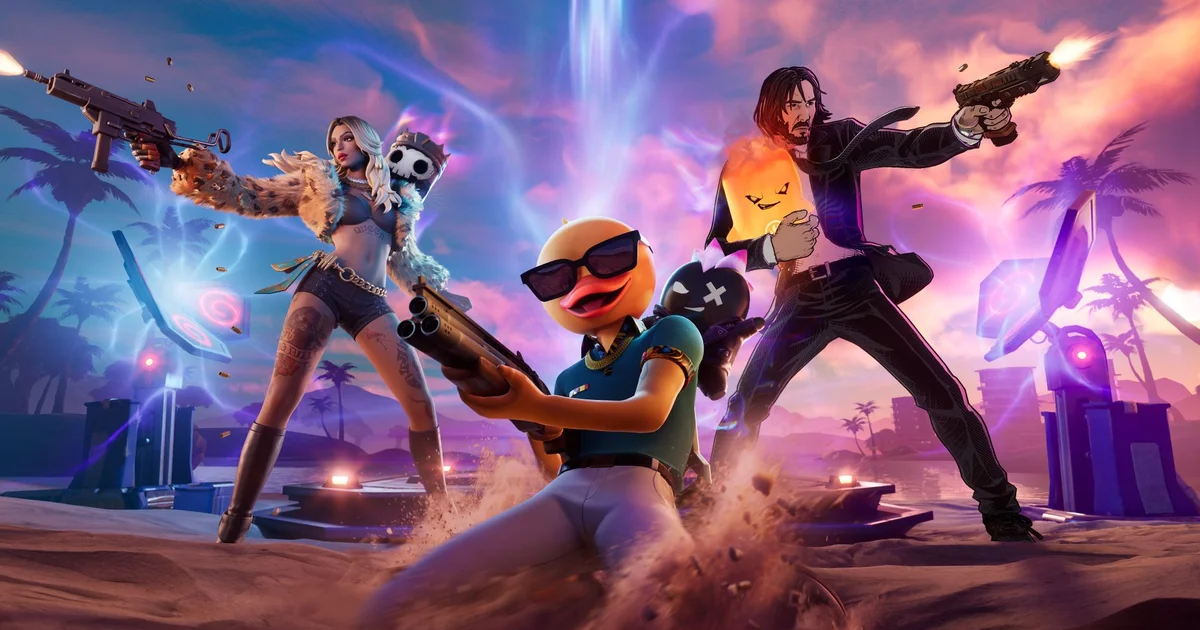
Epic Games has laid out a range of capabilities planned for its next Unreal Engine release—Unreal Engine 6—and one idea it’s considering is letting players move their Fortnite skins into other Unreal Engine games. It also envisions the reverse: other Unreal Engine titles could bring their own skins into Fortnite.
During Epic’s latest State of Play presentation, Marcus Wassmer, the studio’s development team leader, shared these details. In a transcript posted on Epic Games’ site, he said, “Content and code should be transferable across games and engines. Our aim is to provide the gaming industry with an entirely new way to expand our ecosystems through cross-promotion, portable player value, and to truly embrace all of the beneficial dynamics that Metcalfe’s Law forecasts for connecting experiences and social networks together.” Whatever that may suggest.
“Fortnite cosmetics will be our first meaningful test case for portability. We’ll start by shifting the core system into an open UE6 module. That means you’ll be able to use a player’s owned Fortnite outfits inside your own games, and you’ll also get the means to build outfits for your projects that work within Fortnite.”
Fortnite gives Epic a large, active environment to prove the system is workable. “We see this as the first move toward creating a shared marketplace for intelligent assets: practical items with logic and features that carry across games, helping people better understand and value players’ time and spending,” Wassmer added.
“In the end, this isn’t limited to Fortnite alone. It’s about showing that a system as refined and complex as this can operate at scale—and that any game adopting these systems will see immediate benefits from them.”
Unreal Engine 6 still has a ways to go. Epic expects early access testing to begin around late 2027—there was a strong emphasis on the word “around”—followed by a full launch roughly 12 to 18 months later. Important elements include built-in generative AI large language model features—something Epic has only just introduced with Unreal Engine update 5.8—along with options for much higher player capacity. At one point, Tim Sweeney indicated that games might be able to support thousands, and potentially even hundreds of thousands, or up to millions of players.
Another major theme seems to be that Unreal Engine 6 would help games run smoothly across different platforms, without developers having to redo large amounts of work or make significant changes. This priority appeared to come before showcasing flashy new visual features.
“UE6 is going to revolutionize many aspects of game development,” Wassmer wrapped up. “But it won’t change the most important thing—those working in this industry, the game creators, the filmmakers, and our Unreal Engine community, are the people who make it all possible.”