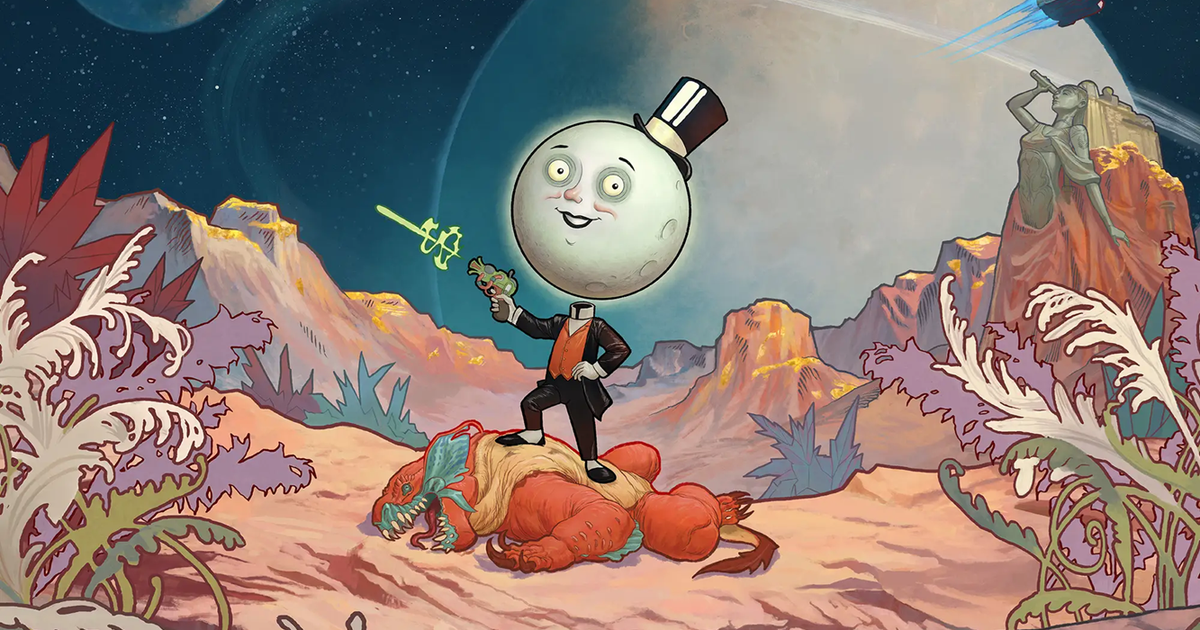
The Outer Worlds 2 remains, for better or worse, an undeniably enjoyable slice of gaming, but it also feels noticeably more refined than the original in almost every way.
Even with the hurdles Xbox has dealt with over the last year, it would be unfair to suggest the biggest name in publishing hasn’t had its share of standout moments. One of the brightest spots in its rather bulky lineup is Obsidian Entertainment. The California studio, best known for its role-playing quests, has already notched major wins this year through Avowed and the early access debut of Grounded 2. Still, they’ve saved the strongest showing for last—The Outer Worlds 2 stands at the top of that impressive run.
Before I dive in, let me ask you not to be swayed by what this game’s presentation might suggest. I do have a small concern about the quirky, punchy marketing surrounding The Outer Worlds 2. That upbeat style does reflect part of what the game itself delivers—it’s irreverent and frequently light on its feet. Yet it doesn’t turn into a meaningless stunt like Borderlands, and it doesn’t consistently affect the thin-skinned posture of a self-important production. Some of the promotional material may lean toward that impression. In reality, though, this is a deeply layered, mechanically demanding role-playing adventure where the three letters in that acronym are on full display—boldly, confidently. It’s an RPG fan’s kind of RPG.
The core setup remains much the same as in the first game. The Outer Worlds was shaped by Tim Cain and Leonard Boyarsky, two key names behind Fallout’s development. Naturally, Obsidian drove Fallout: New Vegas—and this brand-new series was conceived as Obsidian’s take on a similar style of action role-playing. Instead of a post-apocalyptic Earth, you’re dropped into a messy, fragile patch of colonized space. That shift brings a touch of anachronism and wink-at-you humor, while still leaving plenty of room for strong character and faction writing, tougher role-playing story decisions, and more.
Like Fallout, Obsidian has chosen to reset things a bit with The Outer Worlds 2. A new director is now steering the project (though the original creators are still involved), and rather than continuing the story directly, you travel to a different area of space within the same universe. Along the way, you’ll find Easter Eggs for anyone who played the first title, but there are no direct connections—mirroring how Fallout moves from region to region. The setting change isn’t the biggest shift, however. The real difference is the stronger emphasis on the kind of tough-minded role-playing choices mentioned above.

One decision shapes the entire journey: a clear, loud statement that reinforces this design philosophy. In other words, The Outer Worlds 2 doesn’t include a character respec option. That means the only way to reset your build is to start the whole game over. Outcomes from your choices across thirty levels are locked in, which can make the experience painfully unforgiving. I know that won’t be everyone’s preference, but I personally like it—and I respect even more the director’s justification for it.
“You’ll see games that permit infinite respec, and at that moment I’m not truly role-playing a character because I’m bouncing between — well, my character is an exceptional assassin that snipes from afar, and then, oh, now I’m going to become a speech expert, and I’ll respec again,” he explained to me back in June. The takeaway is clear: this is a game that pushes you toward meaningful choices, and—staying true to role-playing tradition—the fallout from those choices won’t always be obvious right away.
That principle carries over to the story as well, naturally, but it’s just as strongly felt in the gameplay. If you struggle with the fear of missing out and you want the most polished run possible no matter what, then this probably won’t suit you. The way this system is built, along with the number of skill points you can earn during a single playthrough, means you will constantly run into speech checks you can’t pass, terminals you can’t break into, locks you can’t crack, and puzzles you can’t solve. Yet that’s where the value lies: it encourages a role-playing style that asks you to plan your route in advance and then live with what you set in motion. It also makes room for surprises to appear—often through a perk structure that’s just as wide-ranging as the one in this game’s predecessor.
I eventually gravitated toward a build focused on a weapon-focused leader. I picked skills and perks that made me fairly solid with a rifle, while also ensuring my selected companion characters were even deadlier. That approach left me with extra skill points to spend on Speech, Hacking, Lockpicking, plus a bit of engineering to help with the occasional jammed door.
The flaws system is back, with your decisions triggering optional
Perks that amusingly mirror the way you decide to play. I’m the sort of player who keeps reloading even when the magazine still isn’t empty, and that habit eventually exposed a glitch: every one of my magazines became 50% larger. Yet if I did let a magazine run completely dry, I’d be hit with a punishing temporary damage penalty. That shift completely altered how I handled fights for the rest of the game, pushing me to choose extra perks or weapon upgrades aimed at…
…increasing magazine capacity, or even having weapons top themselves up before the magazine could ever hit zero.
I was sneaking through everything around me, and at some point I found another flaw: hacking required twice the amount of raw materials, but in return it granted twice the experience. I jumped on the chance immediately. Also, because the Microsoft PR code offered to Eurogamer was tied to the Premium Edition, I was automatically assigned the “Consumerist” flaw. It’s a cheeky jab, sure, but it also makes shops cheaper (though it similarly means they’ll charge me less when buying my extra clutter).
I think this mix of systems—skill points, perks you can unlock, and the surprise way flaws can be triggered—is where no respec really shines, despite its harsher reputation. I worked through character growth across a long playthrough, eventually building a character that felt distinctly my own, shaped by both how I like to play and the circumstances my character ran into. By the time the credits rolled, I was still running into attractive sealed doors, or realizing a combat encounter could have been avoided completely if I’d specced slightly differently—and I was genuinely okay with that.
I’m glad all of that clicked with me, because on the story side, I have to admit I found The Outer Worlds 2 a bit less captivating. It kicks off with drama, but after that, it took me a while to feel it really settle into its rhythm and start building momentum. The game is mainly made up of four core planets, plus a few smaller side areas you pass through while traveling in your ship, The Incognito. Only after I reached the second “half,” when all four planets were available, did the narrative finally feel like it was truly pulling me in.
Even then, there’s a lightness here that doesn’t land with the same weight as the gameplay and RPG improvements it’s paired with. Back in 2019, Edwin described the game as “more often cute than cutting,” and that still fits. This gentler tone—especially in a game where enemies can tear into a dismembered mess if you hit them with enough force—makes the storyline a little harder to fully latch onto. The Incognito is a good example: it delivers excellent sci-fi design, with an attractive look both inside and out. Still, unlike something like the Normandy, it never quite feels like a character by itself. I liked using the ship, but it didn’t really feel like home—and that echoes where The Outer Worlds 2’s execution slips.
It does get there, though—and in an even more complete way than the original. You can see part of that shift around the midgame mission, when the cast connects with a key figure and the stakes jump higher. Like most of The Outer Worlds 2’s major “tentpole” quests, it’s standout mission design that raises tension while giving players a range of ways to complete the goal. That approach helps ensure that any character build can take multiple paths.
Smaller, less essential missions and locations don’t quite have the same level of polish. In a way, that contrast only heightens the excitement during the tentpole highlights. That midgame mission is a real rush, but it’s also the point where you can dig further into faction bonds, uncover narrative secrets, and learn the personal stories of the well-made companion characters—even if they’re familiar archetypes.
While the RPG framework seems like it has been reconsidered from the ground up, other elements—mission structure, narrative delivery, and immediate combat—feel more like incremental improvements. Almost everything tops what the first game provided, whether by small margins or by bigger ones. Gadgets, for instance, are—at least in my view—more fun to use and better integrated this time around. The gunplay and movement are also sturdier, so even players who aren’t deeply invested in the role-playing mechanics can spend points on ballistic skills and jump into the experience like a traditional shooter.
When it’s at its best, The Outer Worlds 2’s rhythm reminds me of Mass Effect 2: it moves through its world with purpose, lightly acknowledges the original’s spirit, and lets its most important story beats land smoothly. I was especially happy that my narrative decisions found their way into different outcomes across the game. In particular, the visible effect of my choices toward various factions also comes through in the final missions—something that isn’t always easy to pull off.
At its weakest, this follow-up slips back into familiar territory from the first game—harmless, breezy, and still not necessarily memorable. When the least impressive results are “fairly good and unobjectionable,” that can still feel like a win of sorts. Even though this drawback continues from the first title, what makes The Outer Worlds 2 stand out is how often and how smoothly it steps away from that comfort zone. A lot of this comes down to a more polished experience across the board: companions, shooting, movement, role-playing, and the narrative branches. Everything feels like it’s improved. With those strengths, along with the gameplay variety enabled by strong RPG systems, I’ve found myself seriously considering a second—and even third—playthrough, which simply wasn’t something I ever thought about with the original.
So, once again, it’s not quite the masterpiece that a spiritual successor to Fallout New Vegas might suggest—but it’s a sturdy, praiseworthy move closer to that goal. The more you dig into RPG progression systems, the more enjoyment you’ll get as an added bonus.
A copy of The Outer Worlds 2 was provided for review by Microsoft.