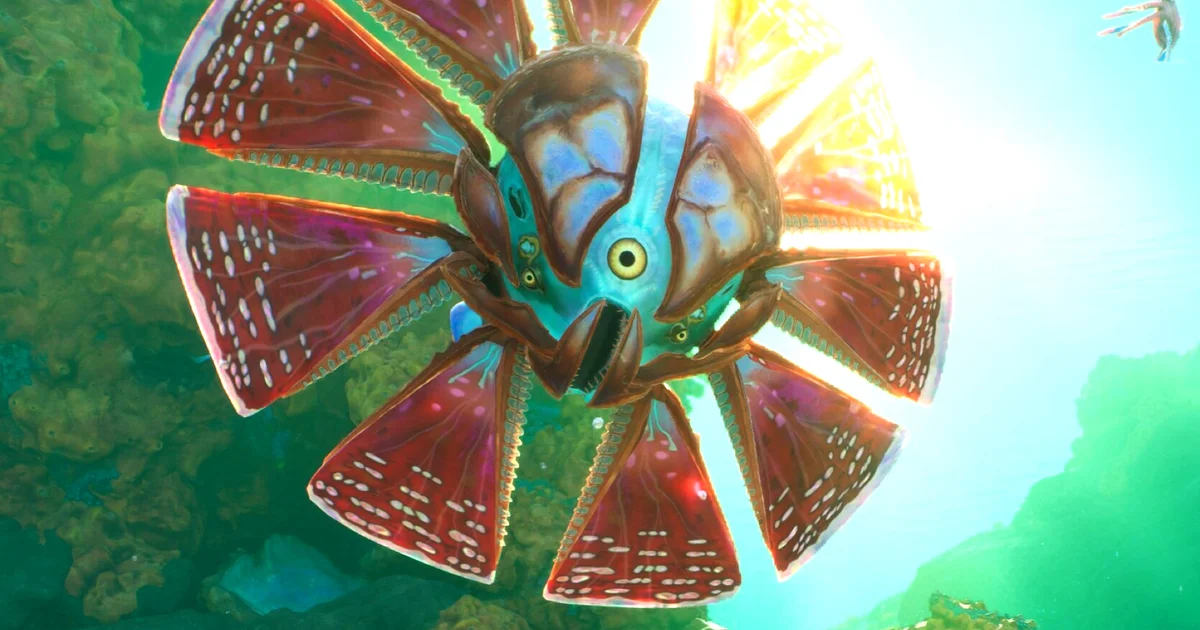
By the end of Subnautica 2’s prologue, unease has already taken hold—even before I set foot on its brand-new ocean world, Proteus. I’m not particularly thalassophobic, but from the very beginning, Subnautica 2—my first time in developer Unknown Worlds’ hugely popular survival series—is enough to unsettle almost anyone. After I wash up in a waterlogged, deteriorating facility on a completely different planet, only to learn that another Pioneer has already taken their own life, the whole experience feels like the start of a long, punishing road. And that’s before Proteus starts throwing its worst terrors at you.
Your goal in Subnautica 2 is to help build a new future for humanity, relying on you as 40,000 colonists look to the decisions you make. That task brings you to Proteus, a completely new ocean planet that differs from 4546B from earlier Subnautica entries, and it’s immediately intimidating. Proteus is enormous, packed with many biomes to explore, each one hosting its own set of creatures (along with scans) — and not all of them are happy to find you there. Still, for all its scale, your assignment stays remarkably clear, symbolized by a towering colossal tree visible above everything else. Before long, you realize something is infecting the planet, but why? There’s a lot to uncover before answers show up, and it’s here that Subnautica 2 really shines during its early access stretch.
The excitement of discovering new corners in Subnautica 2—when you aren’t getting chased by sharks or nipped at by fish—is genuinely hard to match. Whether you’re stepping into an unfamiliar biome for the first time to track down vital materials, or running into fresh fish species (or a Leviathan…), Subnautica 2 consistently pushes you toward exploration, adjustment, and creative ways to last longer in a world that feels determined to end you. There isn’t much in the way of direct instruction—though your companion AI, NoA, will at least offer a reassuring voice—and you can’t simply wipe out threats, since Subnautica 2 again ships without weapons. Instead, surviving what’s lurking underwater comes down to your own resourcefulness, instincts, and whatever gear you can assemble using supplies you find beneath the surface.
Even with the advanced tools you can pick up along the way—no matter how ready you try to be—death still feels unavoidable in Subnautica 2. As a warning left by an earlier visitor on Proteus puts it: “You will perish here, and that’s perfectly acceptable. Choose the most intriguing thing you can see and explore.” From the moment you begin, dying is always hanging overhead, yet its certainty doesn’t lessen the level of dread this strange planet inspires. It shows up in everything: in each unfamiliar sound you catch while pushing deeper into the dark blue… and there are plenty of those sounds.
The instant I built a diving pod to probe the deeper, more dangerous areas of Proteus—the moment I realized I was cut off in the middle of its immense ocean expanse (inevitably, some sections are incomplete in this initial early access build)—the fear hit fast and hard. “Terror” barely covers it when you’re trying to get away from something big, frightening, and unknown—in this case, one of the sequel’s intimidating Leviathans—especially when you already know you can’t fight it. That dread only grows as you descend further into Subnautica 2’s depths. Will adding co-op features ease the pressure in the atmosphere? I haven’t had the chance to test that yet, but I’m definitely curious.

And while death does come with only limited fallout—you lose a few items, but you can usually get them back—Subnautica 2’s intimidating atmosphere is so striking that it’s difficult not to get completely pulled into it. Even so, it never feels crushing. If you don’t make it home in one piece, there’s still a good chance you’ve scanned a new tool or equipment piece that turns your last ill-fated run into something worthwhile.
There’s more to it than just practical payoffs like discovering new things you can craft back at your base. Over time, you’ll also uncover additional story threads—from radios and notes left behind by people who came before you—helping to connect the dots where the narrative is still thin. Pretty quickly, it becomes clear that your mission isn’t quite what it seems at first. Evidence of loss and disaster is everywhere, and after ten hours with the early access version, I’m eager to see how these elements—these alien life forms, this doomed world—come together, and to understand exactly what role the Pioneers truly play in all of it.
Even with Subnautica 2 still incomplete, it feels like there’s an enormous amount left to do: improving crafting and base building, tracking down more black boxes, assembling the storyline piece by piece, and eventually uncovering what’s hiding inside the ocean’s complex cave networks and beyond. It’s off to a promising start, and while I genuinely dread what awaits in the deeper biomes, the game’s irresistible pull—its exploration and curiosity—keeps drawing me forward.