Tarsier returns to the horror scene with a weighty, meaningful evolution of its well-known Little Nightmares formula. Even with room for a bit more boldness, the game is consistently absorbing—bleak, uncomfortable, and steeped in dread.
Discussing Reanimal inevitably leads back to Little Nightmares. Tarsier’s first release since stepping away from the series that made it famous (and whose third entry was handled by a different studio, earning mixed reactions) is so closely tied to Little Nightmares that it’s difficult to treat it as anything else. At its center are two willowy characters, Boy and Girl, drifting through a terrifying, hostile landscape. The gameplay is built around returning threats and unavoidable, escalating chases. Reanimal also keeps several of its predecessor’s hallmarks, from its enigmatic opening tease—showing the corroded jaws of a well and a threatening sky—to the way our paired protagonists rise after death, pressed together as though drawn from a dreamlike prophecy.
That said, even with these clear echoes, Reanimal carves out its own distinct mood. To begin with, the fears confronting our young leads are no longer softened by a whimsical, Burton-style look. What you get instead is a severe, punishing, and often genuinely unsettling world. On top of its darker tone, it’s also noticeably more daring and experimental. The first big jolt is the decision to add spoken dialogue—something that could easily have broken the game’s spell of haunted isolation. Yet right from the start, with that hesitant, accusatory line, “I thought you were dead,” Tarsier makes it work. After that, there are perhaps a dozen more remarks, each more unsettling in the way they’re phrased, especially when delivered by—if I’m not mistaken—real children. There’s also the camera: a restless presence that pulls Tarsier away from its beloved side-on framing, switching to a cinematic third-person perspective—its foggy waters, flooded streets, scorched woods, and derelict industrial areas—so every beat lands harder.
Still, we open on unnervingly quiet water, with Boy and Girl’s first rowboat trip guided through the dark by crying gulls and the faint red glow of distant buoys. For a brief moment, it seems Tarsier may have torn up standard structure altogether, letting us drift freely into the unknown—through crumbling abyssal caverns and along twisting, mine-littered inlets. But before long, once the boat runs aground beneath a structure that looks like a massive concrete fortress, Reanimal returns to a more familiar tempo.
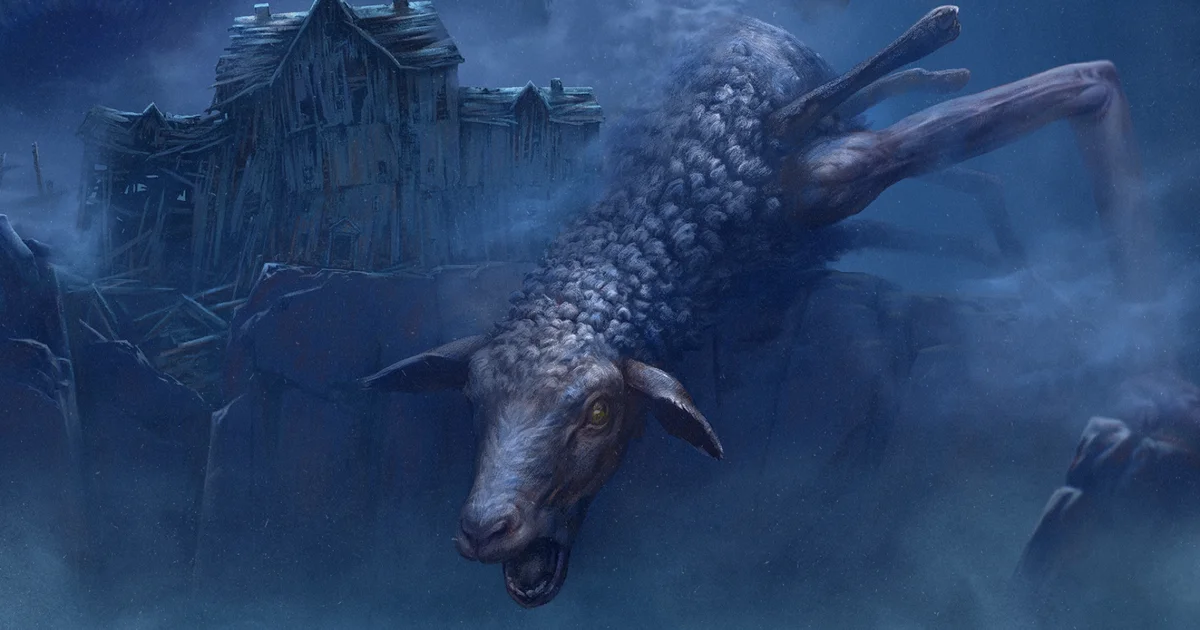
Like Little Nightmares, Reanimal organizes its journey through a chain of creature encounters, sticking to a recognizable rhythm: introduce, intensify, then deliver the final standoff before moving on to the next segment. Tarsier has crafted genuinely horrifying antagonists here—miserable, tormented beings reshaped into nightmarish combinations of even worse entities—reinforcing the game’s bleak, vicious, and hopeless atmosphere.
The setting is just as compelling. This broken island, torn apart by the ocean, offers a surprisingly modern dystopia. Early on, our young siblings explore abandoned industrial areas: empty rail yards that give way to collapsing city ruin, then to neglected farmland, battered coastlines, and what comes beyond that. It’s a place of parking lots and supermarkets, taxi cars and school buses—instantly familiar, yet completely alien at the same time. There’s only the faintest trace of narrative intent—maybe about people and nature caught in a grim loop of decline—but it reads more like atmosphere than like a tightly organized plot, carried through the small details of its environmental design.

On the gameplay front, Tarsier keeps things moving and applies only minimal resistance. You’ll find straightforward puzzles—generally about tracking down an object and using it in the right place—plus basic, one-button combat that’s used sparingly to add sudden pressure. There’s some light platforming, and even sections that involve driving, but the main emphasis is staying fast rather than mastering intricate mechanics. Still, progression isn’t entirely straight-line, and that leaves room for exploration. At times, you might come to a stop and need to go searching farther out for the next step. Each new zone is packed with concealed rewards—partially hidden routes, secluded corners—for players who want to collect masks, concept art, and other special items. Even so, Tarsier keeps the leash tight enough that the claustrophobic mood doesn’t vanish—not even during the few more open-ended stretches of sailing, which mainly function as a palate cleanser between major areas.
In the end, that produces a dependable—though perhaps not instantly memorable—mechanical base. The bigger difference is Reanimal’s relentless pace. The studio’s set-piece planning and careful staging are often astonishing; they clearly know exactly when to pull back into ominous stillness and when to surge into full action. I’m reluctant to spoil too much, but the highlights are striking—from a chase that plays out across a collapsing train roof to a risky escape along a cliff face, surrounded and threatened by swarming birds. Importantly, tighter controls, sensible checkpoints, and less punishing failure conditions help it sidestep the constant trial-and-error headaches that can plague Little Nightmares. And with the showmanship of it all—the truly cinematic quality of that shifting camera—Reanimal sustains a real sense of danger even when you’re not getting game overs as often.
In truth, given how much it adds to the overall experience, Tarsier’s camera really deserves more focus. There are moments when you’re left adrift, only for the view to pull away at just the right time—unveiling colossal silhouettes rising out of the haze. There’s also a staircase that feels almost painfully steep…
Tracked from above, what happens next is pure pandemonium, with limbs scrambling into view as looming darkness encroaches. At times, Tarsier uses understated transition tricks to keep Reanimal’s sense of space from settling, nudging your brain into questioning what’s real. One particularly sharp beat plays out at a bus stop—by simply tightening the frame, Tarsier shifts the mood completely. To be fair, design sometimes seems to take priority over practicality: on a few occasions I was so turned around that I couldn’t orient myself, even while staring across a broad panorama. Still, that feels like a small price when you consider how vital Reanimal’s drifting gaze is for building its atmosphere and suspense. If atmosphere is the ingredient that makes horror truly land, then Reanimal delivers in spades—its bleak world is assembled from hard-edged shadow play and sudden splashes of red, its animations are unsettling, and its soundscape stays relentlessly suffocating. Even if it doesn’t quite fit the bill as a frightening game, it’s overflowing with real menace.
All of this has left me wondering why I’m not quite as hooked on Reanimal as I expected to be. By the time it ended—eight hours in—I felt a bit let down. A big part of that comes from its intentionally elusive storyline; the riddling, carefully underwhelming finish feels shaped as much to fuel Reddit speculation as it does to provide a satisfying wrap-up (and it’s anyone’s guess where the upcoming story DLC might go). I also suspect the episodic layout plays a role. The familiar rhythm of events rising and falling has been lifted straight from Little Nightmares. Maybe predictability is a weakness for horror, because despite Tarsier’s impressive, intricate staging, Reanimal’s shocks end up slightly muted by their reliance on routine.
That said, these are small concerns when compared to the bigger picture, and there’s plenty here that I genuinely value. Reanimal stands out for its atmosphere and craft, and it builds on a recognizable foundation in a way that feels like meaningful progression—even if, in the end, it might have benefited from taking bolder swings. I can’t pretend I fully understand the full extent of its mystery, but Tarsier’s newest release is still a dark, violent, and grimly absorbing trek through a striking vision of something that resembles hell.