My very first Pokémon card bundle came from the original Base set, which debuted in the UK in 1999. (You know—the ones that are now going for several hundred pounds on eBay?) It was a gift from my father, despite my mother’s “No Pokémon cards” rule. She had to accept my sudden obsession with the yellow mouse, but she still thought the cards were an unnecessary expense, especially because there was no guarantee what I’d get—and building out my collection would mean buying plenty of packs. Unfortunately for her (and for her budget), she was right.
Back then, my whole world seemed to revolve around what was tucked inside each Blastoise-adorned packet. The second I opened my first pack, I was hooked. And yes, collecting trading cards really is an expensive pastime. (These days I mainly focus on picking up promo cards. I might never buy a house, but a Black Star Venusaur will absolutely end up in my collection.) So, if you haven’t guessed it by now, I’m squarely in the target audience for Pokémon Trading Card Game Pocket—the upcoming mobile version of the Pokémon TCG—especially because it puts such a spotlight on card collecting.
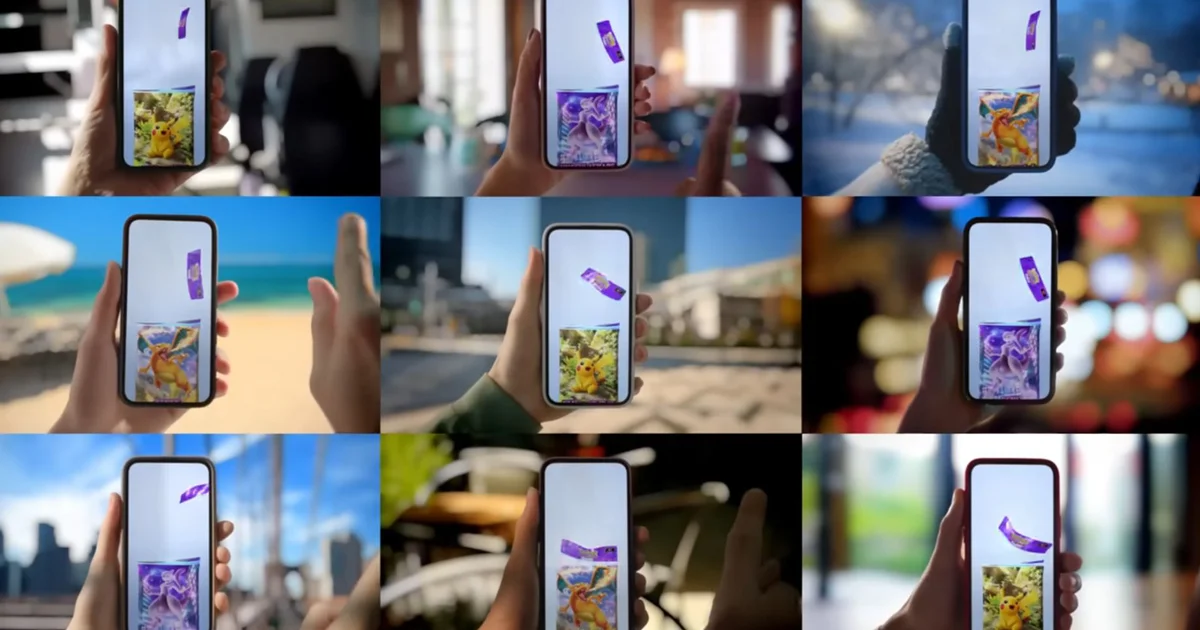
Pokémon TCG Pocket lets you unlock two booster packs for free every day, and after trying it at this year’s Gamescom, I can say with confidence that cracking open packs is genuinely entertaining. It begins with choosing the look you want for your booster packs. With Genetic Apex, the first card set for TCG Pocket, you can pick from three well-known Pokémon—Charizard, Pikachu, and Mewtwo. After that, you move through a circular carousel of boosters, scrolling pack to pack until you decide which one to open.

The catch is that you must build up Pack Stamina before you can open packs—and that wait can last as long as 12 hours. For example, if you open your first pack at 8 am, your second one won’t be available until after 8 pm. That means there’s a genuine chance of missing out on your second daily pack if you open the first too late or if you simply forget. If you want to avoid that downtime, there’s an item that can help—but it requires spending actual money in the real world, because TCG Pocket wouldn’t be a mobile game without microtransactions. (We’ll get into those later.)
TCG Pocket’s developers have managed to recreate the feel of opening a physical booster pack. Instead of cards just popping up on the screen, you have to drag your finger across the top of a digital pack to tear it open—much like you would have done as a kid. After that, the cards appear in sequence, and you’ll need to swipe again to move to the next one, giving you plenty of time to take everything in. Naturally, the rarest card shows up at the end. But if you’d rather see it sooner, you can flip the booster pack over before opening it. That will show the cards in reverse, and you’ll need to turn the pack back around afterward as well.
Still, opening packs isn’t the only way to collect cards in TCG Pocket. Every time you use Pack Stamina, you earn Pack Points, which you can exchange for particular cards. There’s also a daily Wonder Pick option that lets you choose a randomly selected card from another player’s booster pack collection—you might even end up with cards written in a different language. (You can do the same thing using your daily booster packs if you adjust TCG Pocket’s language settings.)
The cards themselves look fantastic, with vivid colours, engaging artwork, and the option to view them from different angles. TCG Pocket launches with a single set—the Genetic Apex mentioned earlier—which includes a mix of brand-new cards built for the game alongside classic favourites from older sets. Genetic Apex will be exclusive to TCG Pocket, with more sets planned for the future. Even so, Genetic Apex has plenty of cards to keep things interesting, including strong EX versions and shiny cards.
That said, the real highlights of TCG Pocket are the interactive cards. These aren’t just visually striking—they also
to dazzle you, but they also pull you straight into their world. Two immersive cards have already been revealed—one featuring Pikachu and the other Mewtwo—each taking you through a lively experience set to music. Pikachu’s card leads you along a walk through the woods, letting you spot other Pokémon such as Ponyta, Butterfree, and Weedle. Although it hasn’t been officially confirmed, the setting strongly resembles Viridian Forest. On the other hand, Mewtwo’s immersive card seems to show its escape from the lab where it was created. This expanded artwork is exactly what makes these cards stand out…
and definitely worth chasing, assuming you’re lucky enough to find them. At the very least, TCG Pocket lets you keep an eye on pull rates…
You might wonder what you’d actually do with these TCG Pocket cards. I know I can’t just slide them to the back of a cabinet at my parents’ place, secretly hoping they’ll stay unnoticed while I make room for new cards at home. These cards are digital, though. The good news is that TCG Pocket rewards you for finishing card collections. You’ll gain XP for major milestones—like collecting the full Genetic Apex set—as well as for smaller collection goals, including grabbing every Kanto starter or all the Eeveelutions. That XP helps you level up your TCG Pocket profile, and once you hit the right level, you’ll unlock fresh ways to grow your collection: playing the Pokémon Trading Card Game itself.
TCG Pocket lets you jump into the card game against both friends and randomly matched opponents. Anyone who knows the original game can probably tell right away that this version is tuned for faster matches. Energy Cards now appear automatically instead of being drawn from the deck, prize cards are no longer included, and the total deck size has been trimmed down.
I didn’t get the chance to test these matches as deeply as I’d have liked, but since I’ve played the Pokémon TCG competitively before, these changes seem like a confident rethink of how the game can work on mobile. The reduced deck size also gives you an earlier start on building custom decks—especially because you don’t need to include Energy Cards. We’ll still need to see whether this new approach clicks with long-time players, but it certainly has the chance to bring in newcomers. I also wouldn’t be shocked to see a TCG Pocket league show up at upcoming Pokémon World Championship events, in the same spirit as competitions for Pokémon Go and Unite.
There’s one clear reality with TCG Pocket: it’s free-to-play, and it’s designed to encourage spending. TCG Pocket may feel so intent on your wallet that it almost seems like it’s been swallowed up by a Gimmighoul. Not only can you buy items that shorten Pack Stamina and Wonder Pick timers, but you can also pick up cosmetic extras. We’re talking card folders, playmats, and coins. And yes—you can purchase a special virtual coin specifically for flipping during your TCG Pocket matches.
Providing these options is a steadier alternative to letting players purchase specific cards outright with real money, which could allow wealthier players to steamroll matches and weaken the “just like real life” feeling the game is trying to create. Still, it’s also fair to note that selling random booster packs will likely push players toward spending over a longer period, as they hunt for particular cards. After all, why open a booster pack if you can just buy a Charizard? Pack Points can be traded for certain cards too, but that’s still more of a steady grind through regular play than a sudden impulse buy.
Whenever I run into cosmetic microtransactions like these, I usually question how necessary they are and worry about how they affect players. There’s always the danger that people will feel pressured to purchase something out of fear it might vanish forever—and as a long-time MMO player, I’ve seen how quickly spending can get out of hand. Even so, it’s hard to imagine a free-to-play mobile game surviving without some level of microtransactions, ad overload, or even both. For that reason, we can only hope the monetization in TCG Pocket stays from becoming too intrusive.
Even with microtransactions in the mix, TCG Pocket is steadily shaping up as a strong adaptation of the Pokémon Trading Card Game. Its focus on card collecting stays true to where it comes from, while also leaning into the pack-opening craze that’s so common on YouTube and TikTok right now. The game offers more than just that, though—and the fact that it reshapes the card game suggests it’s willing to adjust the format for a wider audience. Missions and limited-time events also give you extra reasons to log in and play each day, instead of only chasing new pack openings. If it keeps this direction, TCG Pocket could become a fixture on many Pokémon fans’ devices—closer to Pokémon Go in staying power, rather than fading away like Magikarp Jump.