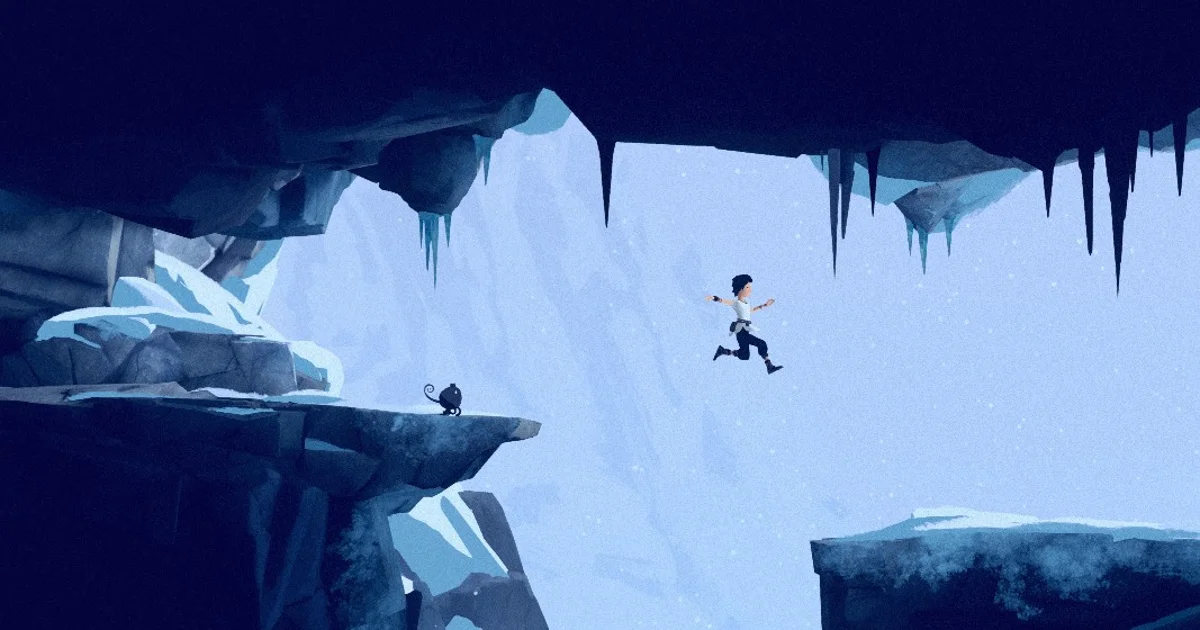
The original Planet of Lana is a title that has stayed with me since it arrived in 2023. In my view, its Ghibli-like 2D visuals, the way the story is delivered through a made-up language, and its sweeping, heartfelt music are still some of the most memorable elements in modern gaming. Even so, I’ve always felt that Wishfully only began to scratch the surface with Planet of Lana, and that there’s room to go further into Novo—along with all its underlying layers.
Now, a few years later, Planet of Lana 2: Children of the Leaf is setting out to do exactly that. The upcoming sequel aims not only to extend the story from the first game, but also to deepen its systems and broaden its world. Today, Wishfully has announced a release date for March 5th, and a demo will be available on Steam, Xbox, and PlayStation starting February 11th. To celebrate the news, I spoke with Wishfully’s creative director and co-studio head, Adam Stjärnljus.
“During [the original] Planet of Lana, we first set out to make a single standalone game,” Stjärnljus explains during a visit to the studio last month. Still, he says the team never had any real intention of stopping there. “There was so much more to uncover about Lana and Mui’s journey, as well as the story of the people who live there and the planet of Novo. With that in mind, continuing the narrative felt like the most natural next step—at least for us, because we were genuinely curious.”
That sense of curiosity quickly pushed the team toward Children of the Leaf, which is scheduled to arrive later this year. Lana—now older than in the first installment—moves with noticeably more agility. At the same time, Mui, the adorable companion (which Stjärnljus describes as something like a mix of monkey, cat, and dog), now brings improved capabilities. He can manipulate machines and also captivate and take charge of certain creatures that roam the world.
“We’ve put a lot of effort into strengthening every part of the game; Lana feels like she moves more smoothly and with better responsiveness. The relationship between Lana and Mui has been expanded quite a bit too, which lets us stage more intense stealth moments and build bigger puzzles,” Stjärnljus says. “We’ve also tried to bring in stranger creatures that you can now control properly,” he adds, underscoring the desire to widen the way you explore. Stjärnljus adds that “it made sense for Mui to have stronger abilities and meet the need to improve how he works alongside Lana.”
As it turns out, the way Mui’s skills pair with Lana’s increased mobility is central to the more complex puzzles and stealth scenarios in Planet of Lana 2. I saw this firsthand during a hands-on preview, where I got to play for about the first four hours. More than once, I caught myself asking how to get past a robotic sentry sitting atop a frozen mountain fortress—or how to steer through an underwater maze.

Let’s talk about those underwater sections, which are a brand-new angle for Planet of Lana 2 (sorry). Early on, I had to track down healing seaweed to make medicine for a sick girl. But the plant wasn’t just sitting beneath the surface in the waters around Lana’s village of Tailo—it was also guarded by a dangerous, ink-dark sea creature buzzing with electricity (because of course it was). Luckily, I could use Mui’s abilities to guide and direct small fish through a variety of underwater passages. Then, once Lana had cleared the rocks blocking the way, I could draw the larger threat away from the seaweed.
After that, when I took control of Lana again, I managed to trap the creature by closing an underwater gate that can be triggered from above. Pulling it off takes a good sense of timing and accuracy, since the sea monster would quickly slip back to its starting point guarding the seaweed if I didn’t move fast enough—something that echoes the deeper partnership Stjärnljus talked about earlier.
“A platformer is, by nature, limited in how broadly it lets you explore,” he says. “You can go left, right, up, or down—that’s essentially it. So it felt like a natural step to explore downward instead, and fill that space with water. That water becomes a place where we can introduce lots of new creatures, mechanics, and secrets.
“And on top of that,” he adds, “because Mui has a well-known dislike of water, we were excited to treat that limitation as something we could build into both the gameplay and the narrative.”
Right—Mui’s problem with water. I had overlooked it at first, but I was reminded quickly when I needed to move Lana’s companion from one side of a stretch of water to the other. I tried calling him over with Lana’s whistle, but he didn’t answer. Then I tested directing Mui (as in the original game, you can tell him to stay put, check ahead, or interact with objects like switches in the sequel), but he still wouldn’t cooperate.
So I remembered Mui’s aversion to water and shifted my plan back to Lana. I went beneath the surface to find something I could use to transport my helper to the opposite side. That’s when I learned Lana can run out of breath and drown—sorry about that, Lana. The silver lining is that bigger underwater areas will include pockets of air so Lana (and I) can catch our breath.
Soon after those bright-blue depths, Lana and Mui reached another fresh setting—this time, a snowy mountainside with sharp winds and freezing temperatures. During this stretch, platforming becomes much more important as Lana and Mui work their way across rocky ledges. At times, they need to stay low behind boulders to guard themselves from sudden gusts that could knock them off course.
Once the storm was safely behind them and they were sheltered inside a cavern, I uncovered yet another creature Mui can take control of: a white, pom-pom-like being that can stick to surfaces and leave a trail of flammable ash (or at least, that’s what it seemed like) in its wake. From there, it can roll into a flame to ignite the ash—helping burn through large cobwebs blocking Lana and Mui’s route, or causing pillars to slide back into the wall to open up a safe path.
Once again,
Timing mattered, since these supports would soon show up again along the walls. Sometimes…
There were several pillars in the way, which meant I had to be smart about where I laid the ash trail. If I lit it too soon or too late, I wouldn’t have enough time to climb up to the higher ledge before another pillar blocked Lana and Mui’s path ahead.
On paper, what I’m describing may look simple, but in practice it was anything but easy to line everything up… and I honestly liked that part. When I finally worked my way out of the cavernous space, I felt a real sense of satisfaction—one that the first version didn’t quite give me. I liked the first Planet of Lana, but I never felt as though my “little grey cells” (to borrow from Poirot) were getting much of a workout. Here, though, they felt like they had stretched out, took a quick run, and then returned for a relaxing yoga session.
Another part I explored in the preview took me around a large, machinery-inspired structure and then into a mine. To make things more tense, this area also had patroling machines, guards, and security cameras. Once again, Mui was an indispensable partner—he could temporarily interfere with the cameras so Lana could move on safely. Sometimes there were multiple cameras at work, forcing Lana to hide inside snow drifts to avoid being spotted, timing her actions between security passes.
Then there were those patroling machines I mentioned earlier. At times, Lana and Mui needed to cooperate to adjust and place beams of light—something these machines clearly didn’t like. The result was that the machines ended up stuck in a corner, leaving Lana and Mui a clear, safe route to continue. In other moments, everything hinged on precision: Lana had to be ready to dash away from a scout machine, then slide out of its reach before it could catch her. This still sounds straightforward when you read it, but my chest tightened every time Lana just barely avoided capture.
I left my time with Planet of Lana 2 genuinely impressed. It’s exactly the kind of game I can imagine picking up after a busy day—something I’d jump into for an hour or so each evening just to unwind. Novo still looks stunning, and Lana’s rural fishing community provides a lively contrast to the cold, harsh palette of the industrial sections. The soundtrack is also every bit as moving as you’d expect from composer Takeshi Furukawa. During orchestral crescendos out on a mountainside, you can’t help but feel your mood lift, and the music feels as much like a living presence in Planet of Lana 2 as Novo itself.
Overall, Planet of Lana 2 improves on just about everything. Even with its challenges, it stays full of warmth and feeling, with family, friendship, and belonging woven into the whole experience. That’s a major achievement, especially considering the limited dialogue and the constructed language in Planet of Lana 2.
“We absolutely love working with restrictions! It pushes us to strip everything back to what really matters,” Stjärnljus says when I ask how players can still build a bond with Lana and Mui, even though they can’t understand what they’re saying. “In both Planet of Lana 1 and 2, we use every tool we have to communicate emotion as clearly and simply as possible, so nothing gets lost in translation.”
Stjärnljus highlights “Music, animation, voice acting, and body language” as part of the studio’s approach to “fill the gaps” created when characters—using an unintelligible language—speak through seemingly uncomplicated models. Sure, you could say this is true for many games, but there are especially strong examples here, even right from the start of Planet of Lana 2, when Lana and her niece meet and joyfully tumble through the grass, with the little girl clapping her hands. That kind of tenderness carries through everything, from playful moments in an old shipwreck to the sadness Lana feels when her young niece becomes ill. And yes—I shouldn’t forget: Lana can pet Mui.
“One of our favorite things to see is when new players go beyond only focusing on leading Lana to her destination, and start wondering whether Mui is keeping up. Before long, a lot of players begin to feel guilty if they briefly forget about him,” Stjärnljus adds.
I can confirm that, at least in my case—it actually happened. On one of those rare moments when I lost track of Mui, he got hit by a machine right after I (as Lana) managed to dodge it, so I assumed we were in the clear. We weren’t, and the game brought me back to my most recent checkpoint to try again—this time with Mui staying right beside me. I also accidentally jolted Mui at one point, but let’s not linger on that…
Planet of Lana 2 clearly aims bigger—and is far more substantial—than the relatively brief five-hour entry that came before it, largely because of its new puzzle mechanics and creatures you can control. In fact, according to Stjärnljus, Planet of Lana 2 is expected to run for about twice as long as the original, which would put total gameplay time around 8–10 hours. He also assures me that even though the two games are connected, you don’t need to have played Planet of Lana to enjoy the upcoming sequel. Still, if you liked the first Planet of Lana, I’m confident the follow-up will win you over just as much.
Wishfully set out to refine and build on the foundation of Planet of Lana, and based on what I’ve seen so far, it’s fair to say the studio has managed to deliver on that goal. The world has grown, the enemies feel smarter, and the puzzles are more demanding. As I’d hoped, the developer digs deeper into the layers of Planet of Lana’s surface—revealing something that could be richer and more meaningful.
This preview is based on a visit to Wishfully’s studio in Gothenburg. Thunderful sponsored the flights and accommodation.