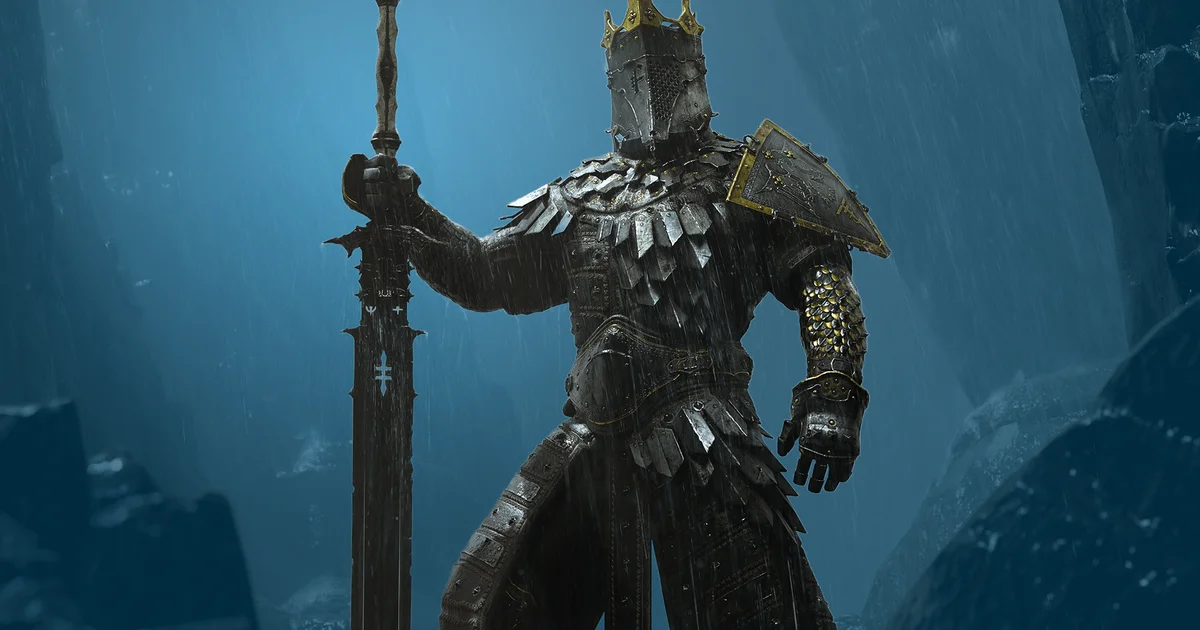
Mortal Shell is an action game packed with familiar RPG elements, set in a grim medieval—or Gothic—style world where hopelessness dominates and grief is never far away. The conversation leans heavily on Proper Nouns, yet still leaves enough mystery that players can draw their own conclusions about what lies beneath.
The fighting feels sturdy and weighty, with longer, sometimes deliberate animations that punish you when you commit too far forward. Still, it’s genuinely satisfying when your attacks finally land. When you do fall, you lose your upgrade currency and have to retrieve it during your next run—or let it disappear for good. And while there’s a bonfire, it’s not called that, even though it serves the same purpose.
So far, it’s giving serious Souls-like vibes. But once you look past those surface-level signals, a more distinctive structure starts to show itself. That’s exactly what has me paying attention to Mortal Shell 2 this week.
Dropping a demo alongside a new announcement or a major trailer has become something of a tradition for a certain kind of game. A demo’s influence is hard to dispute—just look at the many Steam Next Fests that run every year. The 2026 Summer Game Fest lineup offered a few examples, but Mortal Shell 2 is the one I rushed to download. The beta launched at the same time as a trailer that debuted during the event, and as someone who enjoyed the first game, that was more than enough to convince me.
What sets Mortal Shell apart in an ocean of Soulslike titles is that almost every so-called “standard” feature gets reworked in a meaningful way. It feels as if the team behind the game believed there was room to refine—or even redesign—certain ideas. The original struck me as an eager newcomer, bursting with concepts but occasionally tripping over how to explain their brilliance in a way that everyone could immediately grasp. Mortal Shell 2, on the other hand, comes across like a confident second-year effort—clearer, steadier, and confident enough that you don’t really have the option to dismiss it.
I spent nearly six hours in the beta, and not a single mechanic from the original appeared unchanged. That’s a notable achievement, especially because Mortal Shell is built around dismantling key Souls systems and remaking them into something fresh.
The first game’s signature was its “hardening” mechanic, letting you briefly turn to stone to absorb an enemy’s hit. In the original, every character could use it, and that remains true here—but it operates in a much different form. Hardening is still present in Mortal Shell 2, but now it’s tied to a specific Seal: an item that any character can equip. You can choose to slot that Seal in, but doing so means giving up something else.

Seals are central to the experience. They package what would typically be baseline Soulslike mechanics, significantly expanding build options—something these games usually don’t offer to this extent. It’s one of the smartest decisions the title makes. Want tighter parry timing paired with stronger payoff? There’s a Seal for that. Prefer to keep your distance and break enemy posture with your ranged tool before stepping in for the finishing strike? That’s another Seal. Blocking is also in the mix. Really, it turns out blocking being optional is a choice—who decided it had to be mandatory in a Soulslike in the first place?
I read it as a counterweight to Mortal Shell’s rigid character lineup (Shells). Unlike many Soulslikes, those Shells come with set stats that only improve over time—they can’t be reshaped. Put simply, the Shell built to function as a tank will reliably stay a tank. This part hasn’t changed in the sequel, which suggests the developers still treat this idea as core to what makes Mortal Shell feel like itself.
Even though I enjoyed the beta a lot, it’s still clearly unfinished. It was entertaining—though frustrating—to see familiar technical issues from the original technical test returning here, like the tiny subtitle text and menu highlights that aren’t always obvious. The problems I expect to become genuinely annoying come from a lack of polish, and thankfully that’s something the game seems ready to address. I often got caught on uneven terrain, and once I had to restart a boss fight because the enemy was stuck mid-air. On the topic of boss battles, it also tends to feel like the game pushes into combat a little too eagerly, leaving little downtime between the end of a boss’s intro and its first attack.
It’s also pretty easy to take damage while you’re still locked into an extended animation, which makes me think it isn’t working as intended. We still don’t have a release date, so I’m hoping it avoids the September/October crush in 2026, especially with the GTA “black hole” that pulls everything in during November—but it’s a release any Soulslike fan should keep a close eye on.