My most memorable moment in The Legend of Zelda: Link’s Awakening takes place in a library. You’re rummaging through the shelves, trying to learn more about the odd little island you’ve ended up on, and then you spot a book sitting high above—resting on a shelf where you can’t possibly reach it.
There is a way to get hold of that book, but honestly, the whole exchange captures Zelda’s spirit in miniature. You can see the prize, yet it feels out of reach—so what are you going to do?
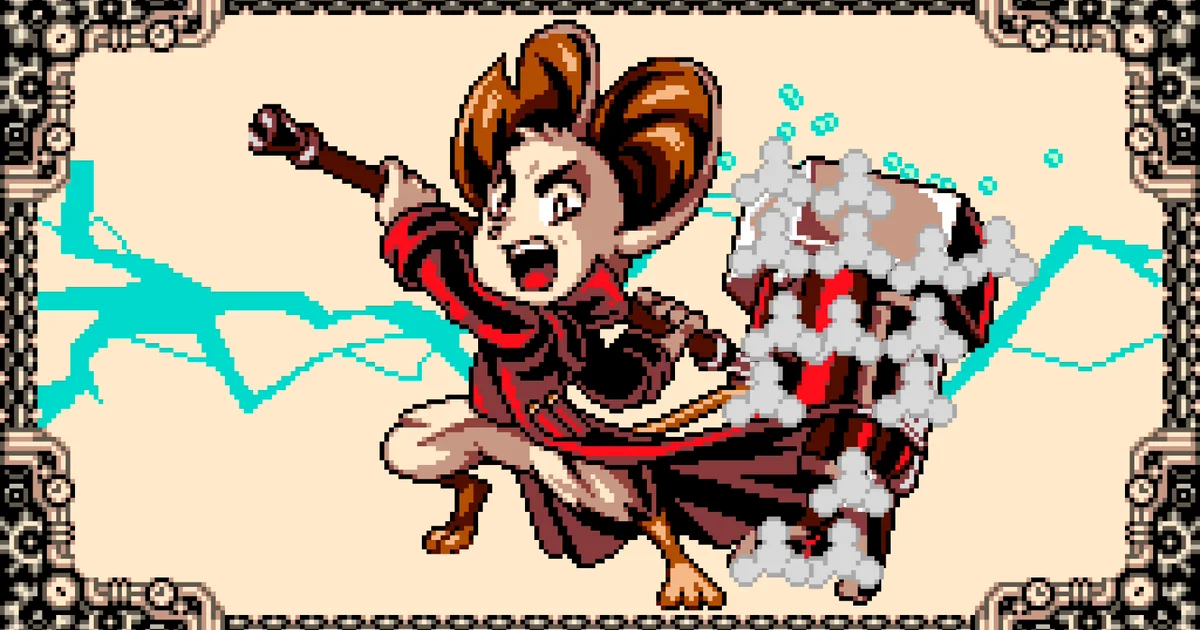
Mina the Hollower keeps that Zelda-style tradition going. It uses a top-down view that calls to mind the earliest games, and even though Mina can jump, their leaps work much like Link’s does—hey!—in Link’s Awakening. They propel themselves into the space above the screen, as it were, and you have to judge their position by watching their shadow. From there, you can collect items floating nearby and land successfully.
Sounds great, right? And if you want another moment that seals the connection in your head, early in Mina the Hollower you’re back in a library. There’s a book perched high on a shelf. You can spot it, and it makes you want to grab it. But it’s out of reach— or does it? Yes, there’s a trick to reach it. It isn’t the same approach as in Zelda, and that’s not the point anyway. The underlying magic is the same: doesn’t that visible-but-unreachable object feel irresistible? Then go get it.
Everything about this tracks. Mina the Hollower is the newest game from Yacht Club Games, a studio best known for Shovel Knight. That earlier lineup reworked classic NES-era platformers like Duck Tales, blending them with generous modern imagination. They captured the NES feeling you likely remember: large, beautifully tough adventures packed with oddball secrets.
Mina pulls off something comparable, but I think it draws from games like the original Legend of Zelda and Link’s Awakening, its first Game Boy appearance. The world is built out of screens, and while the core moves revolve around Mina’s ability to dig through the ground—uncovering hidden treasures along the way—and then spring out again, the real trial, and the real fun, comes from discovering how the game’s layered environment ties together.
This isn’t meant to imply that the gameplay is lacking in difficulty. Mina is a serious challenge from the moment you start. As with other games in this style, you arrive on an island and your goal is to push outward from a central town to restore a variety of items scattered far and wide. Expect plenty of exploration, dungeons, and a delightful 3D-lite stretch after every boss is defeated. The platforming and movement demands are intense—not only because of the distinctive top-down angle. Mina often throws several problems at once: gaps that dump you into pits, spikes you can dig beneath, obstacles you need to jump over, and enemies—everywhere: airborne foes, crawling threats, wandering adversaries, and screen-filling attackers that bring a range of assault patterns.

And yes, that’s plenty of challenge. Still, I don’t think it’s where the game’s real emphasis lies. I bring this up because Mina includes a set of tools to smooth out those early struggles. You can replenish health faster, reduce enemies’ health, or even flip on full invincibility. You can turn off fall damage and move across pits with less worry. You can even choose the option to walk over spikes. These are essentially quality-of-life upgrades—an extra layer on top of the game’s other systems—to help you progress. Progress still depends on leveling up attack and defense, picking from different sidearms, and equipping game-shifting trinkets that change your fundamental abilities.
In other words, you can lean on those quality-of-life features to make platforming sections and combat encounters feel like small potatoes, without the game losing its teeth. That’s because the most satisfying, clever challenges here rarely hinge on enemies, platforming gauntlets, or even the steady stream of entertaining bosses.
Just like those early Zeldas—and hinted at by that book in the library—Mina presents its entire setting as one enormous puzzle, and it’s a puzzle that keeps teaching you how to make even the tiniest progress. After each dungeon foray, you return to the main town, and there are always several tempting cul-de-sacs—like that shelf-book—that you’ll feel compelled to return to. There’s a saloon you’re not allowed into. There’s a giraffe with its head waiting for you on an upper floor inside a house. There’s a whole train station hidden somewhere— but how do you reach it?
So you move through town, sort through your sidearms and trinkets, talk with residents to gather clues, and read the local paper as you slowly figure out what the game wants from you. I often end up spending fifteen to twenty minutes doing exactly that—starting up Mina, wandering around the town, chatting with people, testing movement options, and trying to uncover what unlocks the next slice of the map, the next dungeon, the next boss, and the next stretch of the adventure. You could say I’m “stuck,” but I’m also genuinely absorbed: I’m so wrapped up in Mina the Hollower’s world that it keeps popping into my mind whether I’m actively playing or not.
This isn’t a review. That comes later in the week, after a few remaining sticking points have been addressed—after more exploration, more thinking, and more reading of the in-game newspaper, plus those extra moments where everything finally clicks and the next step becomes painfully obvious, making me want to kick myself for not noticing it sooner. In the review, I’ll cover every detail, from the smart enemy designs (including a snake that, amusingly, has a knife in its mouth) to the leveling system, trinkets, sidearms, and dungeons that don’t feel like traditional dungeons—along with the way you level up, the hidden areas you discover, the digging mechanics, and how the game presents its map. But for now, just take this to heart: if you’ve ever spent ten minutes in Link’s Awakening thinking about how to reach that book on the shelf, and if you loved every bit of it, then this game is something special.