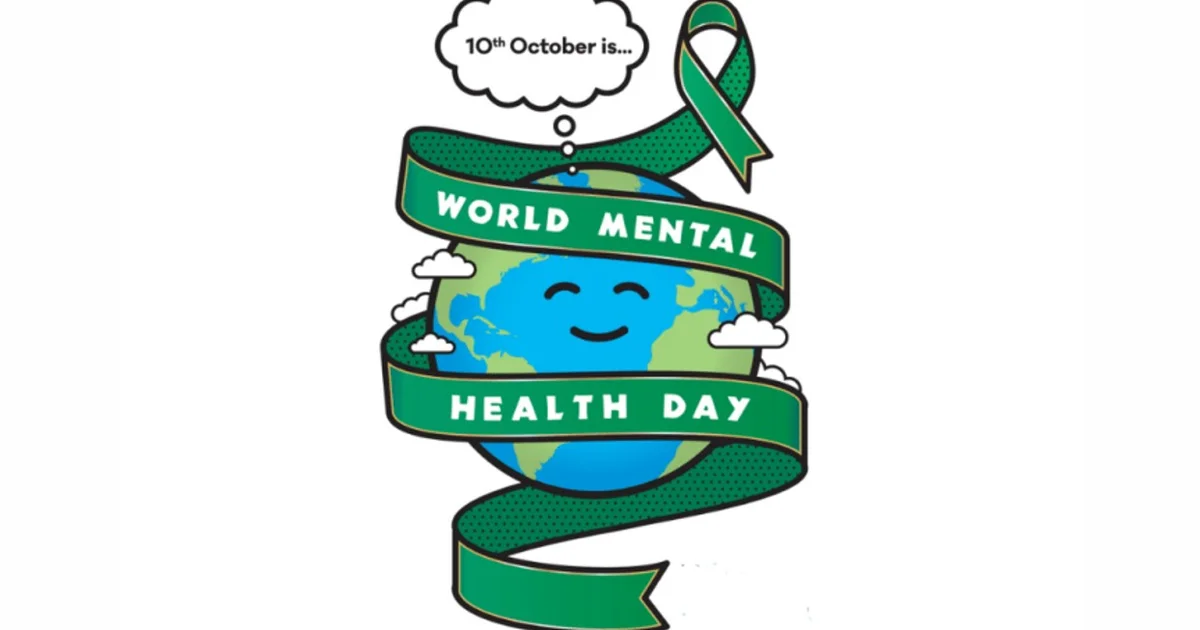
Today is World Mental Health Day. This annual event is designed to raise awareness of mental health, aiming to encourage healthier, more supportive choices for everyone’s emotional wellbeing. Even though there never should be a need to wait for a specific date to talk about mental health, this moment offers a valuable opportunity to start—and continue—the conversation.
For some time now, I’ve been living with mental health challenges. Several years ago, I was given diagnoses of Obsessive Compulsive Disorder and Post Traumatic Stress Disorder. To help manage this, I take a set of prescribed medications, and alongside cognitive behavioural therapy, these methods have played an important role in my ongoing progress toward recovery. I’m truly grateful to say that I’m in a much better place today than I was a few years ago.
Promoting mental health awareness is something I care about deeply, and I’ve taken part in mental health advocacy for around seven years. My involvement has included starting a parents’ wellness group in my local village, speaking on the radio about what the government can do to support people living with mental health conditions, joining charity panel discussions, and getting involved in fundraising efforts. Those activities have even taken me to swim with sharks, train at the gym wearing a tiger costume, and run a half marathon through the Scottish Highlands at night. More recently, I recorded a special Eurogamer podcast focused on mental health and video games.
With that in mind, please join me as I chat with our own Bertie Purchese and former Eurogamer contributor Johnny Chiodini. In this episode, we swap stories about our individual mental health journeys, how video games can shape your understanding of mental health, and the games that can bring comfort on harder days. I hope you’ll enjoy listening.
If you need to talk, the Samaritans are here to support you. Call free of charge on 116 123 in the UK and Ireland, or email at jo@samaritans.org / jo@samaritans.ie. Their support is available 24/7, every day of the year.
In the United States, the National Suicide Prevention Lifeline is 1-800-273-8255. In Australia, you can reach the Lifeline crisis support line at 13 11 14. You can find additional international suicide hotlines through Befrienders Worldwide. More information is also available on the Mental Health Foundation here. For Europe, more guidance on different helplines can be found via Mental Health Europe.