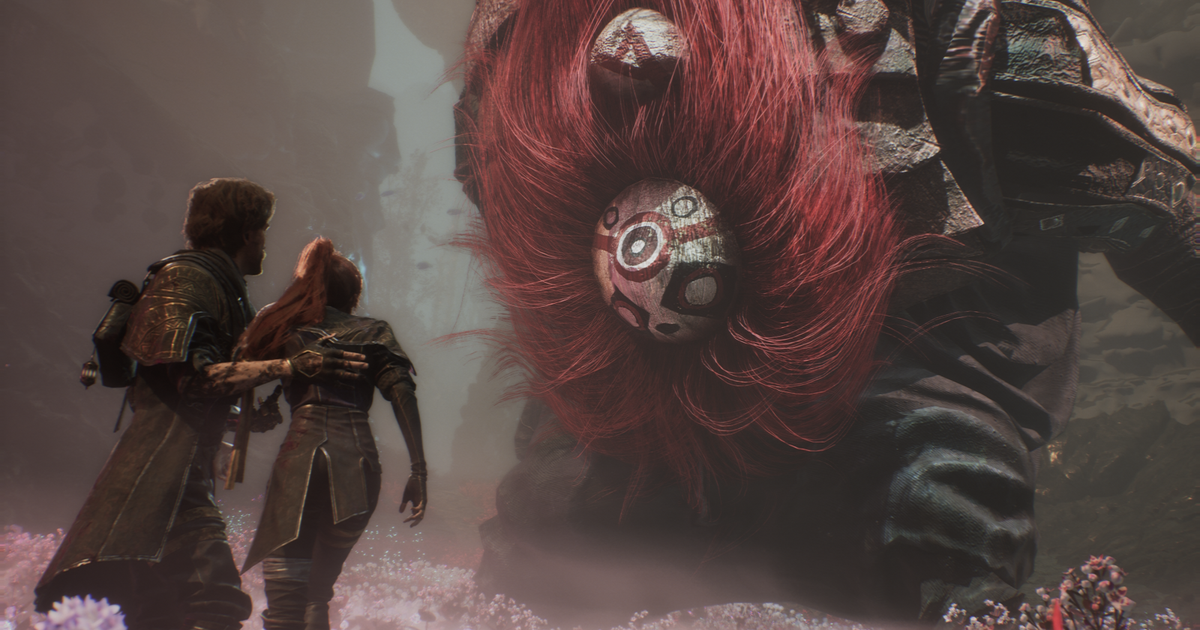
It’s fair to say that Clair Obscur: Expedition 33 caught a lot of attention—mine included—when it was revealed during the Summer Game Fest Xbox Showcase. In a landscape crowded with familiar sequels and remasters, the game stood out for bringing something genuinely fresh to the table: a turn-based RPG set against a Belle Époque backdrop, with the goal of pushing the genre forward into today’s gaming scene.
“It was quite overwhelming,” creative director Guillaume Broche explains about the response. “I figured turn-based fans would feel enthusiastic, like ‘oh, this looks great’, but I wasn’t prepared for the energy coming from the community. It’s almost as if we’d awakened something that had been sleeping.”
A big part of that reaction centers on how the title pairs turn-based systems with action-driven elements. Broche points out that, following the Xbox 360 exclusive Lost Odyssey, there hasn’t been a “major realistic” AAA turn-based release. Even if Sandfall Interactive’s effort doesn’t come with an AAA-sized budget, it’s clearly trying to deliver the look and feel of one.
“I’m a huge fan of turn-based games, and I honestly felt like something was missing when it came to strong visuals,” Broche says, citing Persona and Octopath Traveler as examples of titles that feel both fashionable and nostalgic. “If no one else wanted to take on that job, I would. That’s what sparked the whole idea.”
It’s certainly an intriguing direction. Right now, turn-based battles are mostly linked with pixel-art style games, while big franchises such as Final Fantasy—known for their combat-focused heritage—have leaned more toward action-RPG structures in recent years. That shift has also brought criticism, especially aimed at Final Fantasy 16, from long-time fans (and, as it happens, Clive’s voice actor Ben Starr is part of Expedition 33’s cast), leaving room for Broche’s project to carve out its own lane.
“I can’t accept that, even for a second, that turn-based [combat] is outdated, or that people have lost interest in turn-based games,” Broche argues. “I believe this title can show there’s still a sizable community—‘finally, a turn-based game that looks this good!’”
Beyond that, Expedition 33 acts as a “homage” to the classic RPGs Broche grew up with (especially Final Fantasy and Persona), while still trying to push the genre ahead. “How do we make it feel more dynamic while bringing in real-time elements that players enjoy?” he asks. “That’s where we created the reaction system—both for attacks, and specifically for dodges and parries, which are central to how our combat works.”

In Expedition 33, combat blends timed button inputs to boost damage and enhance dodges—an idea that isn’t completely new. It’s shown up in games from Nintendo’s Super Mario RPG to Legend of Dragoon, and more recently Sea of Stars. Interestingly, it’s FromSoftware’s Sekiro that seems to have left the strongest impression here: “I’m a fan of perfect parries,” Broche admits.
So what does that translate to once you’re actually playing? I had the chance to watch Broche work through a demo that covered both exploration and combat. Enemies can be identified in the world, but starting a fight pulls you into a dedicated battle space. There, the interface echoes Persona 5, using button cues and sharp, angled menu layouts. Alongside attacks and abilities, characters can also aim freely with a gun—not only for striking weak points, but for interacting with the environment during boss encounters. Each character also brings a distinct combat technique: Gustave builds up Overdrive after landing a set number of attacks, Lune applies elemental damage through Stains, and Maelle shifts between Stances to prioritize either offense or defense.
After you select an action, attacks are carried out and then followed by timed button prompts that can increase damage and help extend combo sequences—though if you miss, you could end up taking losses with your own characters. When enemies commit attacks, players can respond by dodging, jumping, or parrying. Parrying asks for the most exact timing, but it pays off with a strong counter. Even the whole team can parry at the same time to trigger a team-wide counter. Overall, it looks like the action elements are tightly woven into the combat flow, and enemy animations do a clear job of signaling incoming strikes. Still, Broche clarifies that these additions are there to enrich combat rather than act as a requirement. A no-hit run is entirely achievable by dodging or parrying every move. Boss encounters also add a break bar that can stagger foes, though Broche frames it as a bonus feature. Since the game ties attacks to elemental weaknesses, the emphasis is on giving players meaningful decisions during fights.
That approach carries over into character development as well. At rest points—flags left behind by earlier expeditions—players can spend points to raise character stats and unlock new abilities within the skill tree. While some characters might naturally favor speed or raw strength, players are not locked into a single path. Broche even encourages people to experiment and create “overpowered builds.”
In addition, players can adjust the Pictos worn by their characters—functionally their armor—by learning the Luminas assigned
to equip, which can be refined to deliver enhanced statistics and additional passive effects. I liken it to the abilities system from Final Fantasy 9, and Broche agrees. As is typical of the best RPGs, there are intersecting mechanics that invite a great deal of trial and error.
I ask whether Expedition 33 includes any further systems or nods to the past—such as a world map. “Maybe,” Broche answers with a knowing glint, though he’s reluctant to share more. “Old-school JRPG fans can expect plenty more along those lines.”
Combat definitely deserves that kind of attention, particularly when you actually watch the game play out