From captivating firefights to imaginative level layouts, Marathon is far more than an eye-catching surface wrapped around the bones of an extraction shooter.
Arc Raiders offered a glimpse at what an extraction shooter can be, but Marathon makes it clear what these games really revolve around. Whatever unusual combination of factors made Embark’s title feel so unexpectedly delightful (at least when playing solo) is nowhere to be seen among Tau Ceti IV’s empty megastructures. The order “Don’t shoot!” would get any seasoned Shell runner chuckling—if those precious moments weren’t better spent turning you into the target.
And honestly, we probably should credit whatever aggressive AI is acting as a god right now, because those pleasant vibes would otherwise undercut Marathon’s excellent combat. This is an extraction shooter that rewards you for thinking fast, acting ruthlessly, and—most of all—taking risks; it’s a place where you’ll find satisfaction in dealing with its robotic NPCs and, through synthetic sweat, blue blood, and countless tears, in meeting its community face-to-face.
Marathon is an FPS with high stakes and even more intense emotional swings. Still, I’ve caught myself coming back long after the most disastrous tantrums. The reason is simple: every new run gives you the chance to try a different Shell, build a fresh approach, and explore a new idea.
Here’s a Marathon trailer to show it off in action.Watch on YouTube
My first encounter with Marathon, though, was pure disbelief. At a time when there’s plenty of doubt about where gaming technology is headed—when visual progress feels stalled, and in some ways has slipped backward—Marathon demonstrates that big-budget games don’t have to rely on raw polish to move things forward. Its neon, sticker-like, Voodoo 2 box visuals highlight a real talent for imaginative design. Even just roaming its maps offers a visual lift that’s uncommon in multiplayer shooters.
That impression is closely tied to how the look of the game supports its core ideas, especially the murky overlap between physical life and digital existence. You play as a disembodied human awareness, thrust through an endless stream of bioprinted bodies. As a Runner, you comb through the remains of a failed outpost on Tau Ceti IV, taking work from multiple corporations hoping to recover the money they lost in the generation ship that carried the original colonists across space.
Cyberpunk stories have worried for years about blending digital reality with the physical world, and in Marathon, those two realms are woven together so tightly that separating them feels impossible. As a runner, you don’t deal directly with corporations themselves—only their AI “stand-ins,” which can run the gamut from personified operating systems to massive, sentient silkworms.
Image credit: Eurogamer / Bungie
The maps, meanwhile, feel like a huge circuit board half-buried beneath the ground, built from strange greebly architecture and tied together with a web of tunnel-and-walkway lines. The starting map, Perimeter, contains a literal Data Wall straight through the middle—like a massive SATA cable—while its North and South Relay sites sit beside towering, heatsink-like installations.
Marathon’s style carried me easily through my early sessions as I started to understand how its matches work and how quickly its combat escalates. These basics will feel familiar to anyone who’s played extraction shooters before. You begin a match at a random spot on the map, search nearby structures for loot to stock your backpack, run into the NPC robot threats (and, if they’re around, other players too), and then sprint to an extraction point to escape with what you managed to collect.
Marathon’s standout feature, compared with other extraction shooters, is its Shells. Unlike Arc Raiders, you’re not put into some generic person in a spacesuit; instead, you choose a specific avatar with distinct abilities that live somewhere between a character and a class. Each Shell is designed for a particular playstyle. Vandal, for example, is your straightforward assault option—she comes with a supercharged sprint ability and a grenade launcher built into her left arm. On the other end is Thief, a more unusual Shell centered on stealth and scouting. Thief can scan for high-value loot, then deploy a robotic drone to grab it from containers at a distance—or swipe it from unsuspecting players.
Image credit: Eurogamer / Bungie
Every Shell brings something worthwhile, though some are simpler to get comfortable with than others. This shows up even more sharply in solo play. In squads, for instance, I like controlling Destroyer, the tanky Shell, by shielding teammates who go down with a deployable barrier and pressuring hostile positions with rockets. Still, handling those tools on your own can be tougher, which is where Shells such as Recon—able to detect environmental
threats, or Assassin, who can become invisible and conceal themselves in smoke, more practical options when exploring maps as a solo player.
One major reason is Marathon’s quick time-to-kill, meaning a well-aimed opponent can bring you down in only a few seconds. This suggests shooting…
At first, it usually looks like a perk—and that perk is most obvious during the game’s opening stretch, when shields are thin and your room to react is limited.
With the constant pressure and rapid wipes, Marathon can feel like a frustrating experience, especially because you can end up in spots you didn’t prepare for. Every new map in Marathon manages to be more interesting than the last, while also raising the difficulty level.
For me, the toughest shift was going from Perimeter to Dire Marsh. Perimeter has some appealing areas, such as Hauler—a massive, two-story vehicle that hides a thoughtfully designed deathmatch arena inside its plain gray shell—yet it doesn’t do as well at making those sections feel connected.
Image credit: Eurogamer / Bungie
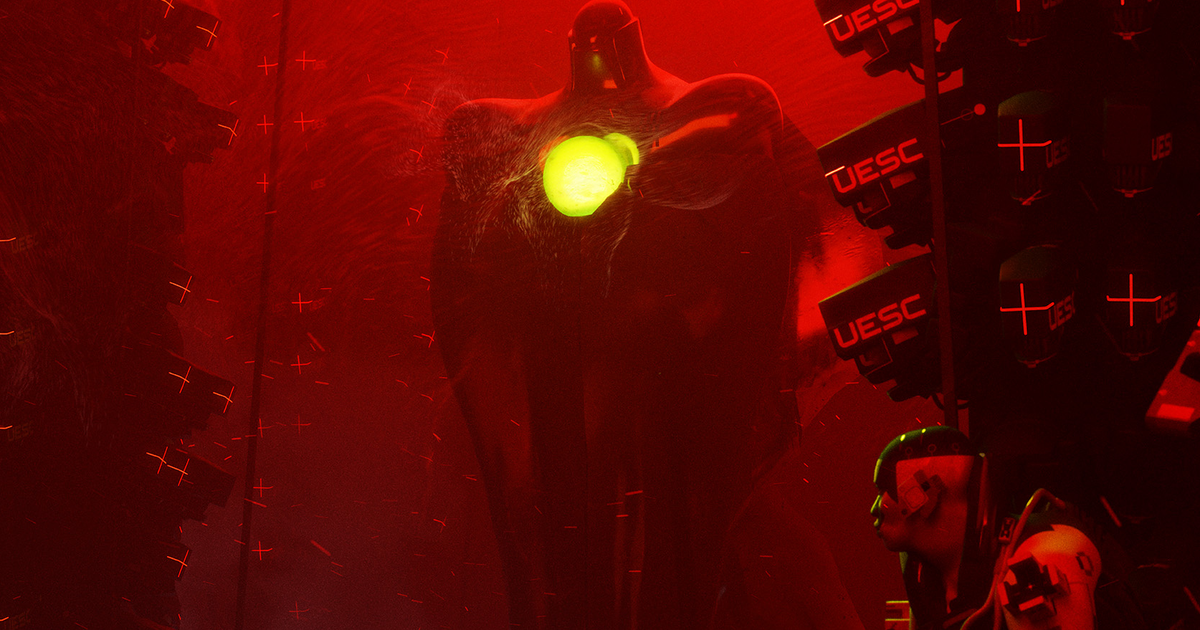
Dire Marsh, on the other hand, is more reliable about delivering exciting fighting zones while also feeling far less predictable. The layout is split down the center by a towering, glowing anomaly, and it’s periodically hit by lockdowns in which large UESC ships drop in over specific zones—giving players chances to push back through waves of enemies for worthwhile loot.
Naturally, I wanted to jump into Dire Marsh right away, but its longer sightlines, tougher opponents, and more seasoned players make it a tougher proving ground than Perimeter—one that often results in ambushes. Even though the later maps raise the bar further, they also come with stricter entry requirements, so by the time you reach them, you’re more likely to be ready.
In a funny twist, getting the best out of Marathon’s matches often means fighting against your instincts. When the first extraction points show up on the map, it’s hard not to sprint for them and flee with the loot you’ve already grabbed. Still, hanging around tends to open up better loot opportunities, and extractions usually feel calmer the farther you get into a round.
Image credit: Eurogamer / Bungie
Similarly, the high stakes of losing in extraction-based shooters imply that you should take everything you manage to pick up. But the real way to do well in Marathon’s fights is to make full use of every upgrade, tool, and consumable you come across along the way. That flechette grenade you’ve just found? Don’t wait for some “later” round—use it immediately! Turn on that bubble shield, take that cardio boost injection, and—seriously—bring that smoke grenade into the fight!
There’s also a larger discussion about how all of this ties into Marathon’s portrayal of hyper-capitalism and “grab-and-go” economics, where the end result of the rat race is an enormous pile of crushed rats. Unlike Arc Raiders, where your surface runs theoretically point toward some kind of respectable end goal, Marathon puts you inside a self-sustaining, venture-capitalist system that has largely broken with humanity. Its universe feels like an end-point mirror of our own shaky, AI-saturated technocracy—one where machines turn profit for machines, and human awareness is treated like a mere defect that can’t be fully fixed.
Image credit: Eurogamer / Bungie
Marathon doesn’t offer the catharsis of pushing back against this setup. Still, you can learn to lean into the moment and judge each round on its own merits, rather than getting stuck on the trinkets and payouts it dangles. The same idea carries over to your class abilities and the value of trying fresh approaches during combat. A claymore mine, for instance, can be a great way to intensify a smoke screen when you’re playing as an Assassin—or to deter an enemy Assassin who suddenly surrounds you with a gray haze. One of my favorite gadgets in Marathon is Recon’s seeker bot: basically a mechanical spider that tracks opponents down and then detonates. You can deploy it to soften an enemy before you commit, use it to hold off someone who catches you by surprise, or have it follow an opponent as they try to run from a fight—staying with them until that last kill.
With so much focus on class abilities and time-to-kill (TTK), it’s easy to miss just how excellent the shooting feels, and it truly is top-tier. Marathon’s guns are varied enough to support different loadouts while also making sure each weapon comes across as distinct and worth choosing. I like to go into a match with a Bully SMG—a close-range option that chews through large amounts of heavy ammo—paired with one of Marathon’s brutal shotguns. If those aren’t available, I’ll use a V11 Punch instead: a simple energy pistol with guided rounds that you can charge up for a hard-hitting blast.
Image credit: Eurogamer / Bungie
Becoming comfortable with Marathon’s combat eventually leads to two especially engaging later-game maps. The first is Outpost, a bleak, suffocating spaceport dominated by a massive three-pronged structure called Pinwheel Base. Getting around this map takes patience and planning, not just because the outdoor areas are
you’re often hit with brutal Heat Cascades, which makes them mostly impractical, but it’s also due to the limits on where you can pull resources from. Any extraction must come from protected exfil points, and reaching them means you’re either forced into a direct confrontation with the UESC or you manage to pilfer a Master Clearance code from somewhere inside the base itself. With seasoned, battle-ready players all chasing the same goals, either route calls for real grit to come out on top.
Then there’s the newly released Cryo Archive, where you drop into…
the UESC Marathon itself. If you’ve heard the joke about extraction shooters that goes, “What about an insertion shooter LOL?” Cryo Archive is, in a way, playing with that idea. It’s a huge puzzle-like container you’re working to break into from the inside out, with multiple layers locked behind clearances that you can only obtain by taking on the UESC, getting them from other players, or working through secured terminals. Between a high minimum inventory value buy-in and the requirement for teams of three, the pressure is intense. Still, the potential payoff is just as significant, since valuable loot is spread across the whole experience—even right at the beginning.
Interacting with other players in Outpost and Cryo Archive settings is exhilarating—like walking a tightrope—and it’s also where Bungie leaves the clearest imprint on the extraction shooter formula. That said, it doesn’t mean Marathon’s overall experience is perfectly polished.
Image credit: Eurogamer / Bungie
Plenty has been said about Marathon’s user interface. I personally think those critiques go too far, though I do see places where things could be easier to understand—stack upgrades, for example. They matter because they improve specific parts of your gameplay, including the initial loadout for Rook, a special Shell created to help gear-deprived players restock their supplies. Even so, they’re simple to miss on the upgrade screen, since your focus is pulled to the large tree above the much smaller line of circles that represent stack upgrades.
I’m also not especially keen on Marathon’s storytelling approach. The game’s worldbuilding is deep and engaging, and it feels like there’s plenty of room to tell memorable stories through its different factions. However, a large share of the narrative gets pushed into codex entries and conversations with your faction contacts, which can make it feel a bit tacked on. It would be unrealistic to interrupt a competitive multiplayer shooter with an in-match lore briefing, but the storyline could be worked into the faction missions more. Similar to Arc Raiders, those missions do a solid job of prompting you to explore the maps, yet they don’t do much to draw you into the bigger story.
Finally, it’s best to have a reliable trio of players if you want the full Marathon experience. I like playing solo, but it’s hard to deny that it can be unforgiving. You’ll also need a team of three to get through Cryo Archive once you reach it, and you’d naturally rather avoid doing that with random teammates when possible. I’d welcome it if Bungie made its duos option a permanent choice, because it’s simply easier to coordinate a duo than a trio.
For the first time in years, Marathon has Bungie moving with a prevailing trend in the FPS space instead of trying to lead it—and that shift could have been disappointing, especially coming from a studio with such an innovative track record. Still, it’s hard to feel down about what Bungie has produced. Marathon is not only stylish in every sense, but it also pairs that audiovisual polish with robust combat and maps loaded with secrets, surprises, and opportunities to dig deeper. After all the attention on how the game was made, Marathon’s quality ultimately stands on its own.
A copy of Marathon was provided for this review by Bungie.