John Carpenter’s Toxic Commando blends zombie slaughter in the spirit of Left 4 Dead with systems inspired by Saber’s earlier projects. The results are often compelling, though the experience is held back by a flimsy mission layout and an unnecessary layer of meta-progression.
Before getting into the details, John Carpenter’s Toxic Commando lands in the “solid” category—maybe even “decent,” with the word doing a bit of the work. If you’re looking for a co-op shooter to stretch out your weekend with yourself and as many as three friends, Saber Interactive’s newest take on zombies checks that box reliably, and it does so without asking for an outlandish price. It delivers goofy, messy, good-natured fun: it probably won’t push you to think deeply or leave a lasting impression, but it’s also unlikely to bother you.
Still, it’s starting to wear on me. To be fair, “irritate” may be an overstatement. “Bother” would probably fit better. No matter where Toxic Commando stumbles, it does it for a specific reason. It’s the latest entry in a growing lineup of co-op shooters that miss the point of what made Left 4 Dead so special—and I’m feeling close to my limit with it.
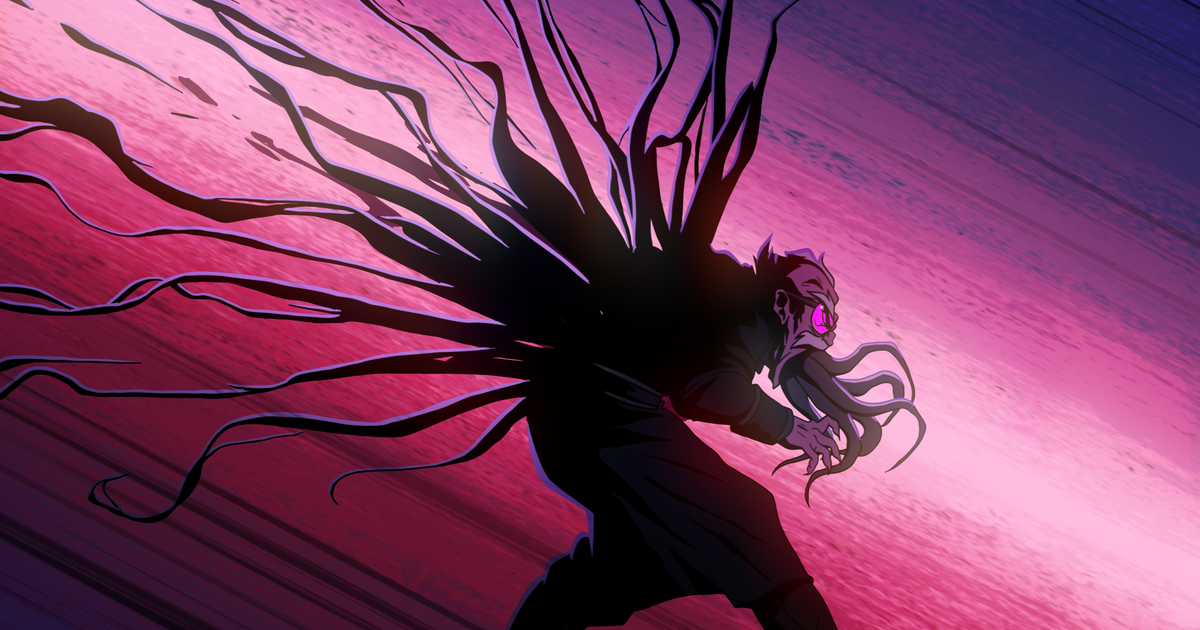
Much like Valve’s celebrated FPS, John Carpenter’s Toxic Commando puts you in a four-player group as you push through a sequence of stages. You face waves of the undead that appear on the fly, while your squad fights their way forward. The premise is that a rotten substance called Sludge has swallowed huge parts of the world, leaving the affected to roam as shambling corpses. Your team gets hit by Sludge as you carry out a high-pressure delivery job for a morally questionable scientist, and the only way to stop the infection is to defeat the Sludge God—the biggest waste monster outside of OpenAI.
Toxic Commando delivers everything you’d expect from a Left 4 Dead-style imitation, including zombie swarms steered by an unseen AI and tougher special undead bearing ridiculous names like Stalker, Snare, and Slob. Still, Left 4 Dead isn’t the only ingredient that matters here. Toxic Commando also borrows a few gameplay twists from Saber’s broader catalog.
One example comes from the swarm tech featured in World War Z and Space Marine 2. It enables zombie masses to move through Toxic Commando’s spaces smoothly—pouring over drop-offs, stacking against walls, and then scrambling up over edges to get to you. It’s perfectly sensible for Saber to bring this in, and it stays just as striking as it has in earlier games that used the same approach.
More unexpectedly, Toxic Commando pulls from Saber’s lineup of off-road vehicle sims such as Mudrunner and Snowrunner. Instead of being built around tight, straight-line levels, Toxic Commando spans multiple mini open worlds that you traverse by driving vehicles. Those vehicles regularly sink into mud and sludge, and you’ll often need a winch to pull them free.

At times, these ideas mash together in ways that are genuinely fun and energizing. Not every vehicle comes with a winch, and trying to get around a swamp while your teammates hold off zombies coming from every direction turns into an exhilarating, improvised kind of moment. A late-game assignment—driving an ambulance across the map between safe areas—makes strong use of this. You have to juggle healing work to counteract Sludge poisoning while you trudge through the muck.
On the whole, though, Toxic Commando’s open areas lead to missions that feel repetitive and oddly unstructured. Most objectives unfold in tidy but fairly forgettable rocky woodlands, with only a handful of distinct spaces—like a motel or an explosives facility—providing any real variation. The structure keeps repeating. You move around the map collecting supplies and specialty weapons for what ends up looking like a siege finale, then use what you gathered to shore up defenses and improve your odds of making it through the zombie waves coming next.
Toxic Commando tries to boost replay value by shuffling objective locations every time you run. Oddly enough, I ended up finding these layouts less rewarding for repeated play than the more straightforward stages in Left 4 Dead and Fatshark’s various adaptations.
That impression comes partly from the fact that Saber’s missions are spread out and don’t offer checkpoints, so replaying after you lose ground can feel more exhausting. Yet the bigger concern is that, in a fast-paced action game, a level that’s vivid and well built—one that stays consistent—is usually more valuable than a level that merely changes in a hazy way. That’s why Counter-Strike players still jump into de_dust even after 25 years, and why I can’t seem to get enough of Left 4 Dead’s airport despite knowing it as well as my own home. It’s the gameplay in these titles that makes them worth revisiting, while the setting is what makes that gameplay memorable.
This issue with plain, unremarkable design shows up throughout Toxic Commando. Take the connection to John Carpenter, for example. There are moments when the game feels like it’s borrowing from the director—especially when his co-composed soundtrack filters in through a vehicle’s radio. Still, more often than not, Toxic Commando reminds me of later seasons of Stranger Things: a forgettable, tentacle-heavy post-apocalyptic backdrop wrapped in a rather unappealing black-and-red palette.
At times, the visuals make Toxic Commando look more routine than it really is. With its own distinctive kind of enemies, Toxic Commando nudges away from Left 4 Dead’s familiar template for special infected. The “Nuker” is one standout: a zombie with an oversized, swollen head that howls and screeches until it detonates close to you (or gets taken out by gunfire from a distance). Another is the Blaster, a chunky, plant-like creature that stuns you with a laser.
These threats should help set Toxic Commando apart from other co-op shooters, even when stacked against the obvious Left 4 Dead analogues like the smoker, tank, and so on. Unfortunately, the way they’re presented makes them harder to remember.
The part of Toxic Commando I enjoy the least is the heavy layer of RPG-style and meta-progression systems it’s built on. Each of the four playable characters can take on a slightly different function in fights—healer, support, DPS, and the like. Every character has its own upgrade tree, along with unlockable content and weapon attachments for whatever you choose to carry.
That kind of system is everywhere in modern games. Even so, I don’t feel it adds much value here—instead, it pulls you away from the core experience. Because the currency is scattered across levels, you end up stopping your vehicle again and again to grab trees of crystals, which interrupts the flow more than the sludge itself.
More broadly, these extra progression layers run counter to the clean, simple focus that helped define this shooter subgenre in the first place. This is where I get off my soapbox: almost every title that followed in Left 4 Dead’s footsteps—whether it was Vermintide or Back 4 Blood—fell into the same pitfall.
Across these games, the foundation gets weighed down by features that aren’t really necessary: RPG progression, deckbuilding, enemies that keep changing, weapon crafting. The irony is that Valve and Turtle Rock didn’t strengthen Left 4 Dead’s appeal by stacking on extra mechanics. They did the opposite—by stripping away distractions.
During development, almost every component of Left 4 Dead was pared back and refined. The underlying mechanics, level layout, count of special infected, and even how the story was delivered were simplified. Even the playable characters were condensed compared to their early portrayals, getting streamlined models and more distinctive costumes so each one would stand out amid the chaos.
I’m tired of watching games copy Left 4 Dead’s layout while ignoring the tough design choices that made that layout so compelling. None of this is meant to suggest John Carpenter’s Toxic Commando is awful, or that you should avoid it. It offers a solid blend of co-op zombie combat and Saber’s established systems. Still, as I played, I kept thinking about something else.
A copy of John Carpenter’s Toxic Commando was provided for this review by Focus Entertainment.