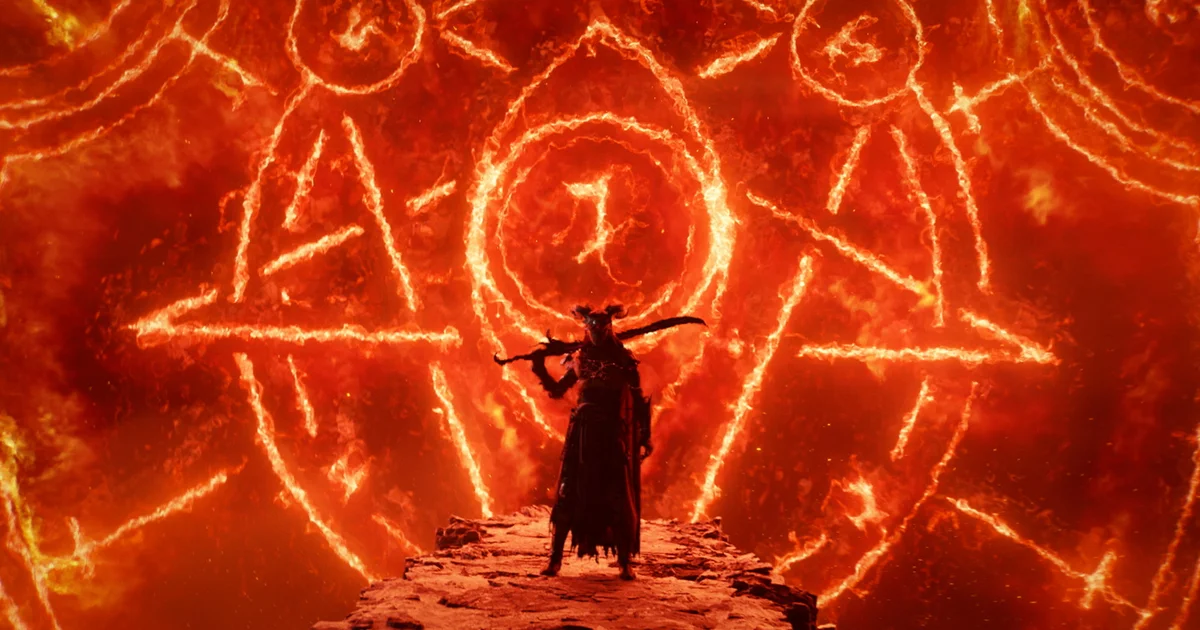
Diablo 4 has unfurled with the rich, crimson flair of a glass of red wine. In a development that feels strikingly close to Overwatch (2), Blizzard is finding its rhythm with Diablo 4 three years after launch—just as the spotlight is shifting toward an eye-catching new expansion, Lord of Hatred, arriving.
The expansion is scheduled to roll out on April 28th, and—most notably—it adds two playable classes: the paladin and warlock. It also brings a brand-new region to explore, a fresh narrative guided by Mephisto, and new gameplay mechanics such as War Plans that are set to change how you engage with the game. On top of that, Blizzard is also reshaping skill trees and considerably broadening the range of choices players will have.
I recently stopped by Blizzard to dig into what’s changing for Lord of Hatred and to get hands-on with the new warlock class—one that’s still not available for public testing, unlike the paladin. Here are the main takeaways from what I learned.
The warlock is outrageous, in the best way
The warlock doesn’t exactly play it subtle. No matter which of the four core specializations you gravitate toward, it can take over your screen with demon-driven magic—whether it leans into shadow, fire, or something more physical. The Spiritborn class added in the previous expansion Vessel of Hatred already upped the class spectacle, but the warlock pushes it even further, making Diablo 4’s launch classes look comparatively restrained by comparison.
The Legion specialization is built around summoning pinkish-red demons from Hell and driving them straight into your enemies—at times, in the most literal sense. You get swarmed by an assortment of: small imp-like demons; a big, serpentine Gorgon-style creature whose body opens into a raw, fleshy mouth; clusters of crawling demons that you fling at opponents like squishy toys; swaths of entwined demons; a powerful, rampaging demon beast; and—the pièce de résistance—a boss-like demon that bursts up from the ground, swinging an enormous sword and claiming space like it owns the place. You can end up with a dozen or more creatures gathered around you, so it feels closer to a small army than a simple party.
This all-new class fits perfectly into Diablo and exceeds the scale of any previous class
Soft pink tones shift into fiery oranges and reds for the Ritualist and Vanguard specializations. Both revolve around fire, but they go about it in distinct ways. The Ritualist focuses on firing fiery orbs and igniting areas—sometimes even producing a circular blast that genuinely swallows the screen. On top of that, Ritualists can also enchant enemies in place, stopping them from closing in on you. Meanwhile, the Vanguard practically embodies fire itself, showing up as hovering demon heads, taking root on the ground, or turning into a demon and blasting flames in every direction. You can even bring along a fiery hellhound for company.
In the Mastermind specialization, fire fades into shadow as ghostly outlines of demons emerge through swirling mist, either to devour or take control of enemies. There’s also a stealth element via Shadowform (a nod to priests from World of Warcraft!), plus a suggestion that you might be able to mind control opponents—though I didn’t see that in the brief 15 minutes I spent with the Mastermind specialization.
You can absolutely blend abilities across the various warlock specializations to shape a build that matches how you like to play, but there’s also a shard system worth paying attention to. With this system, you choose one of four shards tied to a specialization, and that shard enhances it.
While I didn’t have enough time to fully dig into every nuance of the warlock, it still left a memorable first impression. This completely new class feels right at home in Diablo—and it goes bigger than anything we’ve seen before.
The skill-tree overhaul is major

Blizzard is addressing the long-discussed shortage of skill-tree options—called a “skill twig” in a Diablo Spotlight video—by redesigning the skill tree from the ground up. There are now far more possibilities, with an emphasis on actively reshaping abilities instead of simply adding passive enhancements. One easy example: you can change a sorcerer’s fiery hydra damage type to frozen, which opens the door to a frost-focused build. The overall aim is to take the class fantasy you want and bring it to a whole new level.
According to the Diablo Spotlight video, every class now includes 40 reworked skill options and “over 80 additional choices.” Importantly, you don’t have to buy the Lord of Hatred expansion to get these improvements, since they’ll be available to everyone. That said, if you do purchase Lord of Hatred, you’ll get an extra 20 options, with part of that boost tied to the expansion’s higher level cap of 70 (up from 60).
“The primary goal is that we want substantially more build variety. We aspire for a much deeper and broader range of builds in the game” -Colin Finer
Still, it wasn’t until I booted up Diablo 4 in its current state this morning that I truly grasped how big the skill-tree changes are. In the present version, you pick an ability, put in up to five points to strengthen it, and then choose one of three upgrades. In the updated skill tree, you choose an ability, invest up to 12 points into upgrading it (the exact number may vary), then select one of three active modifications, and then pick from four more options. Every ability has more room, more structure, and more depth—including the ultimate abilities.
“The primary objective,” said Colin Finer, associate game director, to our press group, “is that we want significantly more build variety. We aim for a much more profound and broader array of builds in the game.” You can already feel this direction in the Paladin class, which is open to testing if you’ve preordered the expansion (and if you haven’t, there’s a free trial weekend running from March 11th-18th).
Passive skills that used to be scattered across the skill tree have been “cut off,” Finer noted, and are now mainly found in the Paragon tree—the extra tree that unlocks once you hit the maximum level. That Paragon tree hasn’t seen significant changes,
aside from some reshuffling, but it’s on track for future updates.
“Don’t get me in trouble for this,” Finer joked. “I’m just thinking through places where we can genuinely improve, though we do put a lot of thought into Paragon.”
Sure! Here’s the rewritten version with synonyms swapped in and sentences reworked:
especially now that we’re adjusting the skill tree for Lord of Hatred — we’re refining it to deliver a more evenhanded experience, while also encouraging more interesting decisions across a range of builds. That said, I think Paragon is already set up for this change.
Similarly, in-game terminology like Overpower is also being revisited. It will become damage bonuses that stack, which classes can use in different ways. For example, a pyromancer sorcerer might use those stacks to expand and strengthen the damage of their abilities, while also tweaking cooldown timing and mana usage—ultimately turning into the more dramatic spell-casting destroyer that the specialization points toward. Finer added that standardizing terms helps create a shared vocabulary, making it easier to craft items.
There’s also been a small shift toward more cooperative play. “We’re trying out the Paladin with the idea that it can be a class focused entirely on supporting other players,” Finer said. “That means we’re moving toward unlocking more team-play combinations, because we want players to feel good about helping their allies without having to deliver major damage themselves — and that includes tanking.”
You’ll notice this in features like cold skills now applying a chill effect that increases damage from every source, not only damage that’s classified as cold—so you can support your teammates no matter what kinds of damage they specialize in.
There’s increased player power now
The updated skill tree isn’t the only route to gaining more strength in Lord of Hatred. The expansion will also bring back item sets—specifically sets of charms stored in talismans. In practical terms, this adds another set of magical items you can carry in your inventory for bonuses, along with set effects tied to the charm collections.
“The Barbarian has a set designed around being enormous, much like the Hulk” -Colin Finer
For instance: “The Barbarian comes with a set built around getting massive, similar to the Hulk,” Finer explained, “and building up a huge amount of Fury. Once your Fury tops 100, you grow in size, and all your skills also become bigger—though with a slower attack speed and stronger damage. We’re working to make the themes behind these sets clearer, so players can lean into a specific kind of playstyle.”
Then there’s the Horadric Cube, which lets you combine items with components to boost their power and their rarity. In theory, you could raise a lower-rarity item all the way to legendary, which would give lower-rarity items more meaning—something Blizzard has been aiming for “for a long time,” as Finer noted.
Put it all together — the new skill framework, talismans, and the Cube — and “you will be able to progress your character further than you’ve ever been able to,” game designer Aislyn Hall said.
War Plans resemble Adventure Mode 3.0
War Plans weren’t available to test during my visit to Blizzard, which was a shame—because they clearly play an important role in Diablo 4’s endgame goals, both in Lord of Hatred and beyond. They give players a way to string together different Diablo 4 activities and turn them into a kind of playlist, which can then be adjusted to offer further rewards. War Plans help answer the question of “what should I do now?” after the campaign wraps up.
War Plans feel like a Roguelike-style map, with lots of connected activities forming a route of sorts. You can decide which activities are included, or let the War Plan board generate them automatically—then you earn rewards based on what you complete. In other words, it’s a system that builds on what’s already there, linking the separate pieces together. One less-noticed advantage? It can teleport you straight to wherever your next activity takes you.
Where War Plans get especially interesting is in the options for modifying them. They’re tied to a kind of meta-leveling system that lets you raise the difficulty you face, change monster categories, adjust loot drops, tweak risk versus reward, and more. The basic idea is that as you become stronger, your War Plans should also get progressively tougher.
In short, War Plans act as the game’s way to organize your playtime and keep it rewarding once the main quest’s objective has faded.
Fishing is a new addition
Skovos is the kind of burst of sunshine that’s badly needed.
Even if it sounds like a small detail, fishing is an important downtime activity in Blizzard’s other blockbuster, World of Warcraft—and now it’s being added to Diablo 4 with Lord of Hatred. This isn’t limited to only the brand-new Skovos area; you can fish across the Sanctuary world, designed as a way for players to unwind.
“It’s a great reason to explore because there are so many amazing locations in the world that you typically only encounter while battling through countless demons” -Aislyn Hall
As Aislyn Hall went on to explain: “When we build things in Diablo, we want to make sure that if there’s a reward involved, I’m approaching it with the possibility of something completely outlandish, and I don’t think fishing
it will be an outlier there, though. In the end, though, fishing is primarily about collecting. It won’t function as a main source for mythic items or anything along those lines.”
“You might do it when you want a moment to reset while still fully immersing yourself in the Sanctuary setting. It’s a strong argument for looking around more closely, since there are genuinely remarkable spots in the world that you normally only see by pushing through waves of demons. That also lets you pause and take in the beauty with a bit more time.”
Colin Finer added: “When we rolled out Diablo 4 quite a while back, it seemed like a lot of players truly enjoyed the open world—especially exploring it and uncovering the Alters of Lilith along the way. Fishing gives us a reason to revisit some of those older areas of the game that already had water or lava, and it creates a starting point for gathering items from the original world. We think that gives players a genuinely neat incentive to come back and experience certain well-known regions in a fresh way, from a different angle, if you will.”
A look at the annual expansion plan
The lead-in to Lord of Hatred has stretched longer than expected — one and a half years rather than the promised year after Vessel of Hatred. Even so, the impression is that Vessel of Hatred didn’t quite bring Diablo 4 back to life in the way Blizzard had been aiming for. Lord of Hatred is expected to carry more weight, wrapping up the Mephisto storyline that’s been building since the start of Diablo 4 — and continuing through Vessel of Hatred — while helping the game regain its footing amid competition from challengers such as Path of Exile 2.
During my visit to Blizzard, it was unfortunate that I couldn’t play through the entire expansion. I was limited to the warlock class within a Vessel of Hatred area, even though I would have loved to roam through the new Mediterranean-inspired region of Skovos or dig into the updated story. I’m not sure why that content wasn’t available only a few months before launch. Still, that hasn’t really dampened my enthusiasm for what comes next, both for the expansion itself and beyond. Lord of Hatred looks like a timely moment to reconnect with Diablo 4—and possibly for the game to reassert its identity. Much like Overwatch, I get the sense we’re moving toward a 2.0 era.