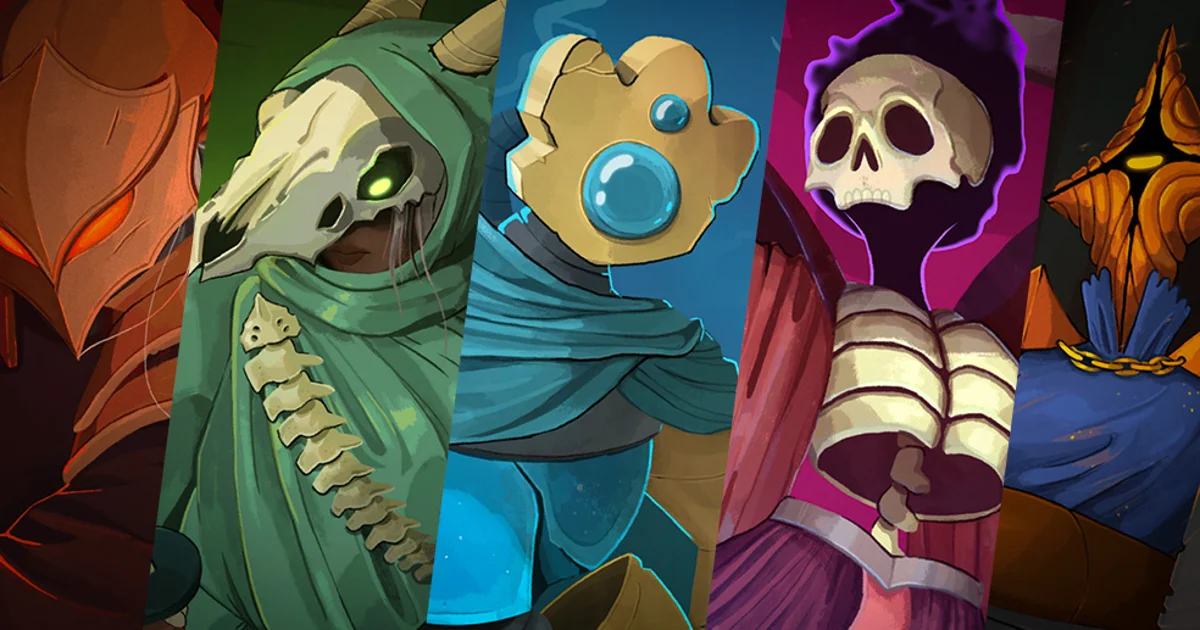
It looks like a simple tweak—something I’ve seen people try in Slay the Spire 1—but cooperative multiplayer changes Slay the Spire 2 in a big way. On paper, it’s more of a continuation of familiar ideas, more evolution than outright upheaval. Still, once you experience it with a friend—or friends—the whole rhythm feels renewed.
The hurdles were many. Slay the Spire clicked so well because it was tightly balanced. It’s a deck-building game designed around a single player climbing a tower crowded with foes, letting you push as far as you can. Bringing in a second player, though, shakes the foundations. A host of tricky questions immediately surface. Is it acceptable for several players to face one enemy at once? Do they share any kind of resource pool? When foes decide who to go after, does location suddenly matter? And how do relic and card rewards get divvied up? The original formula is put under pressure—yet Slay the Spire 2 handles these issues with such poise that you’ll likely wonder why anyone was concerned in the first place.
You can play Slay the Spire 2 with up to three additional players. I tried it with one other person, and starting or joining a session worked smoothly—nothing shocking, but definitely a pleasant baseline. The question of “who does an enemy focus on?” is handled cleanly: it’s “everyone.” When an enemy strikes, each player takes damage. The concern about fairness when multiple players are fighting the same foe is solved by giving enemies larger health totals, and every fight felt suitably tough. There’s no shared energy pool, and you also don’t split card or relic rewards. Likewise, nobody has to argue about who gets to buy what in shops. Everything stays separate, so it feels much like playing by yourself.
But of course, you aren’t playing solo—and that’s a crucial distinction, because Slay the Spire 2 hasn’t just tried to make co-op possible. It fully leans into what cooperative play is about. That’s what makes it exciting, and it’s in the small touches. When you open a chest that offers a relic, each player gets a sharp, animated “pointing hand” wiggle to show interest in that relic, which quickly turns into a fun bit of interaction. If two or more players both want the same relic, you settle it with a rock, paper, scissors standoff.
You can also leave your mark on the map. With a small quill tool, you’re able to write notes or sketch ideas for your teammates while you collectively figure out which route to take. Go ahead and draw whatever you want—even something silly, if that’s your style. Navigation doesn’t depend on this, though, because a small player icon appears at your chosen destination. Still, like the animated finger, it’s the kind of thoughtful addition that makes cooperative play more lively, and once again, it’s genuinely entertaining.

Working together also reshapes the card game itself, opening up a fresh set of strategic options. Consider debuffs: if one player weakens an enemy, the other can step in and capitalize on it—often turning the idea into roles, where one person sets things up and another finishes the job. Potions can be shared with your teammates to help them survive difficult moments. There are even cards that directly influence other players, including one I had that replicated my Block at the expense of a bit of health. The whole system is built for collaboration. You can also heal allies at rest stops. I’m sure I haven’t uncovered everything yet, but at every turn, Slay the Spire 2 seems to encourage teamwork-minded thinking—so much so that you’ll start putting together decks that actually support one another. It’s a new way to approach the game, and I’m genuinely glad it feels this way.
There’s also a larger, more reflective side to it: it’s simply more enjoyable not to play by yourself. Unless you were streaming to an audience (or using mods), or coaxing a friend into watching, Slay the Spire was usually a solitary experience. There wasn’t anyone to talk through tactics with, or to map out the order of card plays alongside you. There was also nobody to celebrate when things went right—or to commiserate when they inevitably didn’t. Now, that missing piece is filled in, and the difference is so striking that it makes you question why it wasn’t there from the start.
Co-op has a major effect here and is the center of attention, but Slay the Spire 2 isn’t limited to that alone. I’m still early in the game, so I have plenty left to explore, yet I’m already impressed by how polished Slay the Spire 2 feels and—once again, to borrow the word—it plays with remarkable smoothness. The presentation comes across as more vivid and refined, while still keeping that familiar independent charm. And for all the returning cards and characters, there’s no shortage of new content. There are lots of fresh combinations to discover, daring new bargains to make with demons—Mega Crit is in particularly playful form—and, naturally, entirely new characters and card collections to dig into. I wondered how different this experience would be, but I don’t have that question anymore. A new chapter for Slay the Spire has begun.