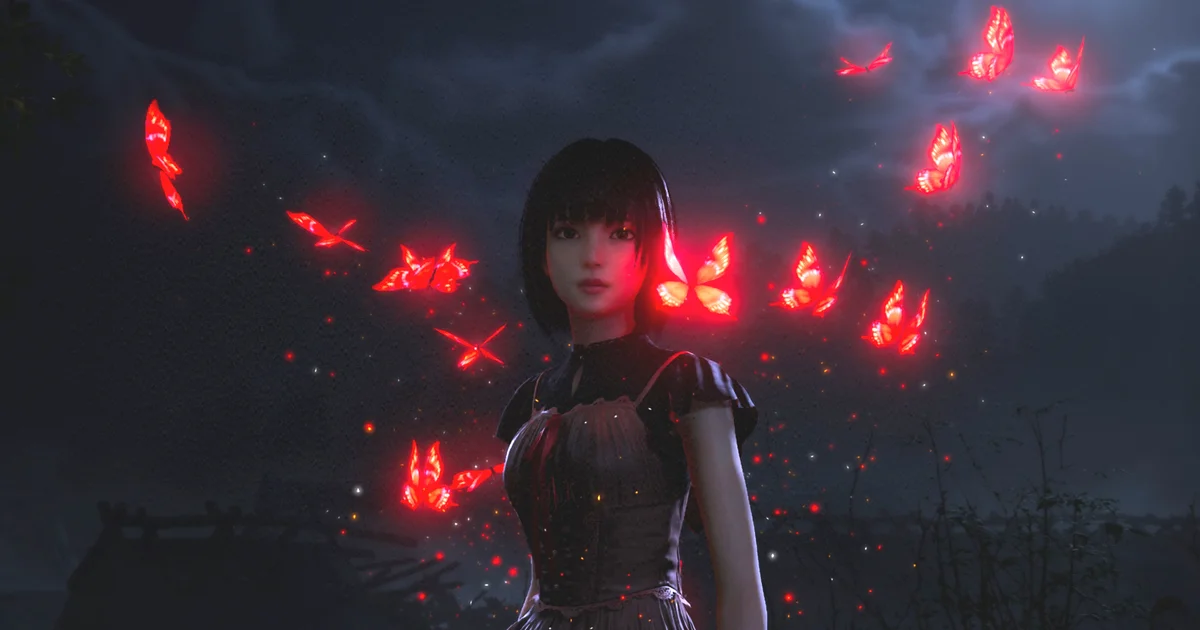
For fans of survival horror from a particular age, Fatal Frame 2: Crimson Butterfly (it’s also known as Project Zero 2) holds a special, well-earned place among the genre’s most haunting legends. This 1980s story follows two twin sisters, Mio and Mayu Amakura, as they’re trapped in a condemned village forced to replay the same night of bloodshed tied to its disappearance. When it first launched on PS2 in 2003, it was genuinely terrifying, and even now it still lands as a tense, lingering thriller. That’s why I was genuinely thrilled when Koei Tecmo announced its partnership with Team Ninja to bring the survival horror classic into a polished modern form. After playing it, though, my excitement has cooled a bit.
Fatal Frame 2 and its 2001 predecessor arrived right at the high point of the J-horror boom, when films like Ring, Ju-On, and their countless follow-ups—along with American adaptations—were drawing interest worldwide. Both games, packed with a parade of long-haired ghosts and carefully staged scares, managed to stand apart from the more tongue-in-cheek swagger of Resident Evil and the deeper psychological dread associated with Silent Hill, helping them build a dedicated fanbase quickly. Coming to the Fatal Frame 2 remake after more than twenty years of J-horror fading from the spotlight, it’s perhaps not surprising that a few methods that once felt fresh now read a little familiar. Still, Team Ninja is excellent at constructing bold set pieces, and when everything lands just right, this remake can absolutely deliver real chills.
Visually, this new release is striking. It may not match the top-tier production polish you’d expect from something like Resident Evil Requiem, but Minakami Village—always washed in moonlight—feels incredibly alive. Outside, as you follow the standard survival horror path of searching for your missing sister, dense, layered foliage cuts you off from the wider world, making it feel like you’re wandering inside a place stuck in the past. The palette leans into deep blues, broken up by the amber glow of distant lanterns. Inside, the cramped, grimy corridors—soaked in decay, rot, and a constant state of night—create an atmosphere that’s hard to forget. Even the eerie grainy black-and-white flashbacks remain surprisingly effective.
The sound design supports the mood in excellent fashion, too. The soundtrack swells and retreats like wind through the trees, anchored by somber drum hits and a distant, out-of-place choral note. Meanwhile, the voices of the dead murmur their final, rasping words through heavy static, as if you’re listening to a worn-out recording that can’t quite hold together.

All in all, it’s wonderfully unsettling. Moving Fatal Frame 2 from fixed cameras to a third-person over-the-shoulder view (not, strictly speaking, a brand-new change) also works well, even though it occasionally removes some of the original’s painstakingly designed background scares—porcelain-like apparitions sometimes barely show up before they’re gone. What you do gain, however, is a perspective that better fits the updated combat. The Camera Obscura system now feels faster and more nimble.
The series’ signature photo-based spirit battles may split players, but I’ve always liked how they intensify both pressure and fear—and that core idea still holds up here. In practice, aggressive Wraiths are met using the Camera Obscura: you look through the viewfinder in first-person mode and start taking photos. The more accurate the shot is—keeping the spirit sharply in focus and capturing the most important areas inside the frame—the more spectral lifeforce you collect. Of course, it isn’t simple. Film stock is limited (at least beyond the basic options), so you have to choose your shots carefully. Reload delays are also long, especially when using stronger film, which leaves you exposed to attacks. There’s an added layer of strategy, but the most clever scare detail remains consistent: the best moment to strike is almost always during that brief instant when a Wraith lunges straight toward you.
It can be remarkably intense, building a basic cycle of anxious anticipation followed by a sudden jump scare—where you’re expected to stay calm enough to manage your framing and timing. The tension climbs even more because spirits can quietly slip out of existence during combat, only to reappear behind you and prepare another strike, forcing you to scramble and keep track of their motion amid the chaos. For this remake, Team Ninja presses even further. Mio now has improved mobility, letting you dodge hazards more fluidly, and alongside that comes a new Willpower system—functionally a stamina gauge—that dictates when she can dash, perform special attacks, and use similar actions. It’s another mechanic to watch, and there are still more additions, including a variety of filters that have distinct effects in specific situations.
It works well overall, keeping plenty of stress and tension alive during encounters. Still, it can feel a bit too elaborate—more complex than it really needs to be. In my view, too much becomes a repeating issue throughout Team Ninja’s remake; time after time, this too much chips away at the otherwise chilling atmosphere. During battles, spirits can occasionally “agitate” at random, causing them to inflict more damage and regenerate health until you finally take them down using a convoluted counter option. The result is combat that stretches longer and longer, coming off more drawn-out than frightening. There are stealth elements and roaming ghosts, but their implementation feels a little too obvious—closer to hiding from a cluster of unsettled humans that just happen to be transparent. On top of that, a couple of basic instant-kill pursuit segments don’t contribute much beyond stealing time.
Other smaller problems also weaken the overall vibe. The idea behind expanded side missions that dig into the backstories of Fatal Frame 2’s secondary characters is intriguing, but these optional detours dilute the urgency of the main story—your twin sister is in danger, Mio!—and that’s made worse by additional design choices that frustrate in fresh ways (why introduce a counterintuitive new combat mechanic and then only explain it after I’ve already struggled through a fight?; why keep the map hidden inside the main menu and make it available only by pressing X, when the back and start buttons mostly go unused?). I had hoped I’d eventually adjust to the remake’s pacing, but after about six hours, my minor annoyances don’t appear to be fading.
That’s disappointing, because there are times it truly shines: when you end up alone in the shadowy wreckage, with nothing but the haunting soundtrack and the paper-thin murmurs from the departed; when Minakami Village’s bleak, lingering mood is given space to fully develop. I still love the way picking up an item or slowly opening a door makes the camera edge closer on purpose, teasing a jump scare that may or may not arrive. There are also some well-built set pieces. The original’s drowned woman encounter is reimagined in a bold way—your surroundings begin to echo the submerged depths as the battle progresses. Even the new optional twin doll puzzles, where you have to locate them around the space and capture both in a single shot, are enjoyable. Yet just as I feel like I’m settling into its rhythm, whenever the tension thickens and the horror starts to fully close in, the remake finds another method to be irritating, pulling me back out again. At this stage, I’m still finding enough pleasure to keep returning to its darkly compelling story, but it isn’t quite the definitive remake I’d hoped for among one of my most treasured survival horror games.