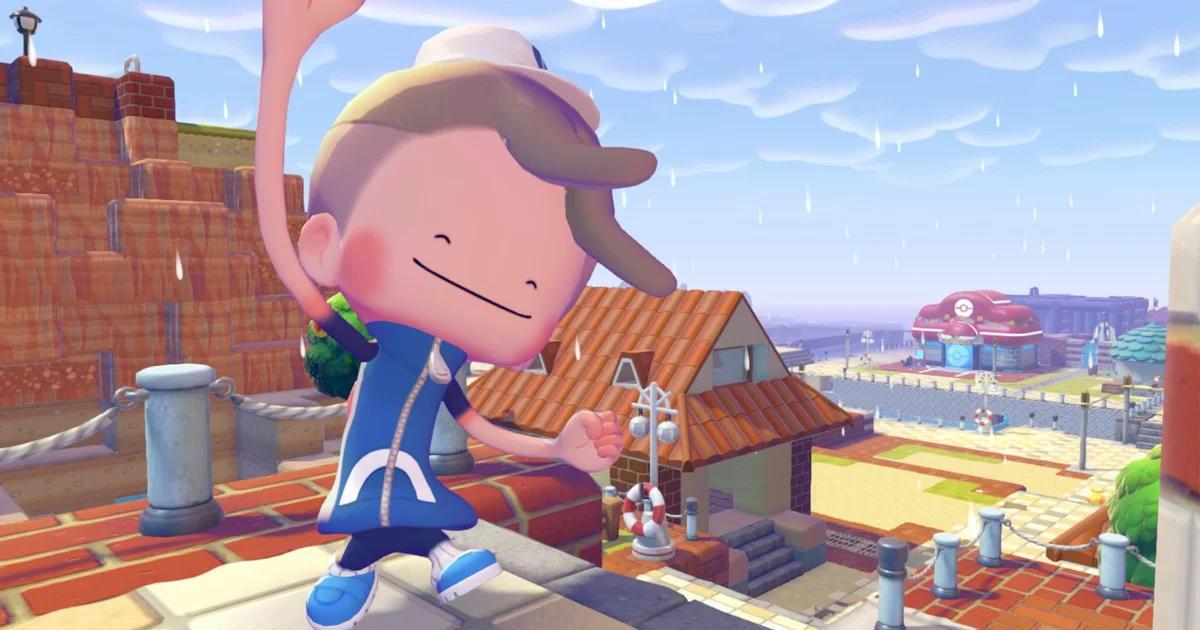
I have to admit, I was a bit stunned when I checked my Pokémon Pokopia playtime on Monday and somehow saw that I’d logged close to 24 hours across the weekend. Still, that didn’t stop me from snorting when coworkers started trading stories about giving up sleep for the game. Absurd, I thought! Unthinkable! Which means it somehow feels inevitable that, a day later, this reaches you through a fog of exhaustion—because I stayed up until 2am last night, completely compelled to mend every single bridge in Bleak Beach. Pokopia has me hooked.
I was already fully caught up in Pokopia—thanks to its delightfully odd post-apocalyptic backdrop—after only a couple of hours, and that fascination has only grown stronger. It doesn’t hurt that the game is packed with personality, and the lively Pokémon lineup is genuinely a pleasure to be around. I realize they’re just bits of the same randomized dialogue looping at the heart of things, but I still enjoy watching how they bounce off one another from a distance; I like the casual ways they interact with their surroundings, whether they’re playing in a sandpit I put together for them or taking a nap on a deckchair; and I really appreciate all the small, endearing quirks they bring along.
But beyond all of that, Omega Force (the studio behind the excellent Dragon Quest Builders series, in case you weren’t already aware) has put together a campaign that’s both captivating and full of constant surprises. Each distinct stretch of Pokopia comes with its own Pokémon, specific materials, a set of particular vibes, and—most importantly—its own set of hurdles to overcome. In Rocky Ridges, I’m currently trying to pull together a party, while in Bleak Beach—a place I’ve come to care about a lot—the relentless cloud cover has been my biggest headache. These big campaign beats are just the start, though; woven through them are plenty of smaller threads tugging me in different directions (for instance, party planning once turned into becoming Graveler so he could shake off his gym bro dynamic with Machop, for reasons I still can’t fully explain). Each one, seemingly, wraps up with a satisfying new discovery or a useful new item.
Unlike the nearby genre of Animal Crossing, which often keeps you engaged by holding features back for long stretches, Pokopia—even with its built-in pauses—feels genuinely rewarding right away, and in a consistent way. Add in longer-running pursuits like crafting and customization, along with the building and decorating that feed their own engaging loops of exploration and collection, and the risk of time slipping away becomes pretty real. I’ve already spent a good deal of time experimenting with waterways to fine-tune my irrigation, and once I got electricity unlocked, my view of Pokopia’s world (soon to become a chaotic mix of power cables and windmills) completely changed. Omega Team manages to pace this content so that every time I come back, there’s something fresh waiting for me.

Still, even with all of that being so impressive, it isn’t actually what’s taken up the majority of my time. Instead, I’ve noticed that the very specific itch Pokopia is able to scratch is the same one that had me sinking hundreds of hours into PowerWash Simulator: that relentless urge to fix things, clean things, and bring them back. Pokopia’s setting is a stretch of timeworn ruin, where the once polished shine of the mainline Pokémon games has—without humans around—faded and crumbled. In Rocky Ridges, ash gathers high on top of countless secrets; cobblestone paths are split and brickwork has collapsed; and in Bleak Beach, wooden walkways have fallen in, harbors have been worn down by relentless tides, and bridges sit in obvious disrepair—and I can’t resist the pull of it all!
My urge to make sense of the world’s broken remnants feels almost like archaeology. I appreciate how Omega Force has scattered just enough hints across Pokopia’s ruined areas that players can figure out what it used to be like, then use that understanding somewhere else. Taking in the landscape helps you spot a rhythm in where the surviving street lamps were placed, or figure out exactly how far the handrails were meant to reach. Even the underwater areas have clues from the past: submerged cobbles that suggest where roads and walkways above once stood. For me, then, Pokopia’s appeal isn’t limited to construction—it’s equally about restoration, bringing the wrecked world back to its former brilliance, brick by brick.
This is slow, hands-on work, I’ll tell you—one that asks for a careful eye and a bit of imagination to fill in the missing pieces and put everything back together, much the way a real archaeologist might. And it’s incredibly satisfying as well. From the ruins that greeted me, I’m steadily shaping a brand-new Pokéfuture out of a long-forgotten Poképast, and I’m enjoying every step along the way. I get why some people might be skeptical about Pokopia, considering how recent Pokémon games have looked, but Omega Force has delivered something genuinely special, often in ways you wouldn’t necessarily expect. And I’m honestly fine with it taking up all my free time—even if, for me, that might just be the sleep deprivation talking.