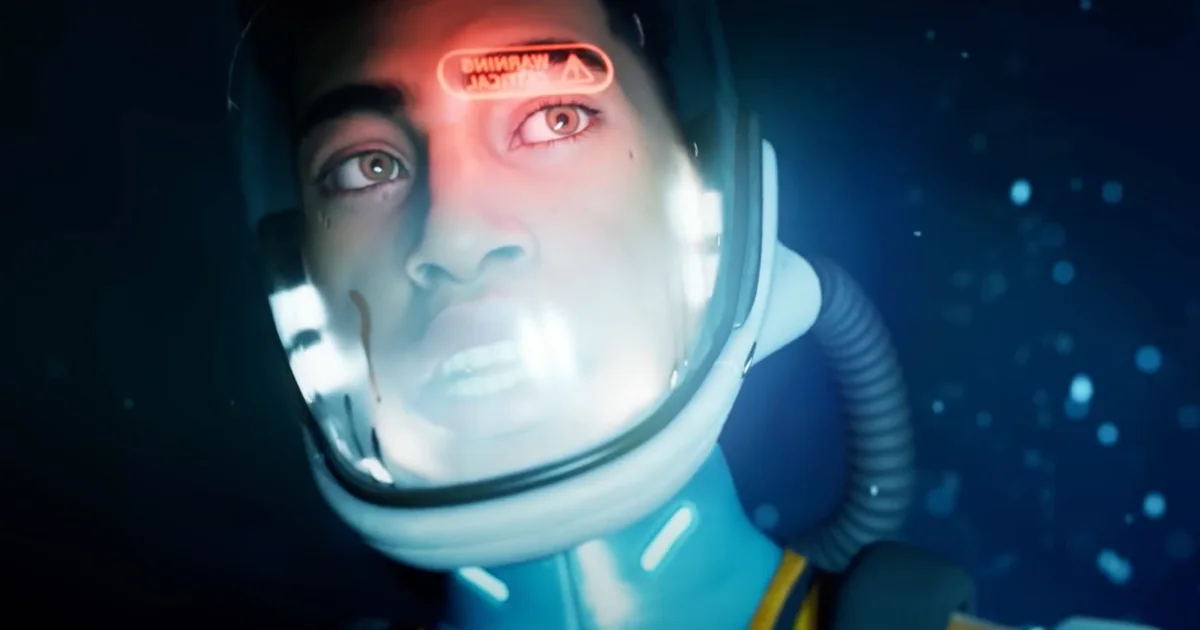
In the horror world—whether you’re talking about video games or other formats—there’s a commonly accepted idea: fear tends to feel stronger when you’re alone. With more people around, the pressure often eases, and the dangers can start to feel less intense. That pattern shows up in survival games too, where teaming up lets players construct a base or deal with threats faster than a solo adventurer. So, what happens when a well-known survival franchise, known for its lurking terrors beneath the sea, adds four-player cooperative play?
The team at Unknown Worlds Entertainment, the studio behind Subnautica 2, has taken on that question head-on. Co-op has been one of the most frequent requests from the original game’s community, but what changes had to be made to the Subnautica gameplay formula to make it work?
Early in the project, Subnautica 2’s design lead, Anthony Gallegos, explained in a recent discussion that the team’s top priority was to “capture the essence” of the original Subnautica—so it would act as “the baseline” from day one of the sequel’s development. After setting that direction, the studio began looking outward for inspiration.
“We looked at what the best survival games do in terms of quality of life improvements that we hadn’t really considered. Then we determined which of those updates were worth carrying over, or building on,” Gallegos said. “Throughout that process, we spent a lot of time thinking about what the new part of the experience would be. Some of the major decisions included placing the game on a brand-new planet with a fresh storyline. Subnautica is already quite solid in how it plays mechanically, but we think that when players say they want something different, they’re usually hoping for a new world to explore. Importantly, a lot of them also wanted co-op.” Of course, even with that understanding among some players, the shift brings real complications.
“Co-op makes everything a lot harder,” Gallegos continued. “It’s a great feature, but the whole team was built around developing for a single-player experience, so a lot needed to be reworked. You run into common multiplayer problems—for example, ‘why isn’t your flashlight showing up for me?’—and yes, it has to be mirrored. Do we add third-person and first-person animations too? Those classic details create extra workload.

“Still, I wouldn’t say we ran into insurmountable issues. Co-op was planned into the game from the very beginning. The team lead emphasized that everything in the game should be able to support co-op play. That helped sharpen our approach for Subnautica 2: we’re aiming to deliver a single-player adventure that you can always choose to enjoy together with others.”
At the same time, this sparked some fascinating discussions about the overall mood of Subnautica 2. The first game is a sprawling exploration, much like many survival titles. You can build and scavenge effectively. And you can also get jumped—like when a Crabsquid appears, a frightening mix of a horseshoe crab’s spindly limbs and a bulbous squid-like head. Beyond those creatures, the constant dread of losing oxygen underwater, or vanishing forever inside a cavern, is frightening on its own.
Adding co-op—along with the natural cheerfulness that a group of voice-chatting friends tends to bring to any game—could easily undermine that atmosphere. Just consider some of the more widely known horror releases from the past few years, including Lethal Company, Content Warning, and Phasmaphobia. The big question is whether Subnautica’s tense atmosphere can remain intact when you’re not alone.
“What I found especially interesting were the online conversations about the game. People would ask, ‘how do you make a Subnautica experience scary when co-op is involved? Is that even possible?’ I can say with confidence that it is,” Scott MacDonald, Subnautica 2’s creative media lead, shared. “We ran co-op sessions internally at the studio, and suddenly you’re seeing the collector leviathan pushing out of the fog while the music swells, the roar carries through, and it stretches a tentacle toward you. When it grabs one of you and all of you scramble to get away, it becomes incredibly frightening. Everyone can share that scary moment together—very much like in a theater, when you watch a movie with friends or coworkers.”
“Even small things, like inventories and how they’re shared between players, had to be handled properly,” Gallegos noted. “After launch, one of the first additions we plan to make is a non-shared inventory for players, because once we let people play co-op, we learned they wanted their own individual pile of items—things that other players couldn’t take for crafting materials. It’s an example of a quality of life improvement we started with shared lockers, and then co-op added a new twist to it. I’m sure we’ll discover more examples like this, which is why we follow an open development approach—so we can judge how players interact with these systems.”
Designing the game with co-op in mind has, in many ways, opened up a fresh wave of unsettling possibilities. As MacDonald points out, using co-op as a lens also gives the team broader insight into how Subnautica 2 comes together: “For me, it’s fascinating to see how creatures respond to multiple players. In Subnautica 2, they can do more than they did in Subnautica 1. Back then, they could only track one player, largely due to the PC hardware we had access to at the time. The earlier AI was extremely limited, so creatures could only focus on a single objective. Now, though, they can track all of you and pick the most effective approach based on who is creating the most noise or emitting the brightest light. In a co-op setting, everything feels far more active and alive.”
To Gallegos, co-op is also an important on-ramp for players who may never have tried Subnautica on their own. “We pay attention to players who say they want to play in solitude. That matters, and I understand where they’re coming from. That’s why people can choose to experience their first run alone. I also think co-op is a strong option for those who feel intimidated by the game—it offers the help and lightness you need to get through it. That was definitely my experience with games like The Forest or Sons of The Forest; I wouldn’t have played those solo. Still, co-op allowed me to enjoy them without being completely terrified.”